

There’s a reason I was never an entrepreneur; I have the business instincts of a tired lettuce. But I challenge you to visit a place as beautiful as Kirkgate Market without wondering: Could I have a little shop here? In this economy? Leeds city council data shows that 5.9 million people passed through in 2025; much fewer than the estimated 7 million just before the pandemic in 2019. Nostalgia is palpable for a time when punters were so numerous they were “rubbing elbows,” as one trader put it.
I spent time at the market asking multiple traders how they make ends meet — and how their lives have led them to set up shop here. That’s today’s story, with some gorgeous snaps from local photographer Ethan Delgado.
Youna: “We are optimistic that it’s going to work out.”
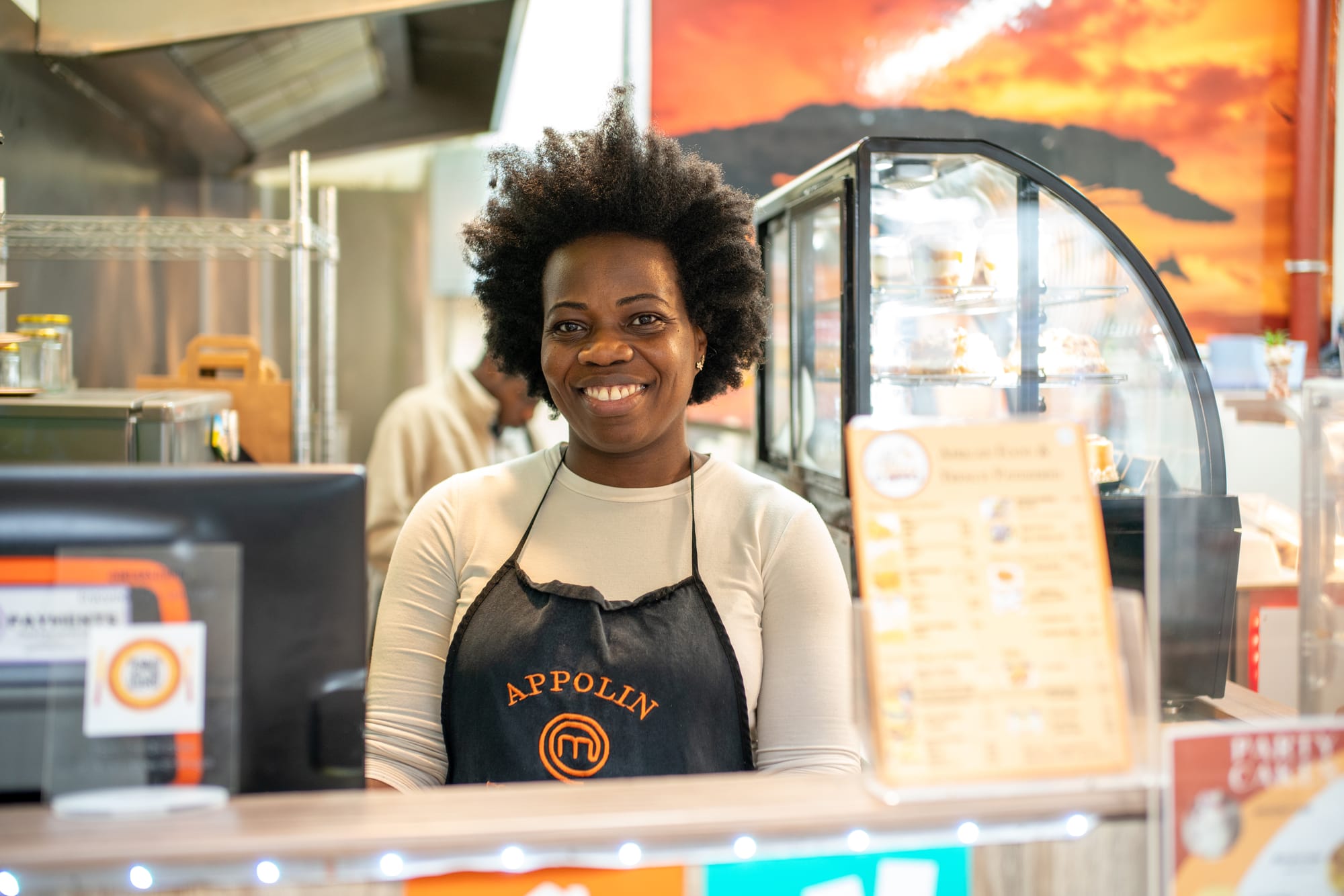
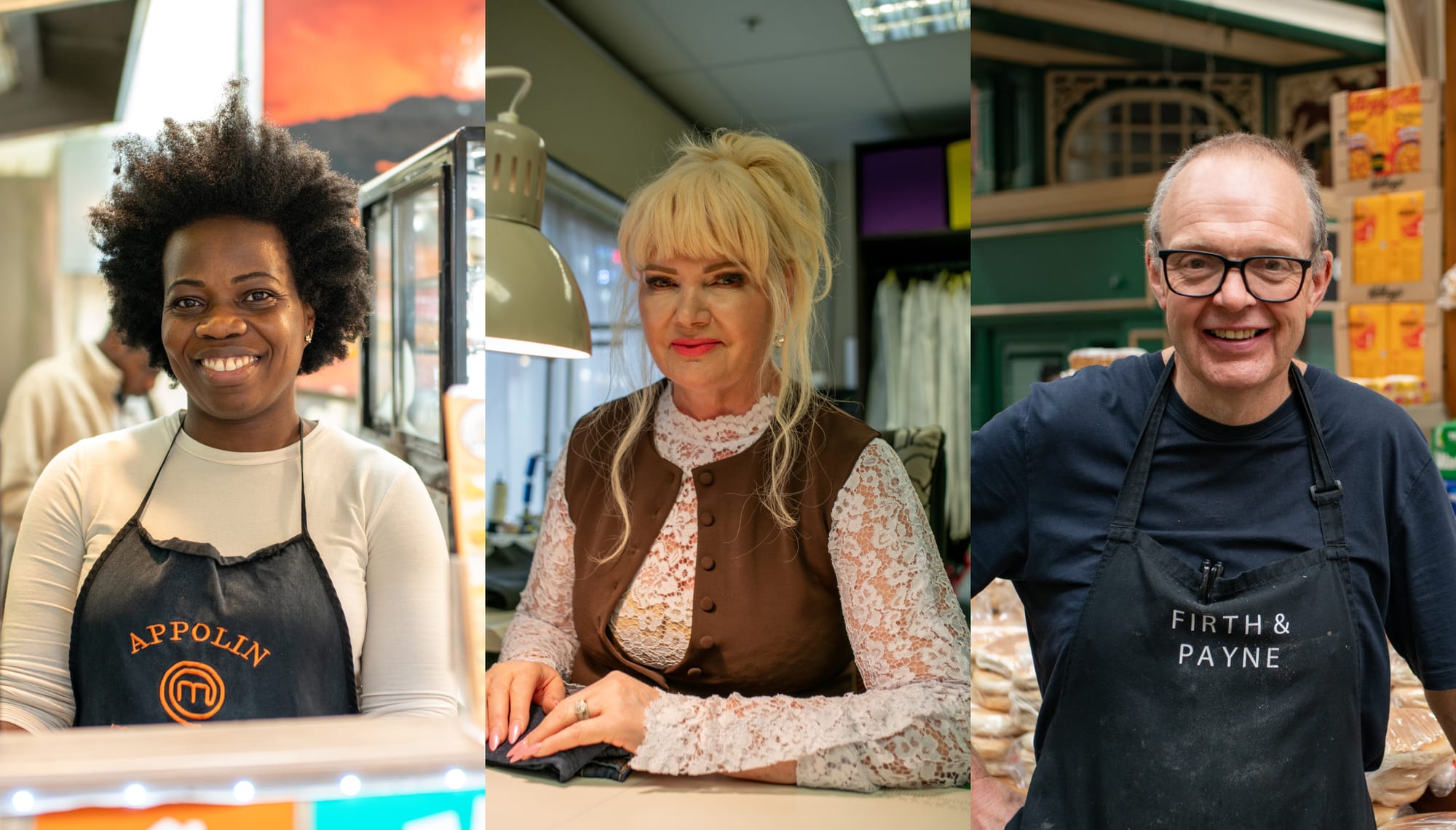
Born in the Democratic Republic of the Congo, Youna Balafoundi started cooking for her grandfather when she was 10, pulling together a meal of soup and a doughy cassava dish called fufu. “I fed the old man, and he survived it,” she says. “From there it was just a passion.”
Youna learned English as a child (aided by a much-worn cassette of the Spice Girls’ Wannabe). But much later, after visiting Leeds, she realised that the Yorkshire accent was a whole other ball game — “nothing to do with what we learn at school.”
20 years after moving here, Youna now speaks with a very slight Yorkshire lilt of her own. She and her husband opened O'Delices D'appo in January 2025, serving her repertoire of African-fusion dishes and her husband’s French patisserie. As far as she knows, this is one of the only spots to get African dishes in the city centre.
When they started, “most people didn’t know what African food was,” she says. “Most had this idea that it will be very spicy.” They broke that barrier down with “testers, freebies” and very low prices — a great way to bring people in, but not something they could sustain for long. It was hard at first. There have been weeks where “we’ve barely touched £100,” she says. But the good weeks are balancing out the bad. People are developing a taste for her food, with the mafe — a velvety, deeply comforting peanut stew — being among her biggest sellers.
“We are optimistic that it's going to work out,” she says. “And we are also realistic that the economic climate is rough and tough for everybody.”
Max is following his father, the “market oracle”
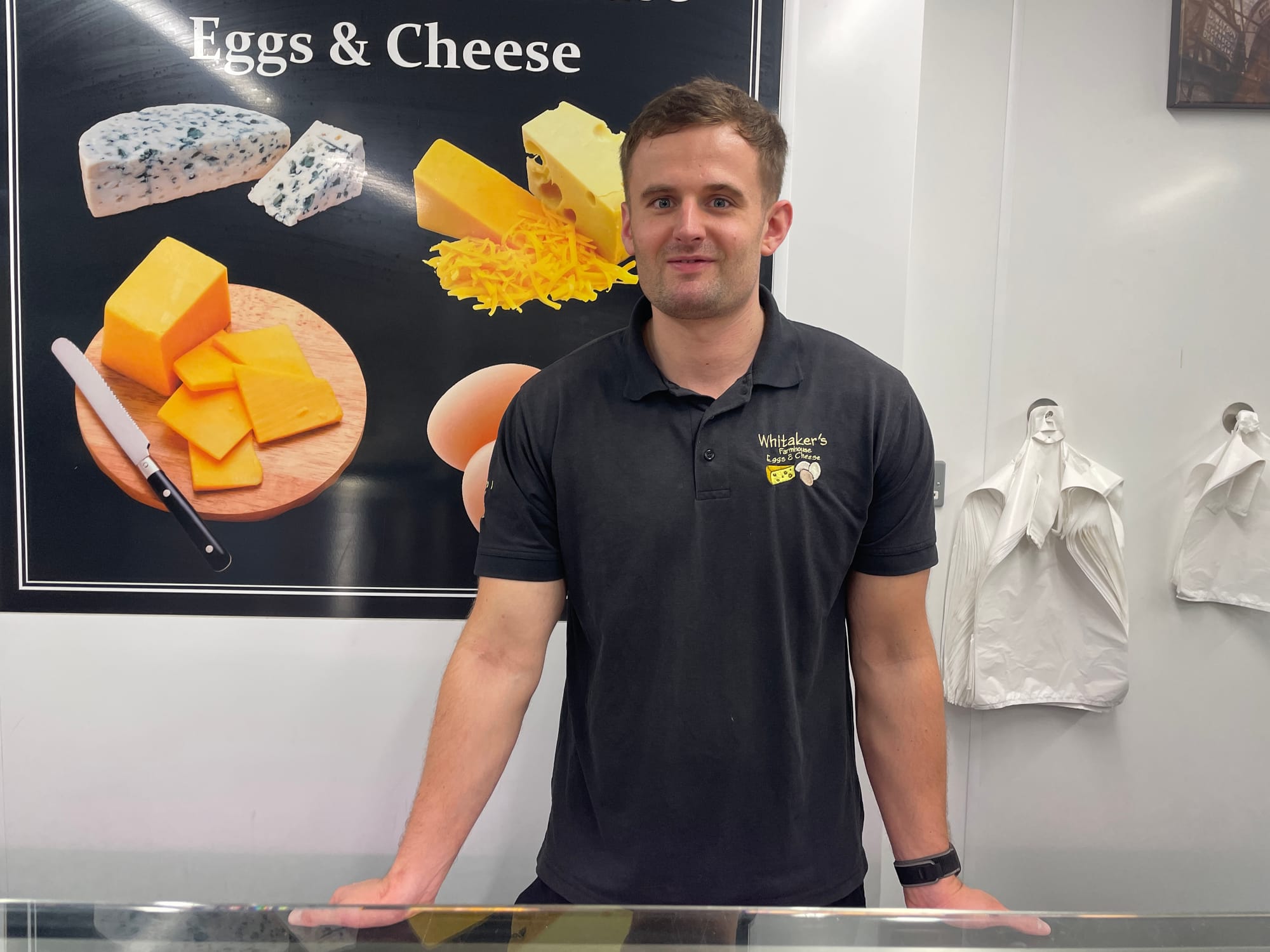
Max Clough has only this year taken over from his father’s farm shop, and he feels he’s stepped into some big shoes. Whitaker’s has been in Kirkgate Market for “forty, fifty years,” much longer than 28-year-old Max has been on this earth, and you sense he feels it. His dad — who took over about 15 years ago — is "probably one of the greatest market traders of all time,” he says, earnestly. “He’s the people’s champion.”
But the current economic environment is “all I’ve known so far” since taking over, he says, and it’s tough. He’s had to raise the cost of his eggs and cheese, but he’s keenly aware prices can’t go up indefinitely — he wants to make sure there’s more affordable products too, without compromising on quality: the cheese offcut section is where to go for thrifty fromage.
Disaster struck the other week, when shop assistant Lisbeth came in to find that the refrigerated cheese counter had tripped half the shop’s electricity. Warm air had been blowing in all night — putting your hand inside felt like “going from Leeds to Dubai,” she says. An operation to move the stock (described by Max as like “rescuing wounded soldiers”) began, but it was too late; the cheese had been too warm for too long, and was illegal to sell. A less principled trader might have tried to shift some of it, but Max binned the cheese — he estimates around £3,000’s worth in sales.
Like many of the food outlets, Max supplements the business by supplying the restaurant trade. “Without the deliveries, I'm not sure if the shop could stand alone,” he says.
But the tradition is clearly in his blood. “My dad is kind of like a market oracle,” he says. “So I’d like to think I’ve learned a lot.”
Hello! This is The Exchange, a new local newspaper covering Leeds. Our mission is to tell the stories over those who live here, like today's article.
Want more like this? Then sign-up to our free mailing list and never miss an edition.
Stephen will never, ever sell you a cronut
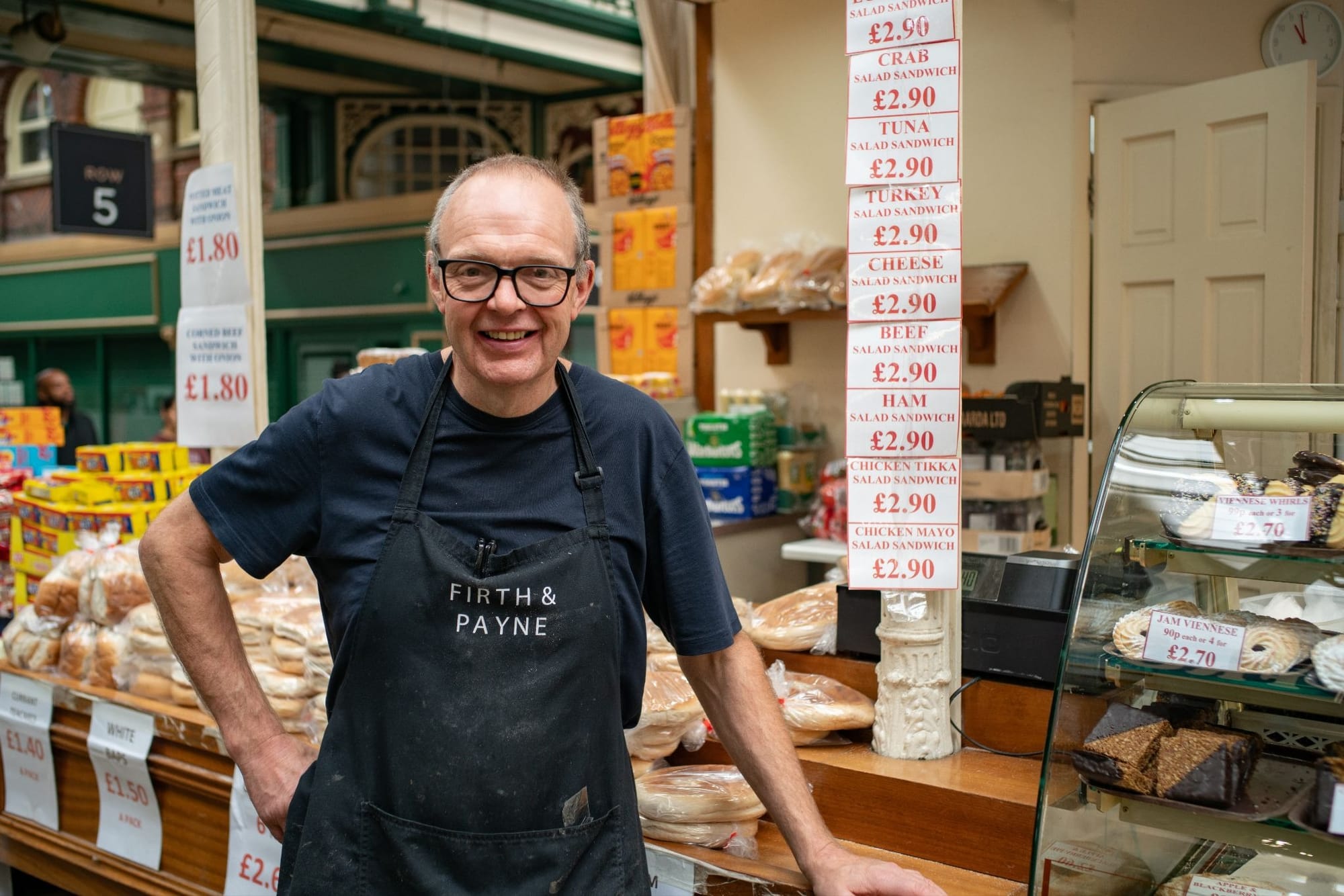
Stephen Whitaker and his wife have been at the helm of Firth & Payne bakery for 31 years, with Stephen bringing bready knowledge from a career at Warburton’s. The evolution of the market is “impossible to put it into words,” he says. “Demographic’s changed, customers have changed, market’s changed.”
It’s a “lot harder” than before, he says; where he used to have five staff, he now has two. But he’s still mobbed at lunchtimes. The reason is obvious: the prices. Stephen’s selling a solid ham salad sandwich at £2.90, a price even the supermarkets would struggle to compete with. “If you have stupid prices, you don't sell it, it becomes stale,” he says. “People don't come.”
Instead of chasing trends — Stephen is decidedly not interested in cronuts or matcha macarons — he sticks to what his loyal customers come back for, such as the stalwart sandwiches, oven cakes, and “old-fashioned buns and cakes.”
People talking negatively about the market “really annoys me,” he says. “You don't hear Morrison's, you don't hear Sainsbury's, you don't hear these supermarkets dishing themselves, do you?”
Mauricio and Manuela are essentially irrepressible: “We don’t shut up!”
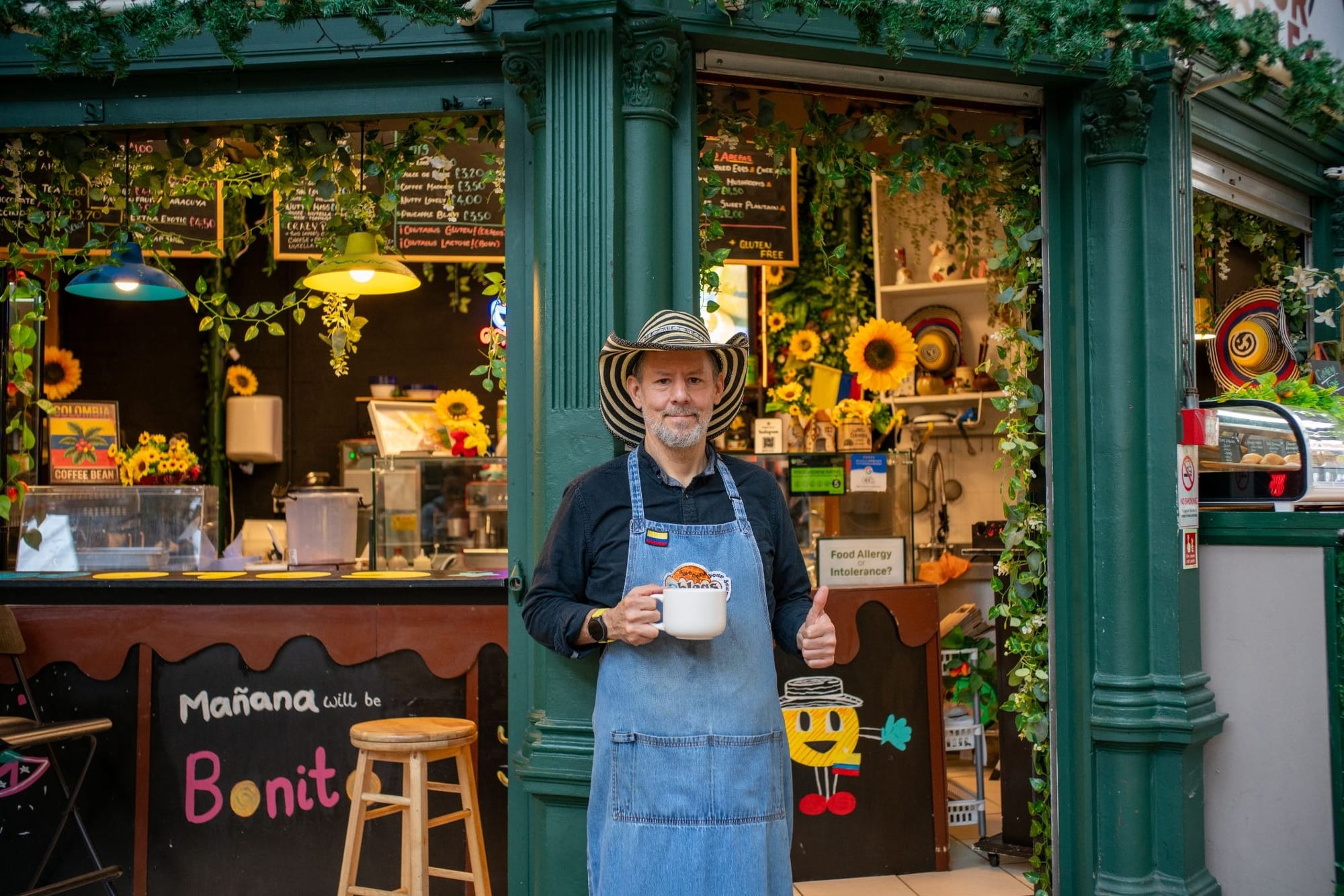
An exquisitely tuned TikTok algorithm sensed long ago I’m interested in a) Leeds and b) eating, and thus placed Obleas To Go, Mauricio’s tiny Colombian street food outlet, in front of my greedy little eyeballs before I ever even visited Kirkgate Market. Social media appears to be working out for them.
They’ve been here around three years, but the family’s food story goes back much further: in Colombia, they say, they had outlets all over the country. I don’t figure out exactly what happened there, but somebody bankrupted them, they say. “They were stealing from us, basically,” says Manuela, Maurico’s (absurdly charismatic) daughter. So 14 years ago, Mauricio brought the his wife and then-four-year-old Manuela to London, where they continued working for companies like Pret a Manger — but he was working so hard, it badly impacted his health. “So that’s why we came to Leeds,” Manuela says. For yet another fresh start.
It’s not clear that the pace has slowed. It takes “a lot of perseverance, I would say, and also a lot of dedication” to survive, Manuela says. Before they had an empanada machine, her mother — the prep cook of the business — was getting up at 4am to make and fold 400 of them a day. Now, they’re looking to expand the business by opening a dark kitchen in Headingley.
As they don stripey straw hats to serve snacks out of their greenery-festooned shop, there’s a clear sense that they absolutely revel in the social side of the market.
“We’re really annoying with that — we love talking,” says Manuela. “We don’t shut up!”
David knows his history
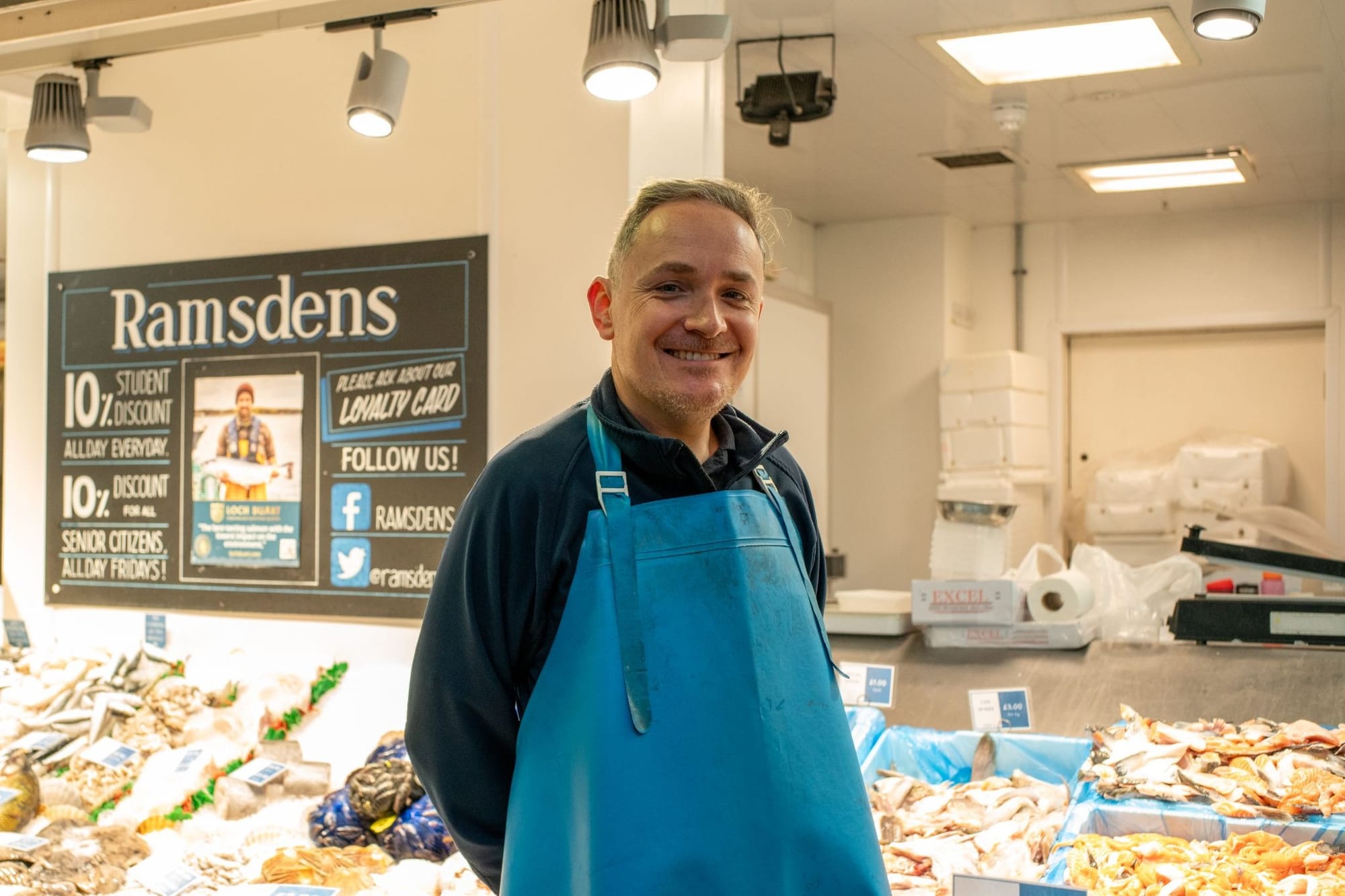
Ramsdens fishmonger — and the neighbouring Welham’s — are entwined with Kirkgate Market’s history via David Ramsden’s extended family stemming back, more or less, to the very beginning.
It would make sense for David to join the family business, and he did. But before that, he read politics at university, and thinks he probably should have studied history — his passion. However, when he came out, “no one wanted a university graduate.”
“So then my dad was like, "Well, you're not sitting around at home doing nothing,’” David remembers. “‘You're going to have to come and work.’”
David doesn’t look back at that tantalising academic career. “As much as I’d probably like to be a guest on The Rest is History podcast, life is what happened,” he says, with a grin. (What I will say, though: if you ever want to know about the Abyssinian expedition of 1868, David’s your guy).
It’s more recent economic history that pulls him back down to earth: namely, Rachel Reeves’ budget of 2025. “Things were really on the up, right up until Labour won the election,” he says. Employer contributions and minimum wage rises hit the business hard. “What was in the bank was getting wiped out, and we had to really rethink everything about costs,” he says.
This is a particular problem when he doesn’t want to compromise on quality. “We only sell Loch Duart salmon … we almost always have Lindisfarne oysters,” he says. “That’s why people come back, when they try our salmon.”
Enjoying this wander down the alleys of Kirkgate Market? Want to remind your friends to head down there? Give this article a share — it truly helps us get the word out about The Exchange.
Callum is betting that Leeds wants meat. Really, really good Italian meats
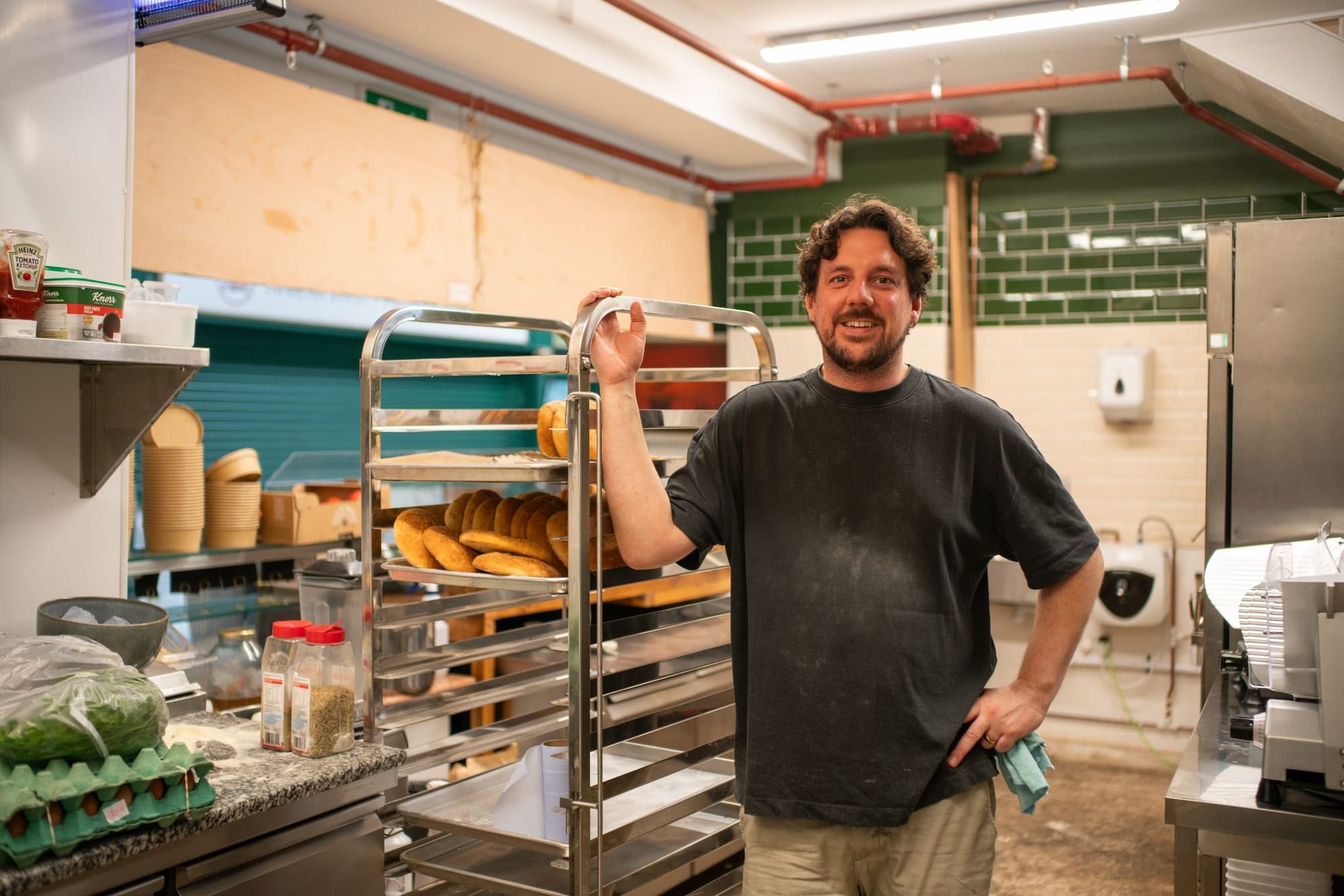
Callum Crymble has been running the Galley Delicatessen for less than a year, but he’s already made an impression: an Exchange reader commented that he makes “arguably the best sandwiches in the city centre.”
Callum’s working career has been in hospitality, working in kitchens in Leeds, Manchester, London, and Hong Kong. But “it was always my plan to have my own place eventually,” he says.
Aware that flashy restaurants can be a money pit, he started small at Kirkgate Market. Friends and family helped him kit the place out, from ovens to charming vintage furniture. “It was a lot of fun,” he says.
From his time working at Fazenda — the legendary former Brazilian steakhouse in LS1 — he learned that the people of Leeds love good, high quality meat. Now he’s trying to sell them on his “favourite type of food” — Italian cured meats.
His bestseller is the “Montagne”: a marriage of mortadella, speck, coppa, fennel salami, provolone cheese, whipped ricotta, grilled peppers, and rocket. It’s admittedly expensive. “I'm aware that being in the market, I can't charge much more than I already am,” he says.
The lunchtime hour is already bringing him a crop of regulars anyway — he’d just like footfall to widen beyond that. Despite the call of the cavernous food hall further back, he knows he wants to be in the older part of the building. “As soon as I visited this market for the first time, I fell in love with how well kept and historic it is. So I want to be a part of that, really.”
Wahid thanks the Versace-branded toilet mats for getting by
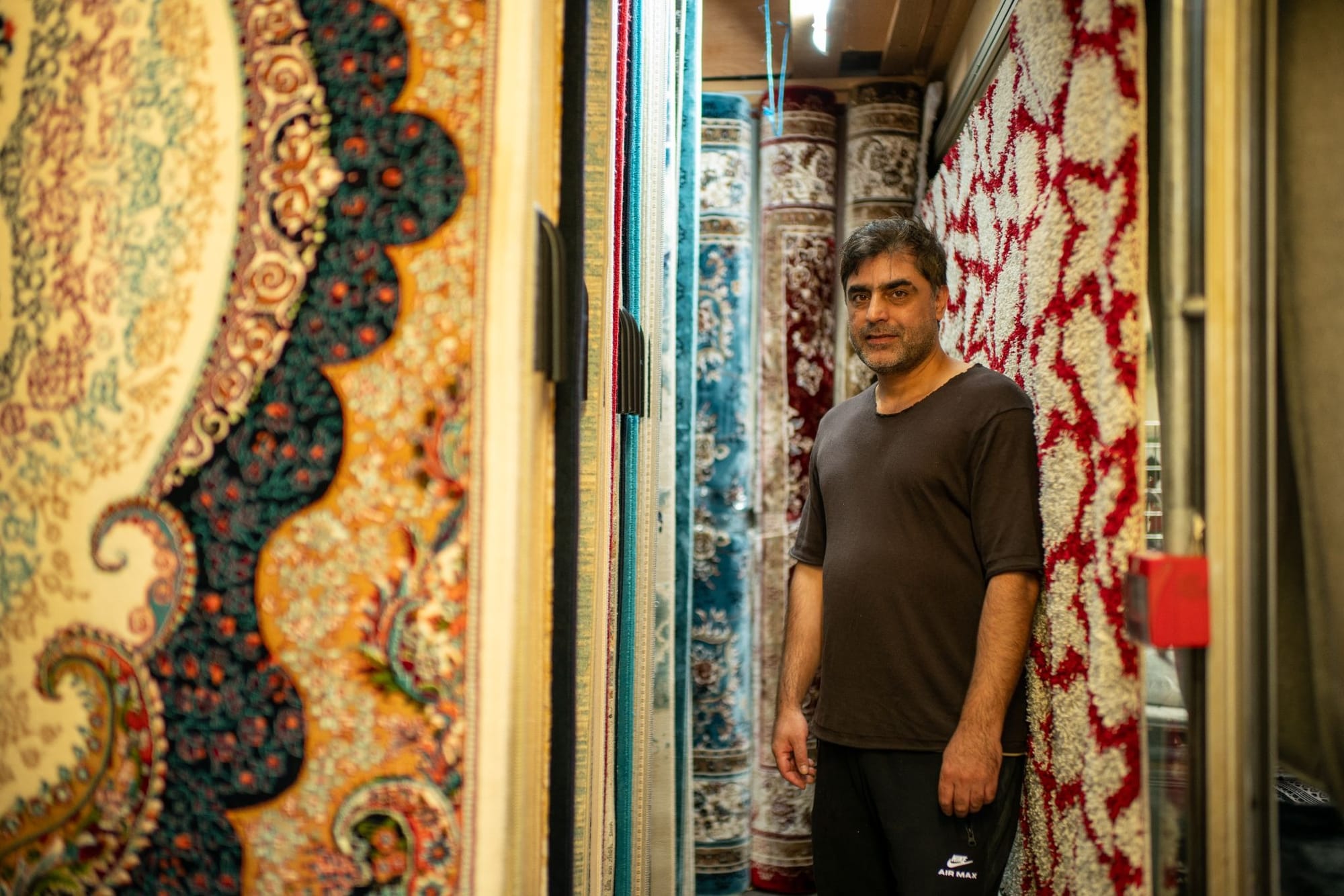
Wahid Fayed drove ubers for many years before he decided he “wanted something to change,” he says. King Rugs in Kirkgate Market — already established — seemed like the perfect way to change pace.
Nearly three years on, he’s still paying back the former owner for the business. He’s making a living, but had hoped to have paid it all back by now. For him, doing about £500 per day in sales is enough to cover all costs and have something to take home, he says. Today’s a good day: he’s done £450 so far — but not every day is like that.
“When I first got the business, it was not too bad, but it’s gone quiet day by day, week by week,” he says. He has loyal regulars, but now people who would have replaced their rugs every few months are waiting much longer, he says. His showroom offers everything from finely-patterned Persian stunners at £250, to cheap and cheerful mats. He reveals that his best sellers include inexpensive Versace- and Christian Dior-branded toilet mats. "People like this," he says.
He’s happy he’s made the shift from driving. He can walk to work, he has regular hours, and he can call on his children to help out if he has to be elsewhere. “It’s not a hard job, actually,” he says. “It’s a clean job.”
Agata Cassama lets her scissors do the talking
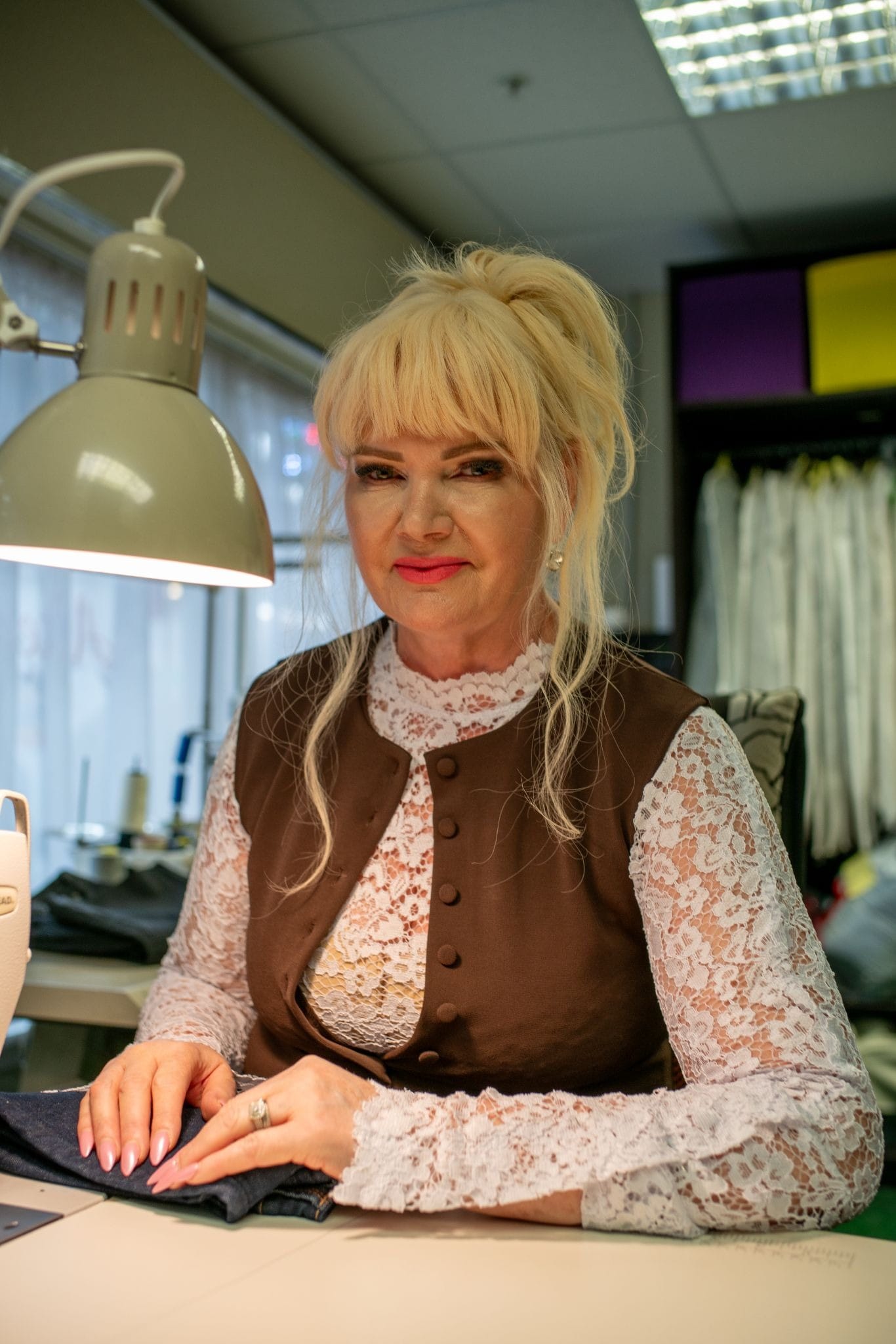
Agata Cassama, pattern designer and seamstress, first came to the UK in the early 1990s, soon after the collapse of communism in Poland. It was a “bad economic situation,” she says. But her skills spoke for themselves. She built a reputation on word of mouth, and by 2014, she had a trusted spot in Kirkgate Market. She’s readying to celebrate the 21st birthday of Vena Alterations this Saturday.
People want “a lot of stuff,” she says. “One wants shortened trousers, another wants a dress alteration.” Her most challenging ever task was to resize a size 20 wedding dress — a complex, corset style, with a “very, very long train” to size 8. I’m flabbergasted. When I say that’s impossible, she says: “It’s possible! Remove all the stitches, do a new pattern, sew it again.”
What bothers her most is people who think she’s done nothing, because her adjustments are so invisible. Of all the market traders I’ve spoken to, Agata is perhaps the most sanguine about the future. Perhaps it’s because, whether in rich or poor times, we’ll always need high-end clothes adjusted, and our old rags repaired.
I’m committed to neutrality as a journalist, but I’ll allow myself one polemic: places like this are really special and you should support them. So get down there and buy a fish, for god’s sake. Get a zip replaced. Buy a cheese offcut, or a lunch that isn’t Gregg’s. Get your lighter engraved. Because, while the traders I spoke to are managing, times are tough, and there’s a bunch of empty stands to show for it.
 Brad Deas