
It’s the early 90s in Altofts, nighttime, and fifteen-year-old Richard Wheater and his younger brother are being shaken awake by their dad Tony. Tony has just got back from the pub, where he has heard a strange fact about electricity pylons. He excitedly tells his sons to get dressed and help him test it out.
Tony reaches up into the curtain pelmet in the living room and unscrews a fluorescent tube. Then he leads his two sons through the dark for about 10 minutes, to the base of the nearest pylon, which hums with electricity. There, Tony tells Richard what to do next. The teen gingerly stretches the tube towards the fizzing pylon. And there it is. As the electricity in the air interacts with the tube, the gases inside glow up, as brightly as they would if connected to the mains.
“Maybe unconsciously that created a bit of a spark,” Richard says. “It certainly felt magic to me.”
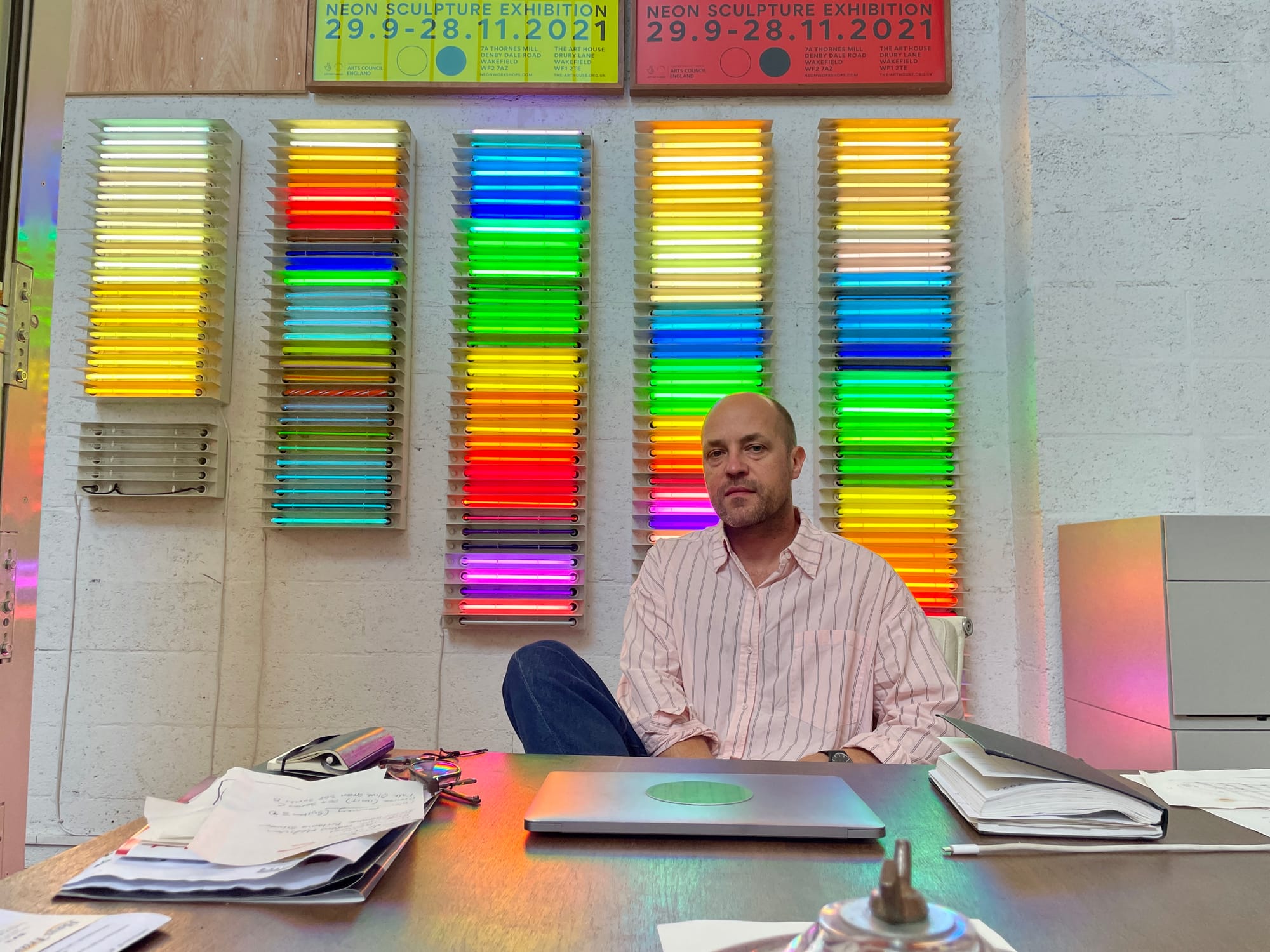
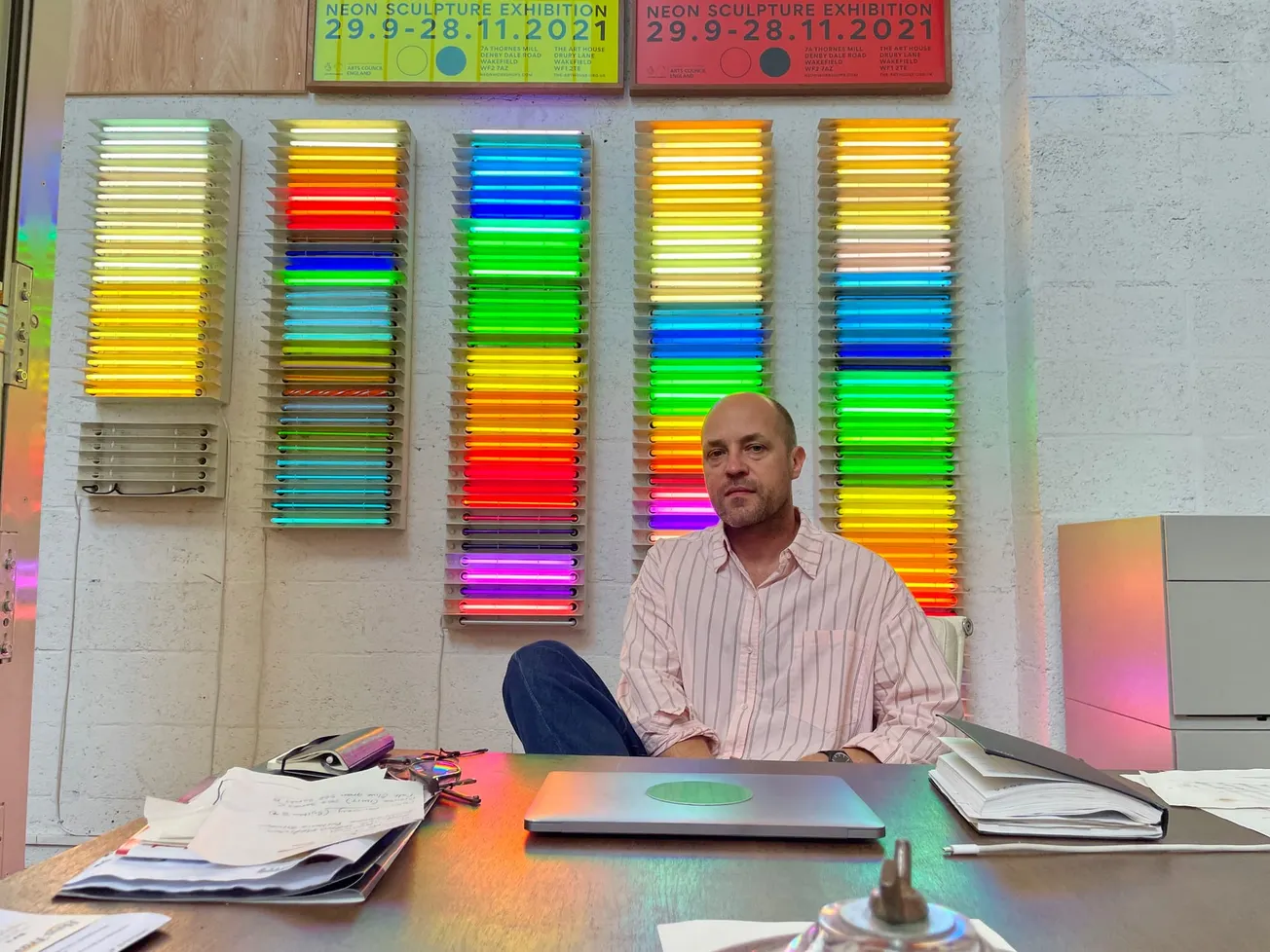
Richard has devoted his career to the same family of glowing tubes. He works in neon, both as a contemporary artist and as the owner of Neon Workshops, a large studio and training space in Wakefield devoted to the preservation of the art.
Neon signmaking is officially on the Red List of endangered crafts, the odd one out among a bundle of oldy-worldy pursuits like basket-work, scissor-making or coopering. It’s “disappearing like wildfire,” says Richard. “It's just going so fast.” When he first started training, “there were about 12 neon shops in Leeds,” he says. Now, he estimates there’s about three left in West Yorkshire. Nationwide, per Heritage Crafts, there are just 24 businesses operating — and “most of those, it'll just be some guy operating out of a garage with a mobile phone,” Richard says. When it opened, Neon Workshops was the only place in Britain to offer classes. Nobody in the UK is currently in formal training, and many are ageing out of the profession. The art form looks poised to die out.
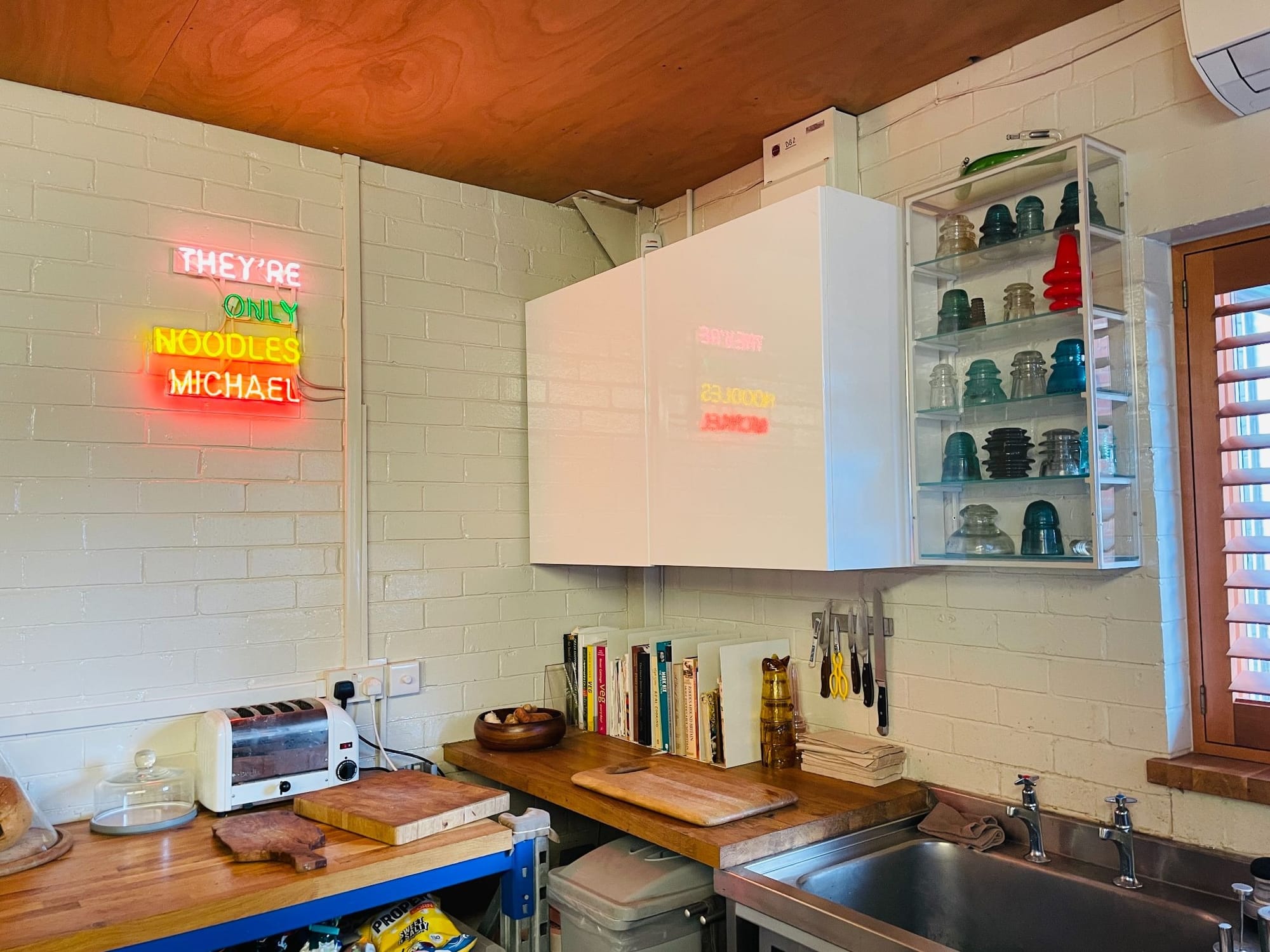
Most crafts die when people stop wanting the thing. But nobody fell out of love with the neon aesthetic. If anything, its appeal has broadened — from being the ultimate symbol of commerce, futurism, and sleaze throughout the 20th century, it’s more recently been Live-Laugh-Loving its way into homes, YouTuber backdrops, and vape shops throughout the 21st.
The only problem for Richard is: that stuff is almost never neon. It’s what’s come to kill neon.
A 'blaze of crimson light'
At the tail end of the 19th century, British scientist William Ramsay and his student Morris Travers beheld a kind of light that no eye on earth had yet seen: the potent red glow of neon gas as it is electrified in a glass tube. “The blaze of crimson light from the tube told its own story and was a sight to dwell upon and never forget,” Travers wrote of their discovery. The scientists had long suspected that normal air contained traces of what are now called noble gases: their combined efforts found or isolated neon, argon, xenon, krypton, radon, and helium — each of which, when isolated and electrified, produce a different-coloured glow.
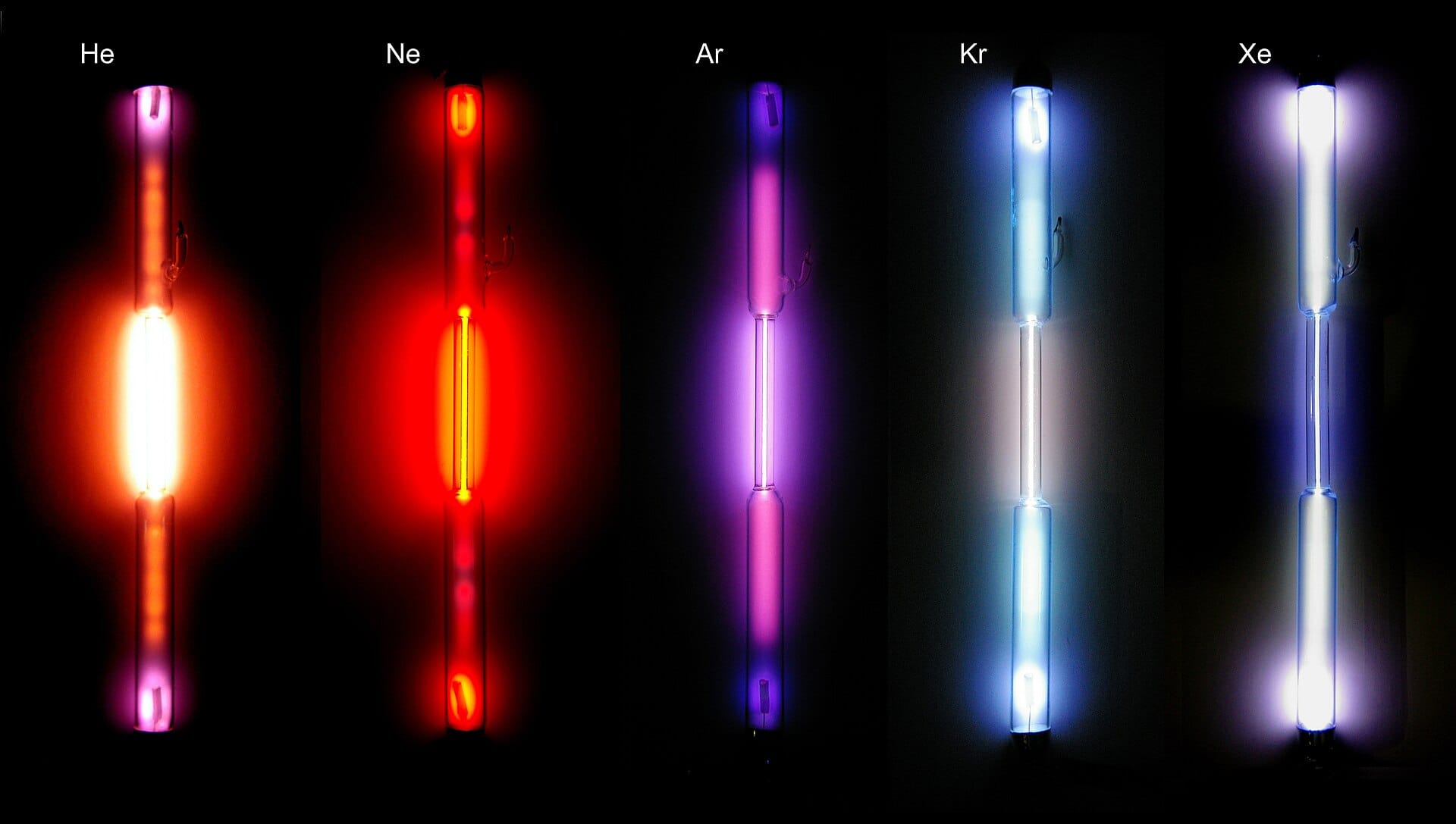
The discovery totally changed the look of the century that would follow. The first use of neon lighting — at the Paris Motor Show of 1910 — blazed into a world mainly lit by flickering gas lamps. Shops clamoured for its eye-catching properties in a lurid arms race, and a new signmaking industry quickly sprang up to serve it. Neon, which only glows red, became the catch-all term for a plethora of combinations of electrified noble gases and phosphor-coated tubing to produce a vast rainbow of possibilities.
Jack Timmermans, the son of a Dutch lightbulb-maker and newly trained in the craft, was part of that boom. In 1936, he set up the massively successful neon department at Leeds-based sign shop Oldham Signs, the largest in a growing local trade. They started taking on contracts for huge and elaborate bent-glass works that would illuminate the fast-growing Middle East. Soon, much of the world was lit up by West Yorkshire.
And so was Leeds, says Richard. “The Headrow was just awash with neon. We're not just talking like a bar or a club. We're talking laundrettes, or a cobblers. They would have massive neons in the windows, sometimes animated, and they were beautiful, creative, imaginative.”
“There were always orders there,” Chris Timmermans, Jack’s son, tells me. When his time came to join the family trade, he loved the jobs they took on: like the Foster’s sign at Piccadilly Circus, and much of the signage for Tetley breweries, which for a long time, shared a parent company with Oldham Signs. “We were knocking neon out night and day for the majority of major sign companies,” he wrote in a memoir of his career, which spanned several companies.
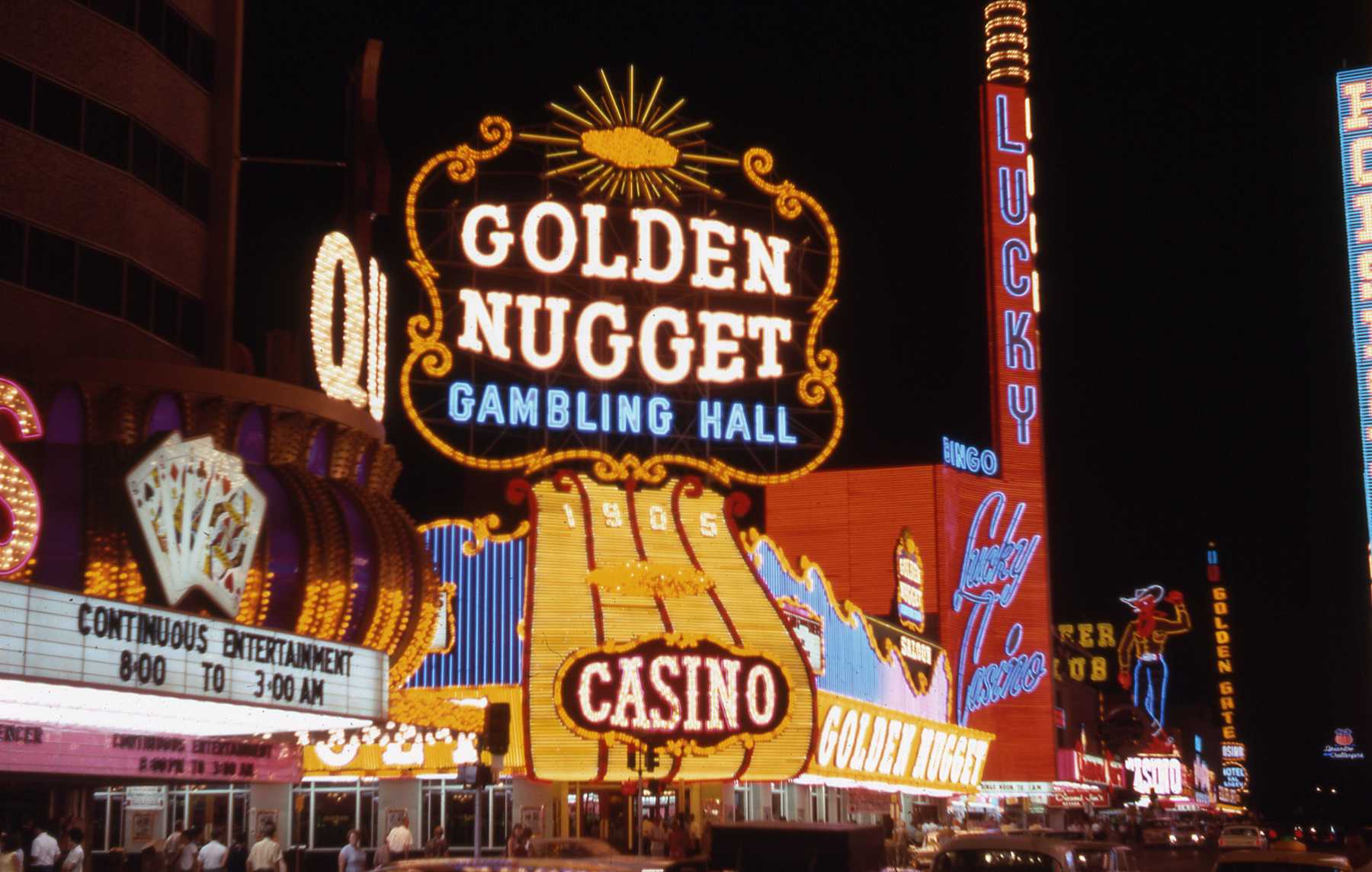
If there’s one material — one experience — that encapsulates a century of commerce, consumption and urbanisation, it’s neon. “There hasn't been another material that's infiltrated our culture more,” says Richard. Nothing quite says “noir” like the sizzle of a detective’s sign reflected on a rain-splattered New York street; nothing speaks of illicit pleasures like Las Vegas’ arid glow.
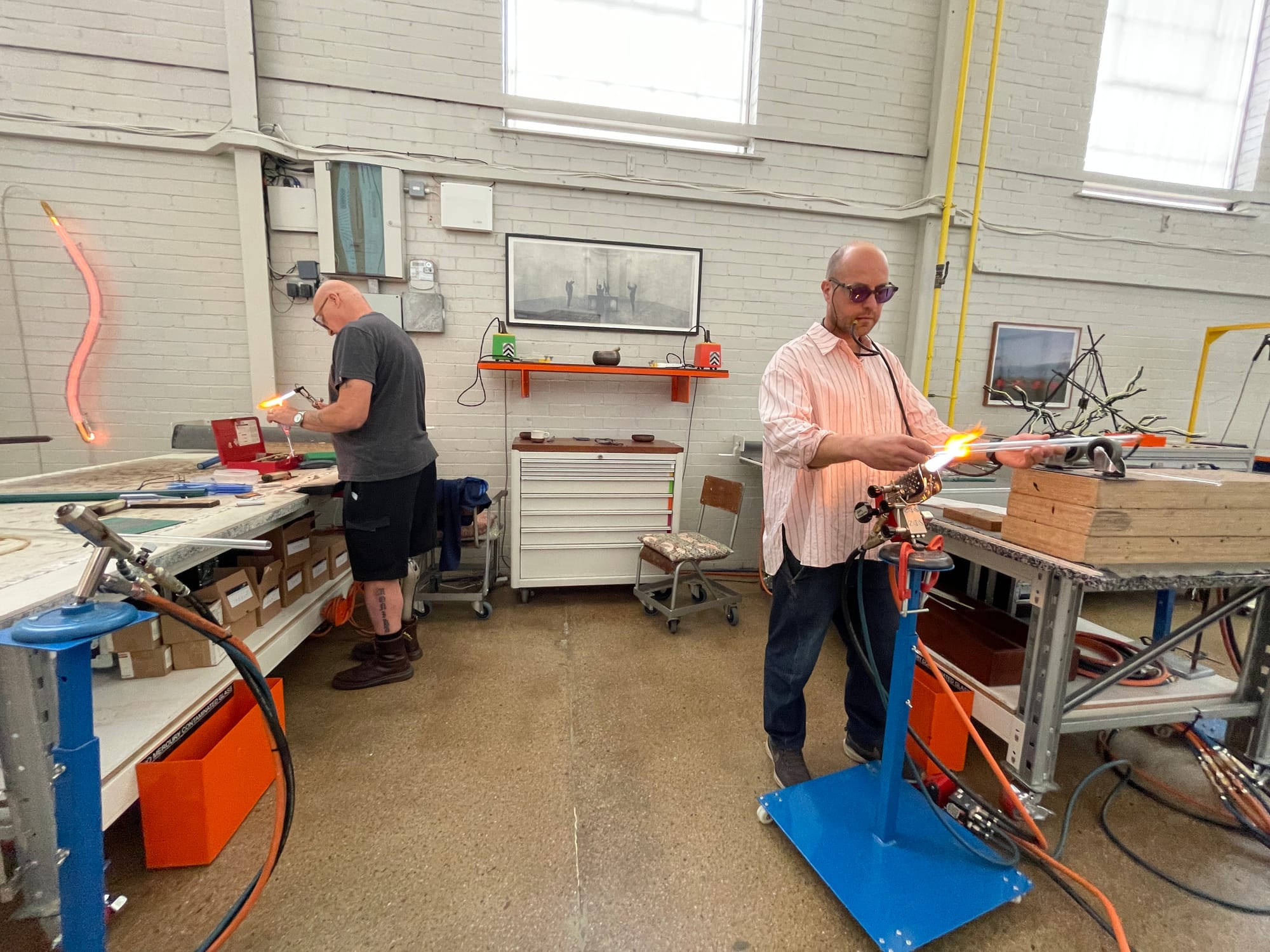
Today, Chris has retired, and many of the companies he worked for — including Oldham Signs — are gone. But he can’t keep himself away from neon: When I visit Neon Workshops, he’s popped along on his bank holiday to help Richard with a series of artworks he’s making.
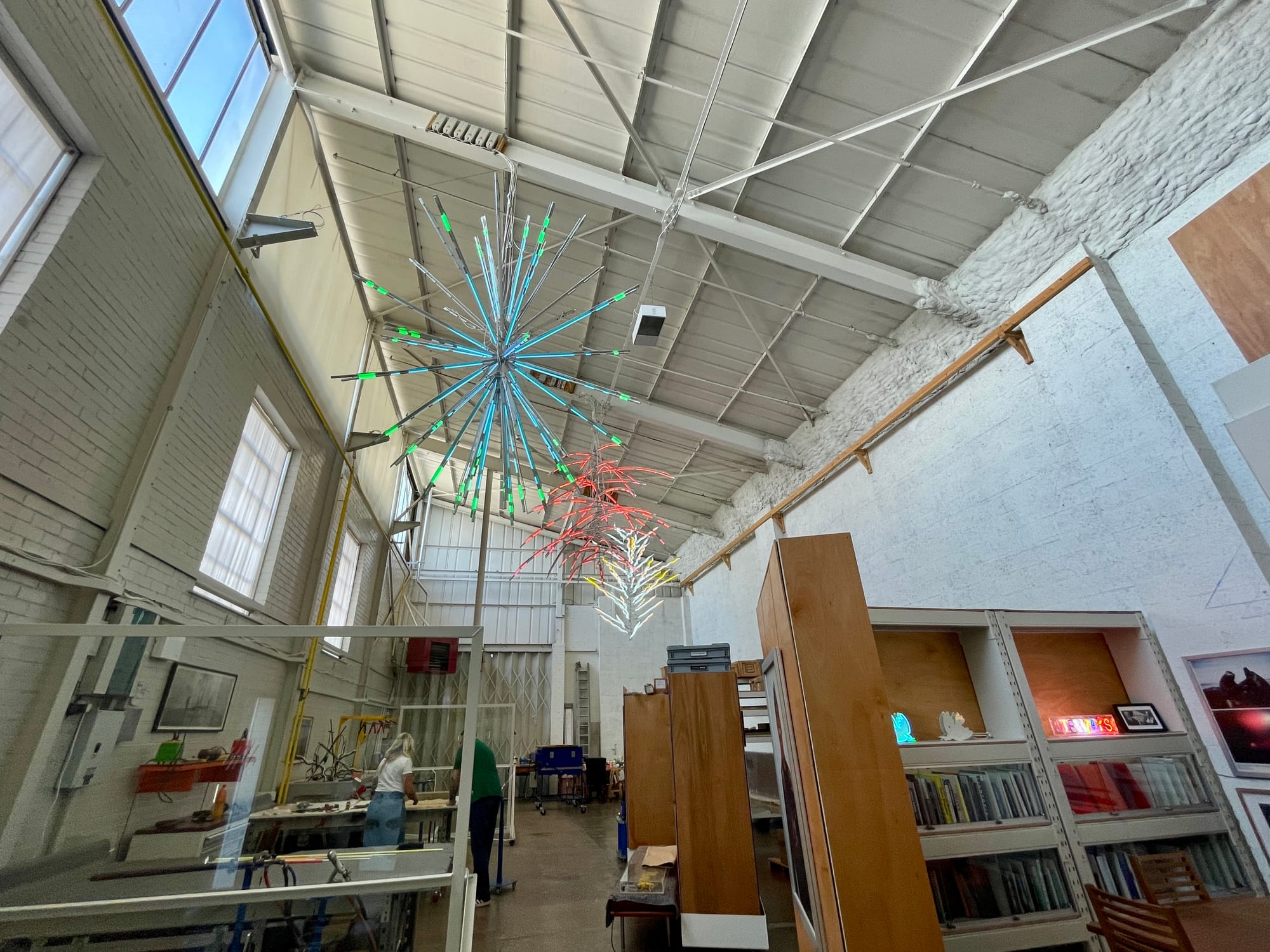
For a few minutes after my arrival in the vast white workshop, I hover to watch the pair of them, each with a rubber blow hose dangling from the corners of their mouths, as they turn clear glass tubes over bluish flames to delicately add the bulbous shapes needed for one of Richard’s pieces. Above us are suspended large neon installations that look like jagged bursts of fireworks trailing into the air. There’s quiet background music, the gentle roar of the flames, and — every now and again — a massive bang.
“That’s oxygen," says Richard. “Sometimes you get a little build-up.” It happens, apparently.

Hi, Mia from The Exchange here. If you're enjoying this piece and would like to see more on-the-ground local journalism, you can sign up to get articles like this sent to your inbox for free.
To become a neon maker requires mastery of a number of esoteric skills: a glassmakers dexterity, a chemist’s knowledge of gases, an electrician’s grasp of voltage, and an artist’s eye (Richard shows me a selection of twenty shades of white alone). Oh, and you need to be happy working with mercury and open flames.
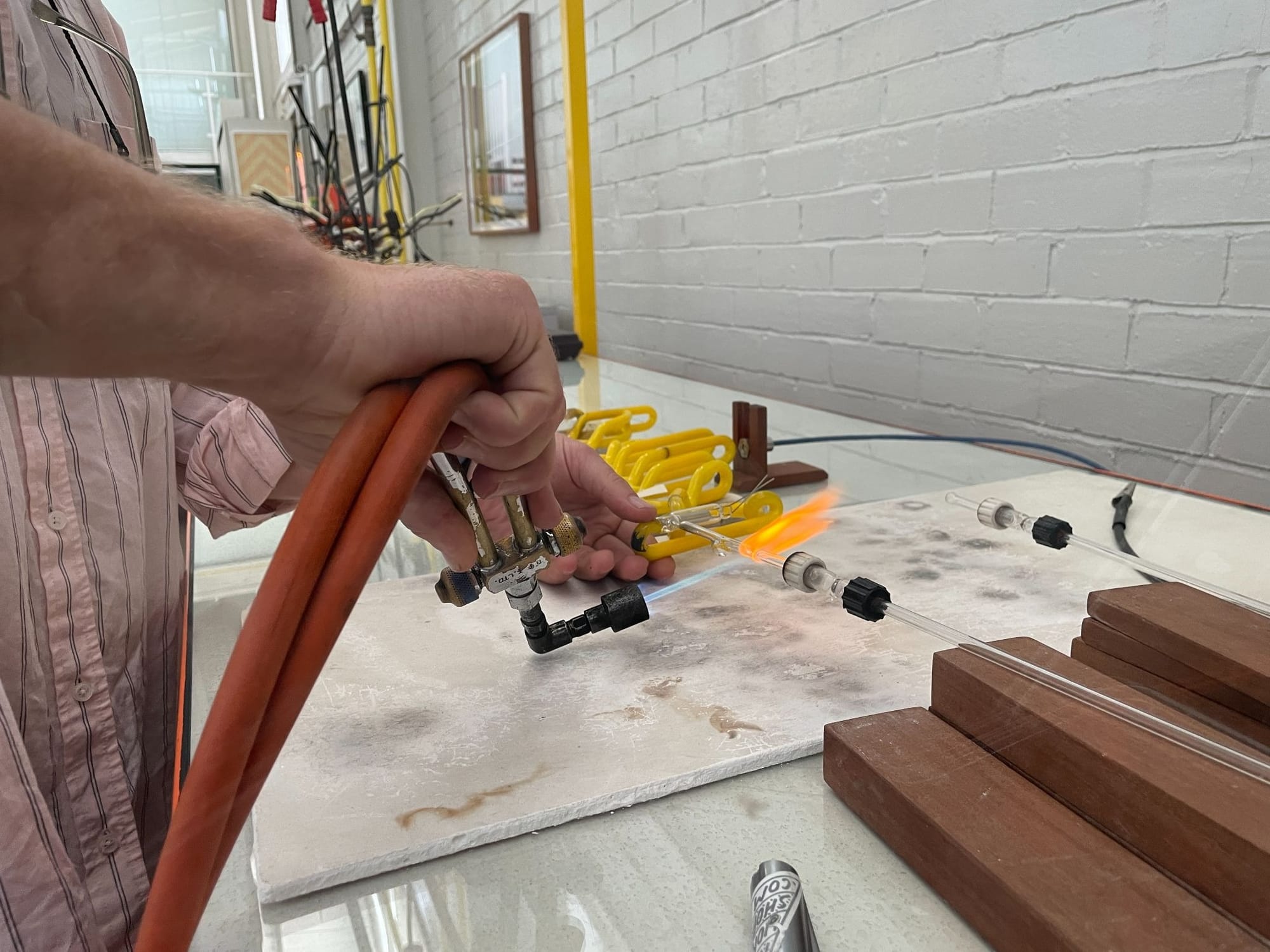
Richard picks up a small yellow bar sign he’s repairing (the “pulled” in “get your coat, love, you’ve pulled”) to demonstrate one of the industry’s key processes. Before it is filled with gas, any neon tubing needs to undergo the combined attentions of a vacuum pump and an electron bombarder. This cleans the final bits of microscopic dust and minutiae that remain inside the glass tubes before the pure gas is pumped in and sealed. Otherwise the product will be unreliable, and will fail faster.
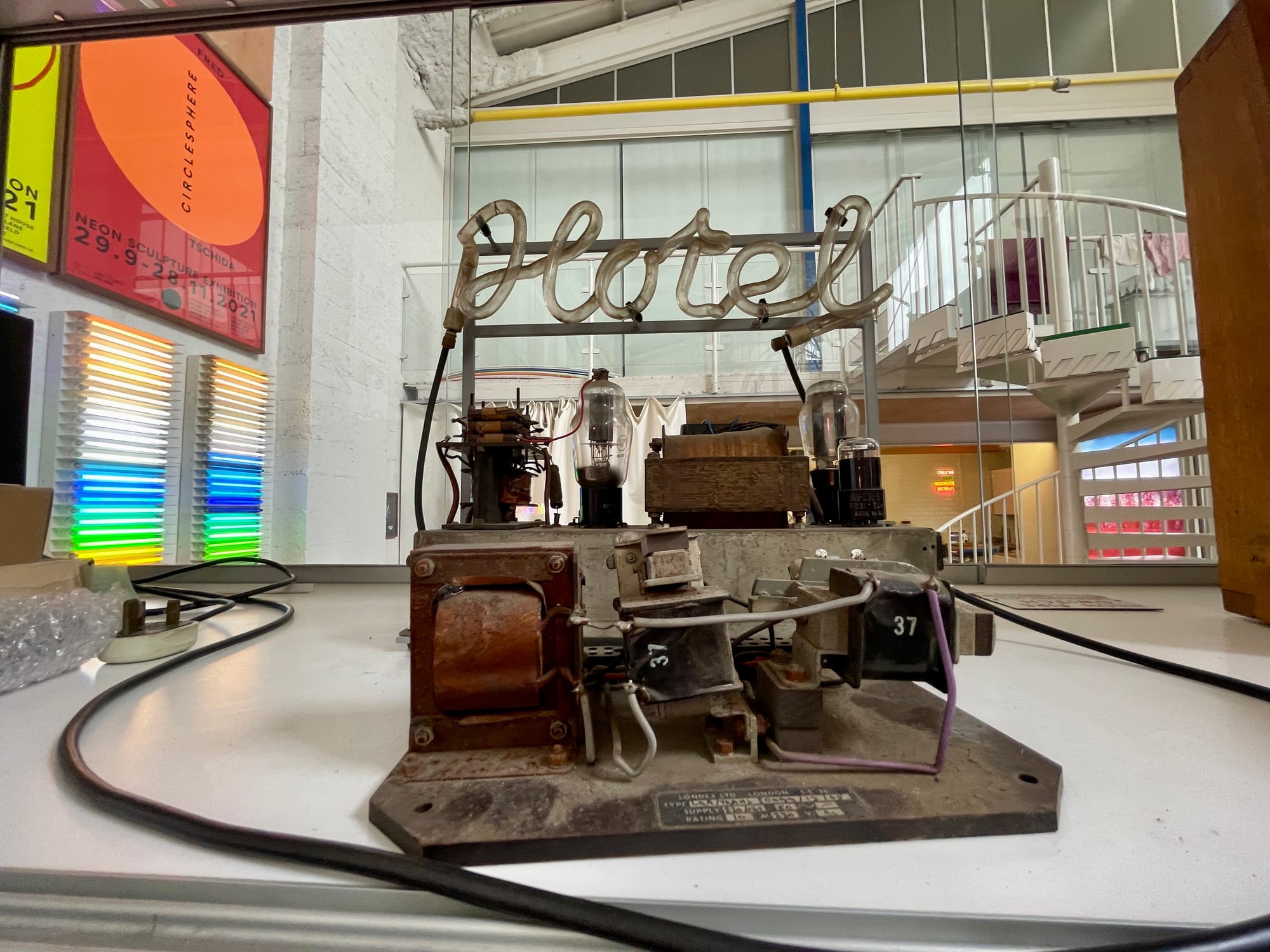
If you want to get into neon, you’ll need one of these electron bombarders: a horrendously complex (and expensive) dishwasher-sized machine. Richard built his own. Now, using his “life savings,” he’s developing another machine that does the same job, but is smaller and simpler to operate and take on the road — one possible key to saving the industry. But the accessibility of neon is not the industry’s biggest problem. A cheaper, more energy-efficient technology is turning neon makers into an endangered species.
The rise of Big LED
Chris first noticed the change in the early 2000s. “I messed about with them quite a lot actually,” he said. “It were different.” The first LEDs were flawed, but since improvements to the tech, it’s been “just LEDs taking over,” he says. “It were more adaptable. It didn’t need skilled people.”
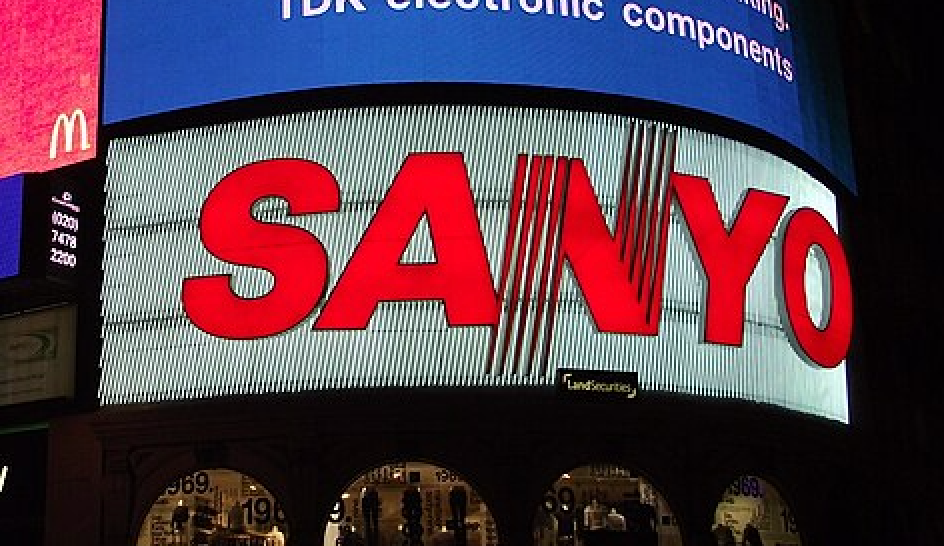
LEDs have been on an absolute tear. The last neon sign in Piccadilly Circus, a Sanyo sign made by Oldham Signs, is gone. Even Las Vegas now glows largely with LEDs.
Almost everyone but neon enthusiasts is thrilled. “The first LED revolution reduced energy use worldwide — and a second wave of deployment is now taking shape,” wrote the International Energy Agency in a report this year. The environmental benefits of a globally-scaled reduction in energy usage can’t be denied, and from Europe to China, energy policy now strongly favours the phasing out of older types of lamp. This has particularly impacted cold cathode lighting — those fluorescent tubes that light up shopping malls and petrol stations — which was the neon industry’s bread and butter.
But for Richard, the rampant spread of LEDs doesn’t stop at promoting the benefits; it almost amounts to a smear campaign against neon. He suspects it's an aggressive tactic on the part of Chinese LED companies. “If you do a comparison on social media you will get trolled to high heaven,” he says.
If you seek chapter and verse on the precise pros and cons of neon vs LED today, your Google AI summary will throw up confusing results. Some, hoovered up from LED company FAQs, will authoritatively state that neon is worse on every environmental level, whether it’s recyclability, danger, toxicity, or longevity. “There's all sorts of BS propaganda from sign companies that are moving into LED, because there's way more money in it,” says Richard, adding: “The profit margins are obscene.”
Much is made of the fact that mercury is involved in making many neon colours — but as Richard points out, mercury is highly regulated, and is part of a circular economy. This is not true of the trace amounts of toxic heavy metals involved in the production of LED signage, he says. “It's all moulded into the resin, which is non-biodegradable, non-recyclable,” he said. “It goes straight in the landfill.” He also points to the massive drop-shipping industry that’s sprung up around cheap LED signs.
The long life of an LED is a selling point, but neon lasts comparably long, and is infinitely repairable — there are nearly century-old examples that have been found to still be in working order, Richard says. Neon’s defenders also say that its comparatively higher energy draw gets overstated, when you consider its brighter glow.
Rage, rage against the dying of the light
Most of Neon Workshops’ work now comes from commissions from contemporary artists and the very rich. There are few companies picking up traditional work — bar signs, the “girls girls girls” end of things.
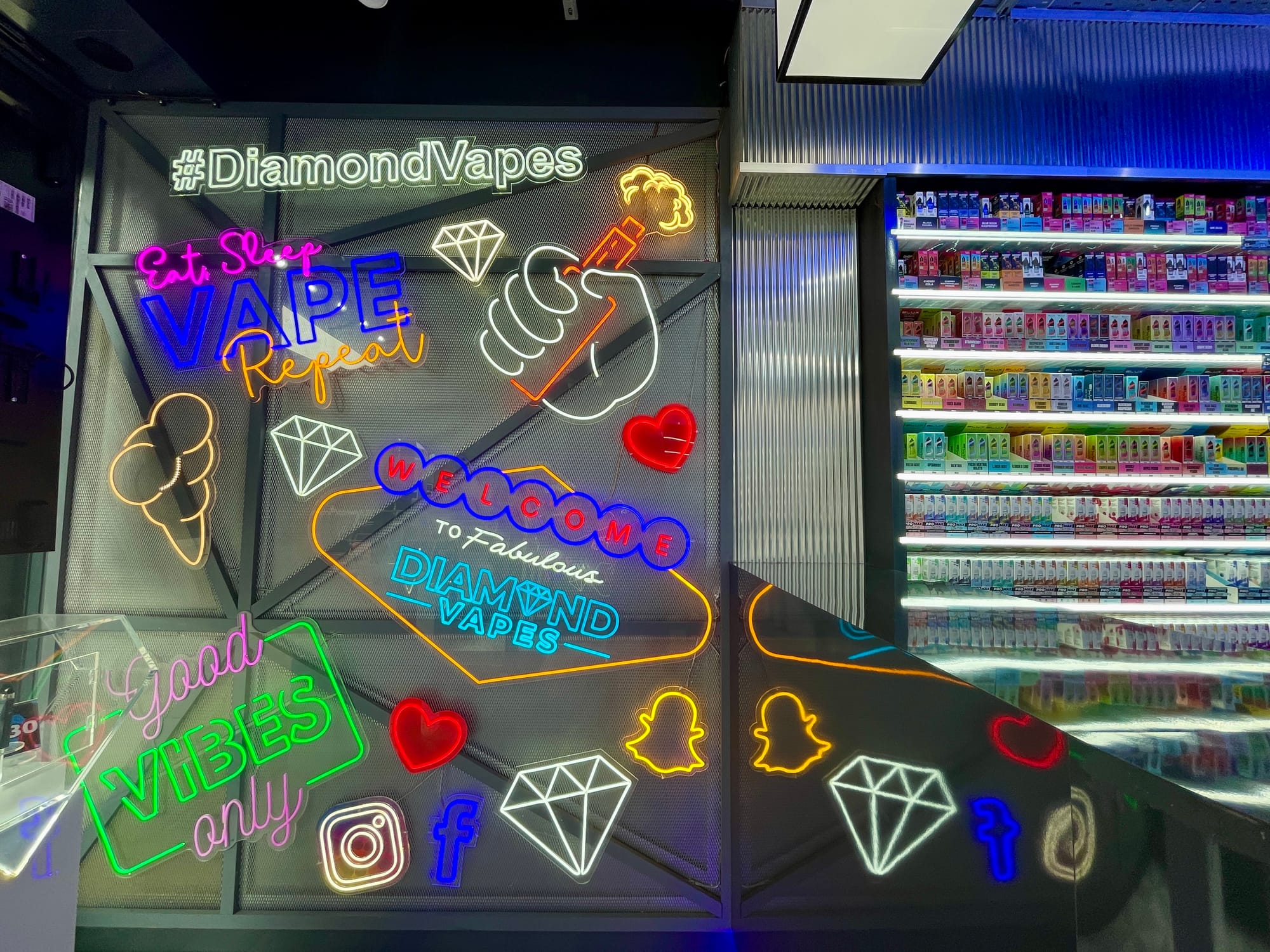
On my travels through Leeds and Wakefield, I start photographing the neon — and LED-based “neon” — signs that I see in shops, bars and restaurants. The faux-neon signs appear in more abundance in low-rent businesses like vape shops and newsagents.
“LED has managed to jump on the story of neon, because LED doesn’t have a history,” Richard adds. “They've spent gazillions on trying to mimic and copy neon, and over the last 20 years, they've come pretty damn close. A lot of that was to eradicate the craftsperson.”
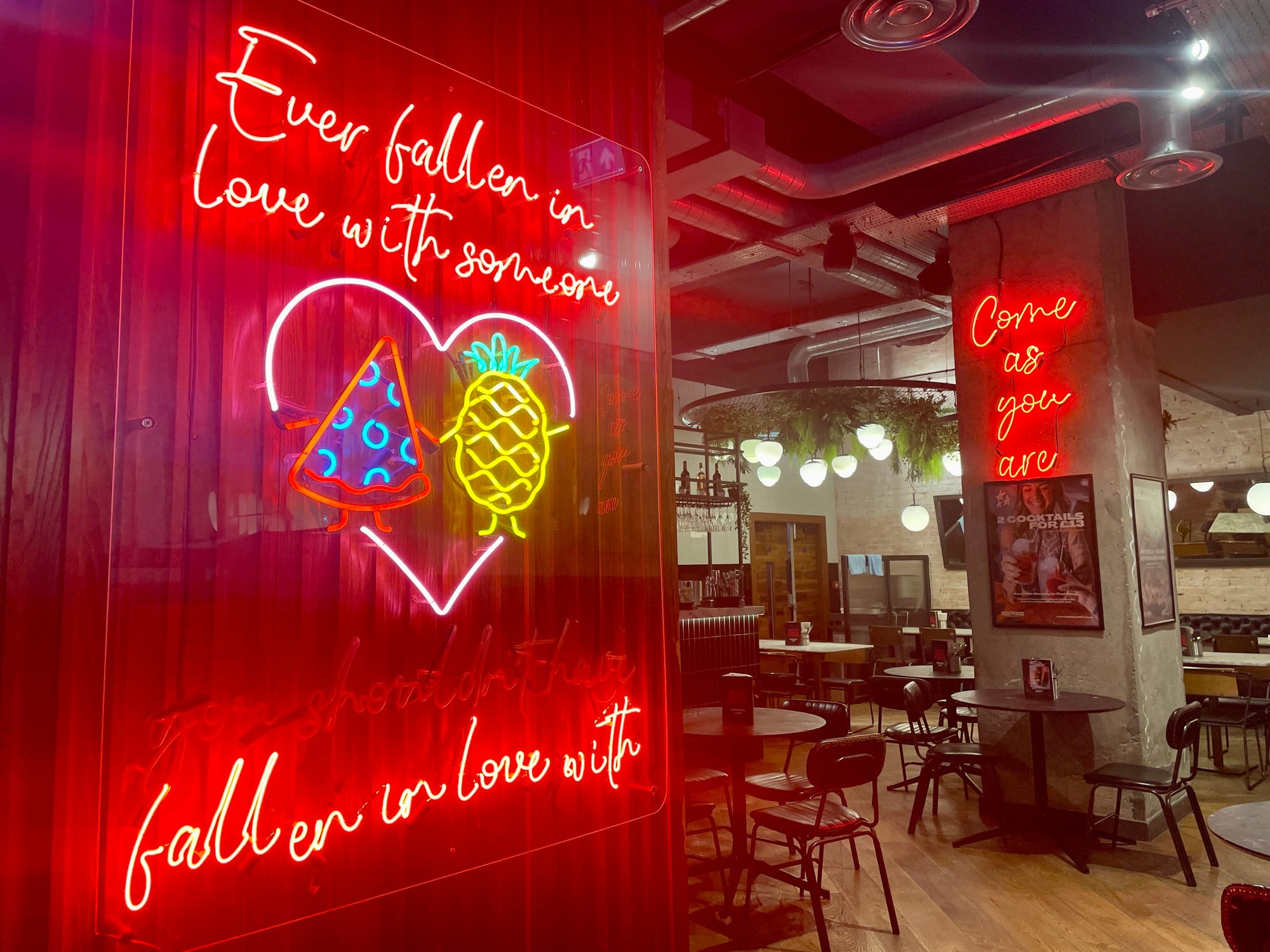
There’s an undeniable extra charm to the genuine neon I spot, which has a handmade feel, glows more uncannily, and — if you listen closely — emanates a faint electric buzz. Could the sheer, plasticky cheapness of LED “neon” be its own downfall?
I don't know. But my visit has awakened a sort of visual hunger for a light that can’t be replicated, its intensity and brightness, including the deep red glow of pure electrified neon itself. The experience, Richard says, is as primal as the human attraction to staring at flames. After decades working with neon, he's still entranced by it. “It has that head-turning capacity that no other form of light has.”
Hi — thanks for reading. If you know someone who'll enjoy it too, give us a share — it really helps spread the word about The Exchange.