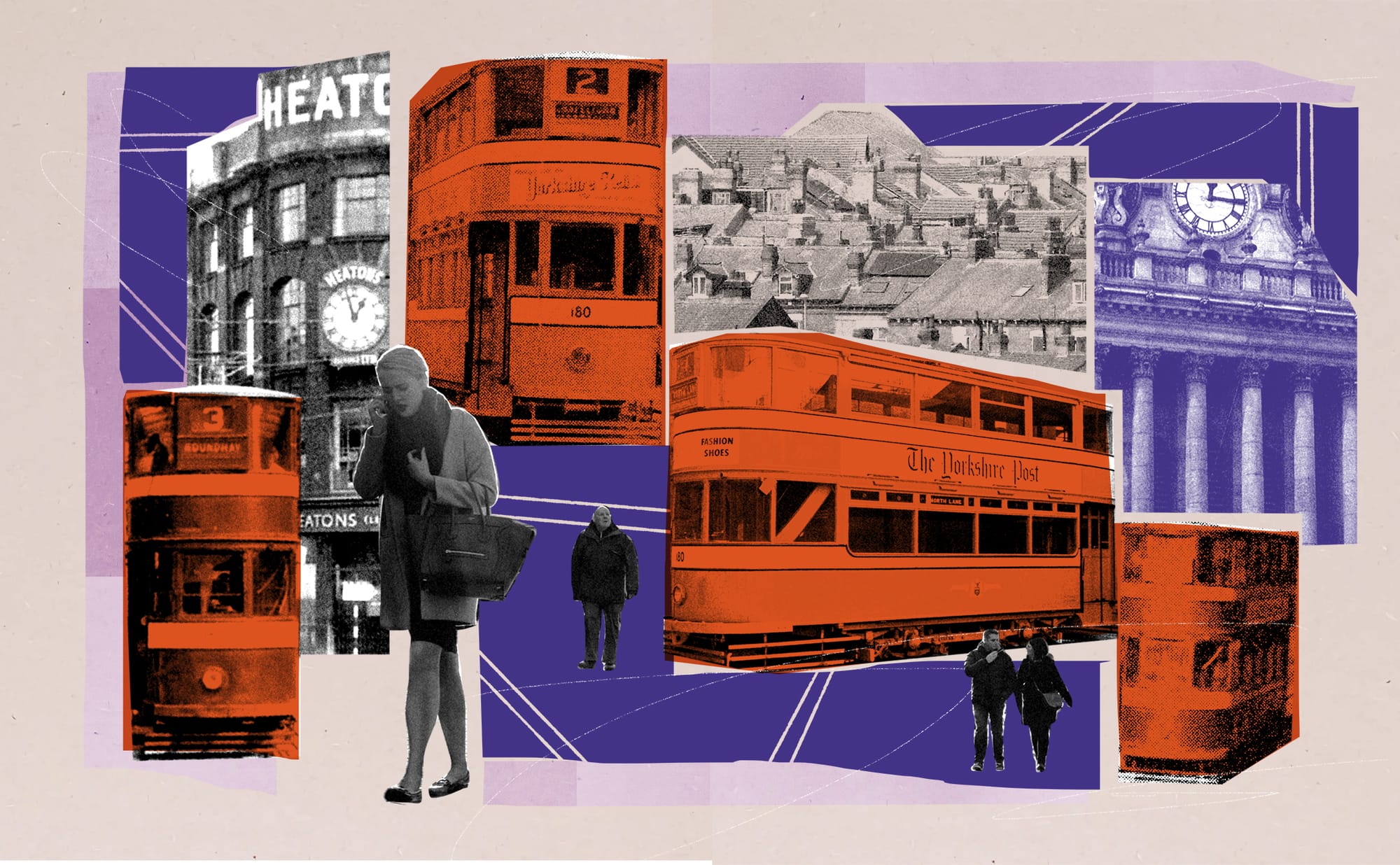

In January 2024, workers digging up Sovereign Street in central Leeds for the City Links scheme got a glimpse of a city that no longer exists.
There, 15cm below the surface, they found a set of tram tracks. The city’s residents had spent 65 years walking on top of them a few yards from the old Swinegate depot, where the last trams rolled in on the night of 7 November 1959 after 88 years of service.
It wasn’t the first time that old tracks have emerged. They were found at the Corn Exchange in 2021, at the Headrow in 2019, and on Chapeltown Road and Otley Road before that.
Between 1949 and 1962, every major British city and town dismantled its tramways — Manchester, London, Birmingham, Sheffield, and Glasgow — leaving only Blackpool’s in place. Leeds, however, took a unique, destructive path: in 1971, branding itself the “Motorway City of the Seventies”, it pioneered Britain’s first urban motorway, prioritising car infrastructure over public transit.
The consequences of dismantling Leeds’ tramways have long been a subject of debate. Now, they can be measured — and we can see who has been hit hardest by the loss of the tram network.
The shrinking city
If you stood on Briggate at 8am on a weekday in 1957, and stood there again in 2026, in which year could you reach more of the city in half an hour?
A 97-page Leeds City Transport timetable book, containing the winter 1956/57 timetable, released two years before the tram network closed, made it possible to work this out. I transcribed the whole timetable — every service, both directions — into the format modern journey planners use, and did the same for today using the live national bus dataset for June 2026.

Hi! This is Mia, one of The Exchange’s staff writers. Like a 1957 tram gently grinding to a halt at Dewsbury Road terminus, you’ve run into our paywall for this story. The rest of today’s article — including the graphics that really illustrate just how small Leeds has “shrunk” — is for our fantastic paying members.
Want to become one of them? £8.95 a month helps make it possible for The Exchange to operate without stuff like pop-up ads, clickbait, and the blizzard of empty-calorie articles that drain time and energy from the reporting that West Yorkshire deserves. Click the button below to become a superstar and gain access to 100% of our reporting.
Using an identical routing algorithm, walking model, and the latest census data, we used the timetables from different years to answer the question above.
West Yorkshire deserves great journalism. You can help make it happen.
You’re halfway there, the rest of the story is behind this paywall. Join the Exchange for full access to local news that matters, just £8.95 a month or annual deals with two months free.
SubscribeAlready have an account? Sign In