
Dear readers — two bits of exciting news this morning. Firstly, we've just passed 1,000 readers! It's incredible to see the word start getting out there. Please tell people who might like us about what we're doing, it really makes all the difference.
The second bit of exciting news is today's story is our first from Mia Jankowicz, one of our new staff writers on The Exchange. Enjoy.
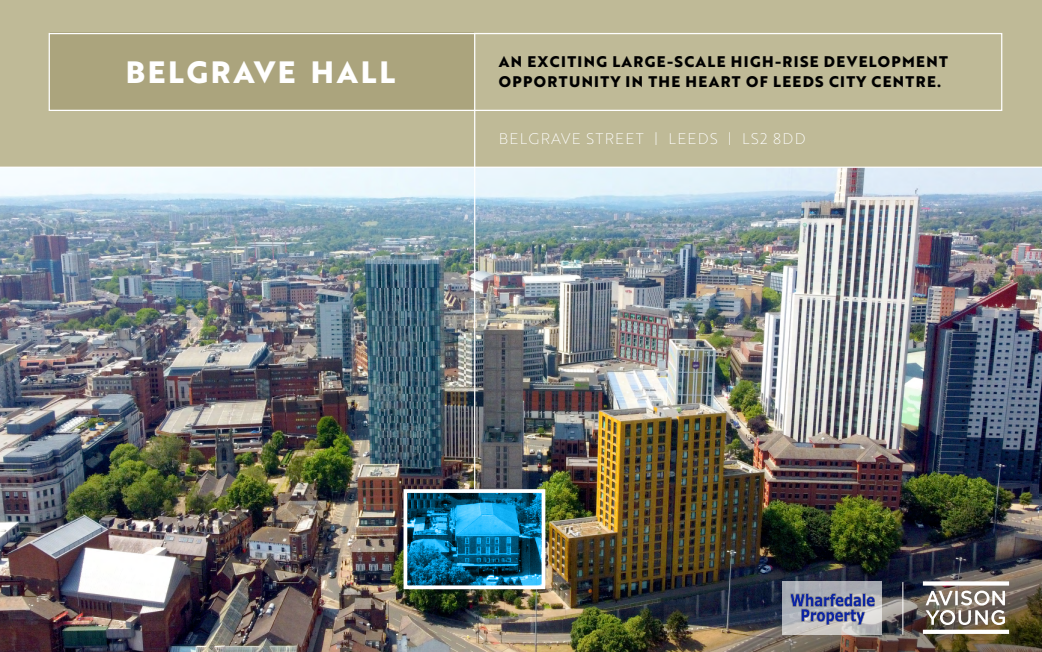
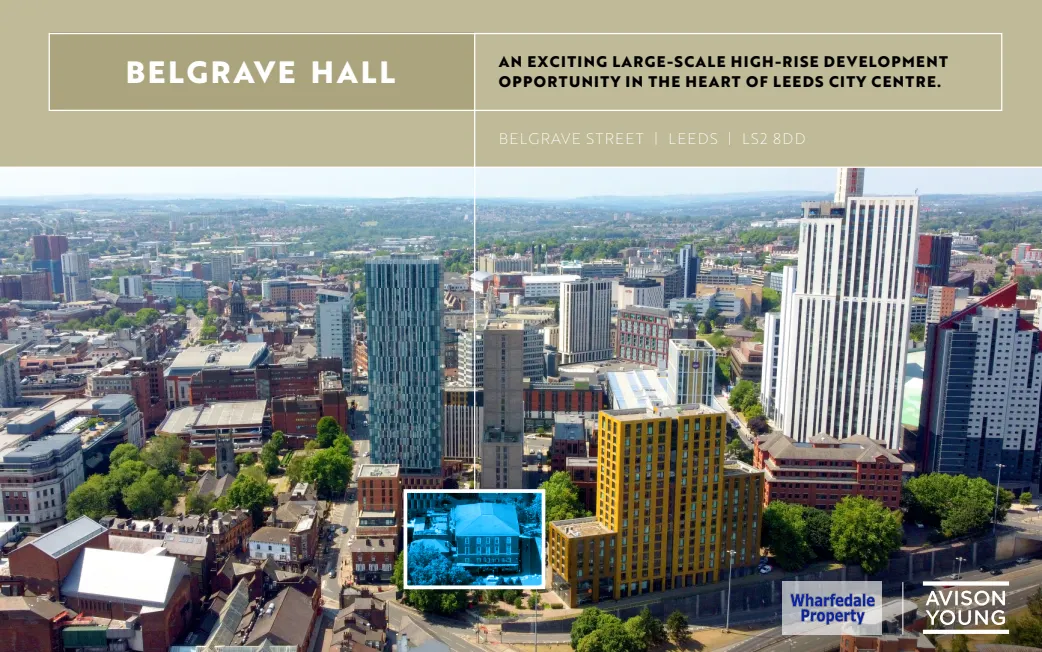
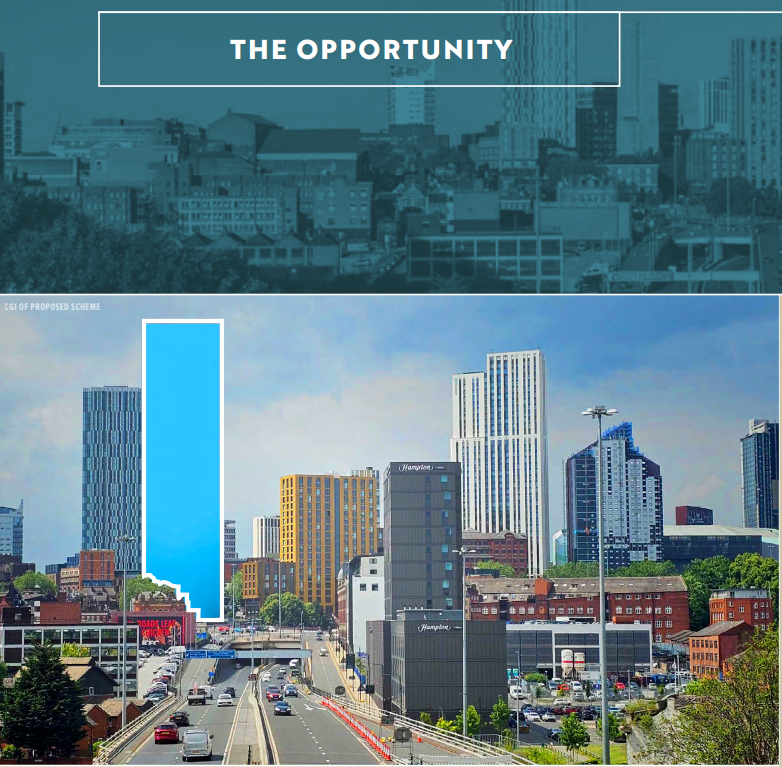
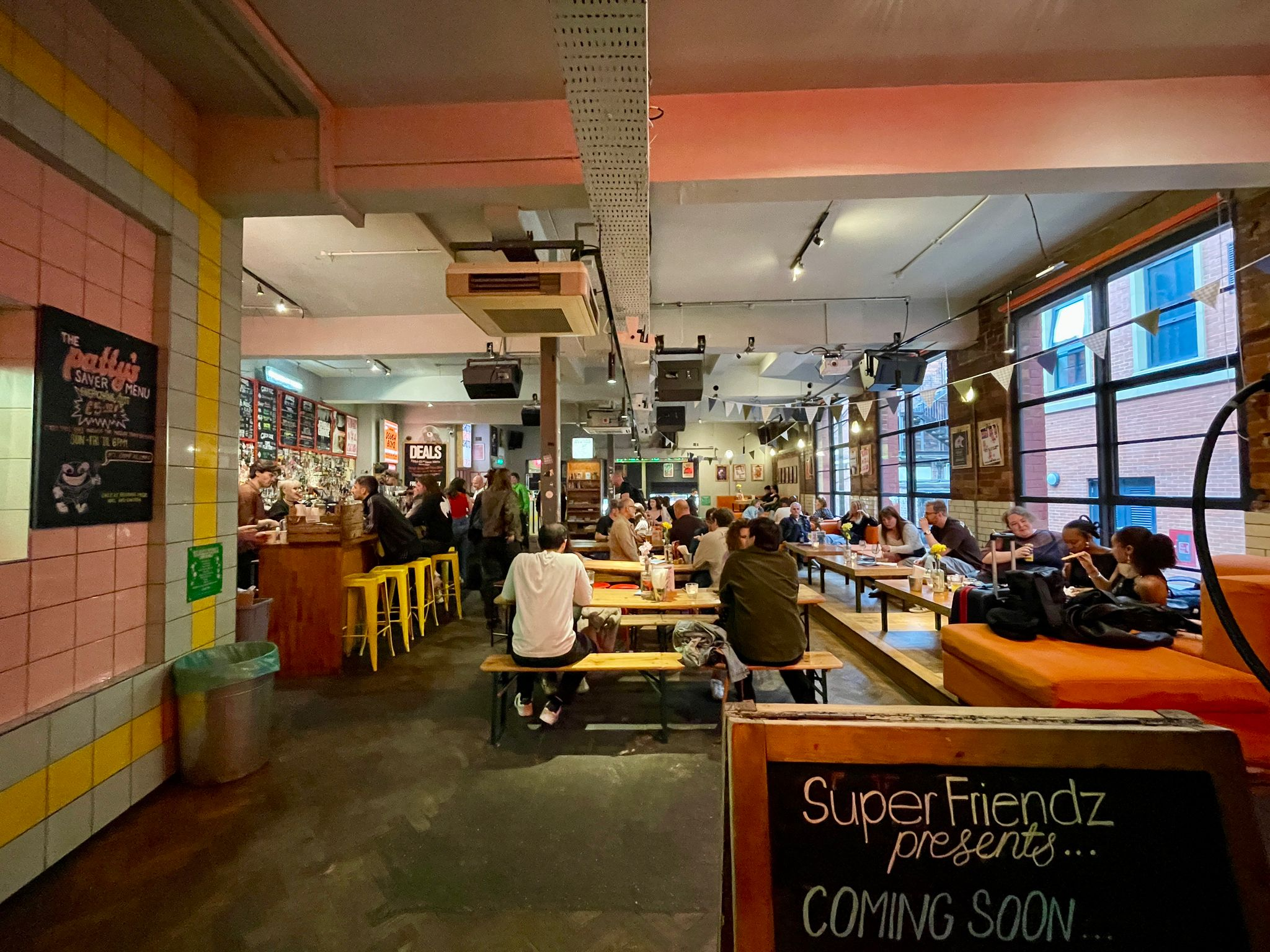
The blue oblong seemed innocuous enough, until you saw where it was going. The pdf, marked “strictly confidential”, included a picture of the Leeds skyline, with an extra tower-shaped blob hastily photoshopped in. Its location: exactly where the present-day Belgrave Music Hall and Canteen (BMH) currently stands.
Titled: “An exciting large-scale high-rise development opportunity in the heart of Leeds city centre,” the document was published jointly by the building’s owner, Wharfedale Properties, and real estate agents Avison Young.
Despite the plea for confidentiality, the document found its way onto Skyscrapercity, an old-school internet forum for development enthusiasts, which is where The Exchange found it. But even many of the fans of “talls” — forum slang for high rises — didn’t like the sound of a new tower supplanting one of the city’s best-loved cultural sites.
“I’m strongly opposed to this,” was one comment that more or less summed up the objections. “One of Leeds’ most important music/cultural venues should not be replaced with another soulless student tower.” Indeed, many rank BMH among the city’s best venues, an oasis amidst a city turning corporate. (The brochure’s mention of “the potential reintroduction of the music hall” doesn’t add much reassurance.)
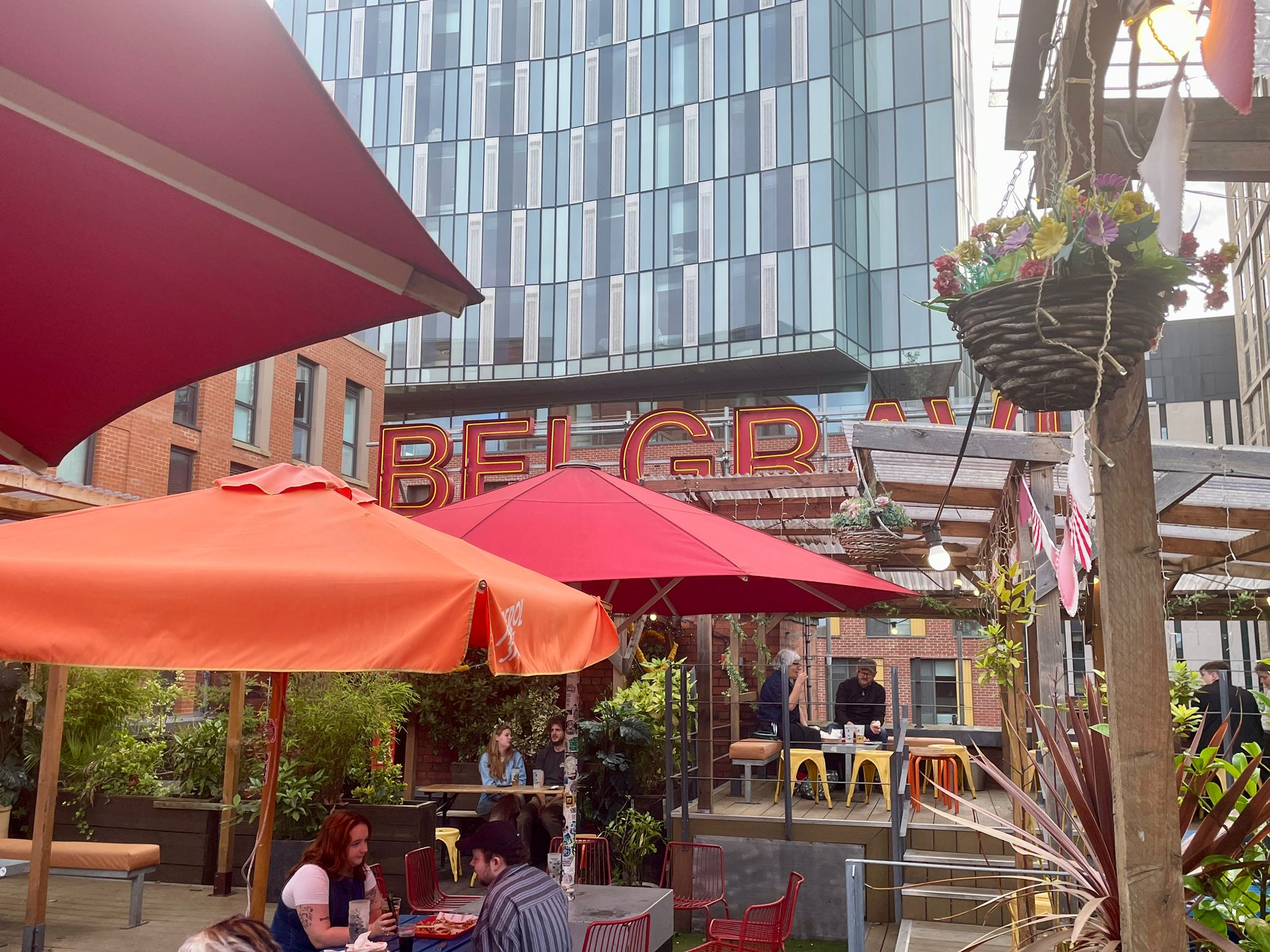
Perhaps it shouldn’t have been a huge surprise; several large student tower blocks have sprung up right next to the popular venue — most notably the 32-storey Scape tower, which casts unwelcome shade over BMH’s cherished rooftop bar. But was it actually going to happen?
Initially, Wharfedale gave my editor a brief comment suggesting little would likely happen in the next year or two. By phone and email, I followed up with them, and absolutely anybody else connected with them, but got radio silence. The company didn’t respond to a detailed request for comment.
I then asked Leeds City Council what they knew. The brochure touts a “supportive” council response to “an informal pre-application process,” but it’s unclear what that consisted of. The council, which does process pre-applications, said it had no record of one (suggesting “informal” is doing quite a lot of heavy lifting). On that basis, anyway, they had nothing to add.
But perhaps surprisingly, when I managed to track down BMH’s own business owners, Superfriendz, they were also unfazed. After some chasing, co-owner Simon Stevens told me over email that the proposal had been around for a while. “I'm not sure it's much of a story I'm afraid.”
I’ll admit that my first reaction was slight disappointment: my first byline for The Exchange and it wasn’t the scoop it might have been. My second was more public-spirited: relief that the wrecking ball isn’t coming for Belgrave Music Hall any time soon.
But my third reaction was puzzlement. Why not? The owners have obviously spotted the opportunity, and the student housing market seems to be booming. Why aren’t they getting building?
David Feeney is the student accommodation lead at property company Cushman & Wakefield. He’s also a fan of Belgrave Music Hall, and saw the proposal, he told The Exchange.
“We were expecting things to happen, and then the longer it went on, it was pretty obvious that things weren’t going to happen” any time soon, he said. It’s all come down to shifts in the market.
The Wharfedale brochure suggests several ideas for Belgrave: build-to-rent, co-living, as well as PBSA: Purpose-built student accommodation. Most of what currently surrounds the Belgrave is PBSA, and high-end student studio flats have generally been the most profitable niche of an already-lucrative market.
“If you're building a straightforward apartment, there are certain space standards that you have to meet, that aren't required for student accommodations,” said Martin Hamilton, director of Leeds Civic Trust. “You make more money. It's as simple as that.”
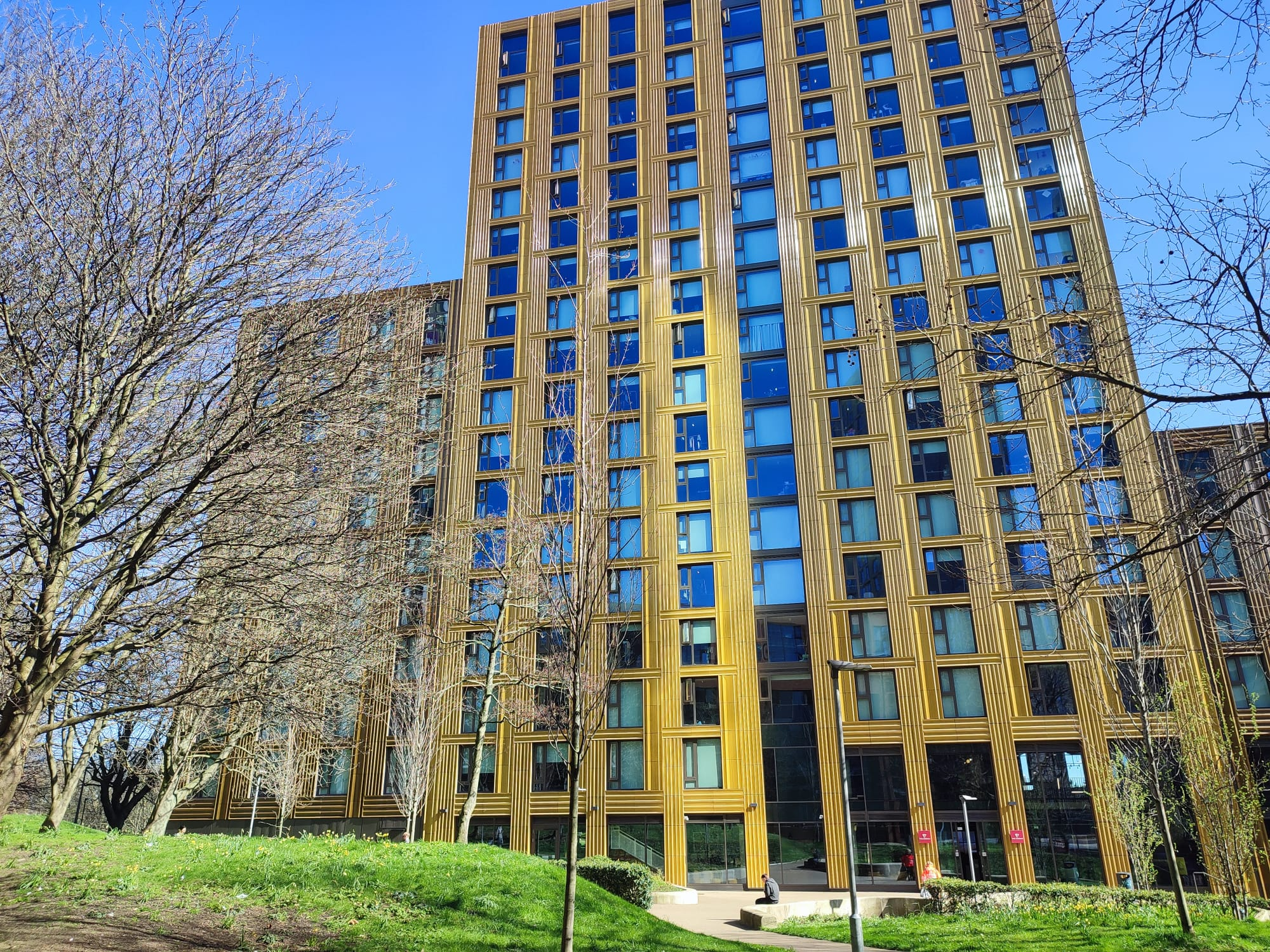
Such fancy studios are on offer in Belgrave’s neighbours Straits Aire (on the site of a former nightclub on Merrion Street), Scape (the massive tower), and Vita (swish yellow ceramic-tiled building). Amenities variously include a private gym, a yoga studio, and a movie room, on top of the apartments and self-contained studio flats, with names like “Classic” for the cheapest and “Deluxe” for the fanciest — the most expensive of which tops out at £361 per week at time of writing.
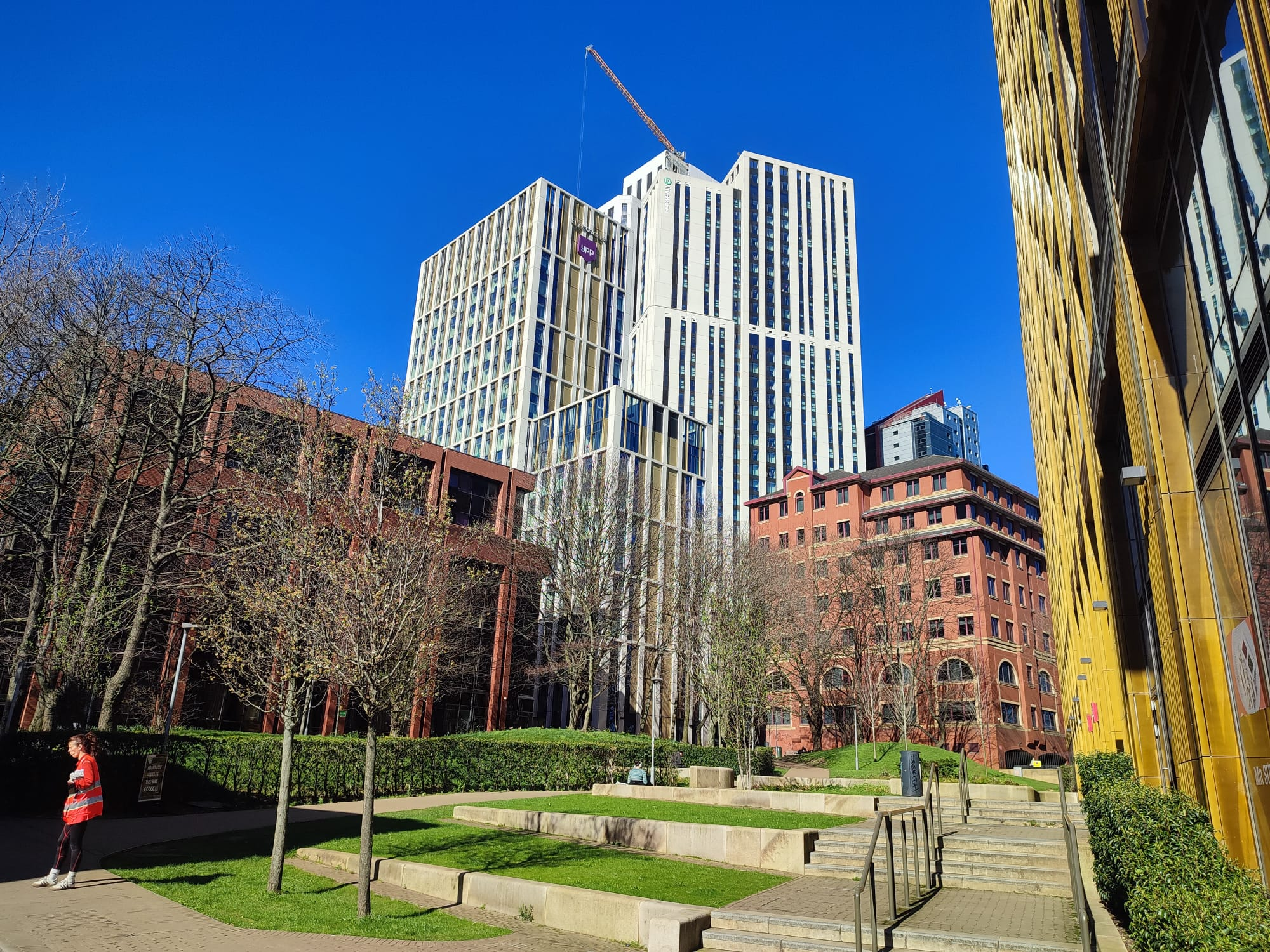
But there are signs PBSA isn’t the cash cow it once was. Threadworks, on Lisbon Street, opened its doors to students in September 2025. Just months later, it filed a planning application, spotted by the Yorkshire Evening Post, to convert some of its 548 spaces to hotel use during term time. The site has seen “fluctuating levels of demand,” the application states. With 50% occupancy currently, “full occupation is not expected over the next few years,” it adds. So what’s gone wrong?
The boom
If you’ve noticed the surge in student tower blocks, you’re backed up by hard facts. Of all the new student beds built in the UK last year, roughly one in nine were built in Leeds, according to a Cushman & Wakefield report, with the city behind only London and Nottingham.
The recent history of this starts with the relaxation of Covid restrictions in 2022. This brought such a surge in students seeking to learn in the UK that student housing charity Unipol set out to publish a massive report about the state of the Leeds market.
“There was a big growth in student numbers, and that led to accommodation shortages in quite a lot of locations,” Victoria Tolmie-Loverseed, Unipol’s director of standards said. At the time, international students — especially from China, Nigeria and India — were a reliable market. The University of Leeds, one of the city’s five main universities, had a proud place in the QS rankings of the top 100 universities in the world. (This is not the only ranking out there, but it matters hugely to Chinese students in particular — the group most likely to gravitate towards expensive studio flats.)
PBSA is attractive to international students: instead of scanning endless Rightmove listings from a foreign country, trying to work out if that blob is a damp patch or just an odd painting decision, you know what you’re getting. “It seems kind of risk-free,” said Tolmie-Loverseed.
The market looked so promising that more and more plans were drawn up. But, of course, it takes a while to build. “If you had a building opening this September, for that intake of students, you would have been starting to talk about it in 2022,” says Tolmie-Loverseed, “when we had a huge upsurge in the number of students, and demand was skyrocketing.”
The crunch
But since then, international student recruitment has taken a hit, for various reasons. One is immigration policy: most foreign Masters students can no longer bring dependents with them — a common factor for postgrads, who tend to be older and more settled in life. The length of post-study work visas have been cut, which also made the UK a less attractive prospect.
There has also been an ongoing decline in EU students following Brexit. And Nigeria’s decision to float its currency in 2023 led to a massive drop in the value of the naira — and therefore the spending power of Nigerian students.
In 2024, nationwide, student visas issued to Nigerians had dropped by 71.6%; Indians by 15.1%; and Chinese by 4.3%, compared to the previous year, according to Cushman & Wakefield.
Domestic students, who might also consider PBSA, have faced a financial squeeze. The maintenance loan uplift has not kept pace with inflation, and the first real-terms increase in tuition fees in years came last year.
This means two things happened at the same time: much more student housing came onto the market, at exactly the point when the number of students was beginning to fall. What had previously been a — very healthy, from developers’ perspective — 2.15:1 ratio of students to available beds in 2022, had plummeted to 1.64:1 by 2024.
That’s still more students than beds. But that’s before you consider one other issue: type.
6,579 new student beds came online in Leeds the last five years, per Cushman & Wakefield — but astonishingly, almost 99% of them were for “the same upper high-end area of the market,” Feeney said, i.e. luxury flats. There’s been an extraordinary uniformity in what has come forward. “We think only a relatively small number of students want to live in them,” Tolmie-Loverseed told The Exchange.
Feeney believes that many developers wouldn’t have taken this route — but building became so expensive that the only route to profitability was to squeeze maximum cash out of every square inch.
We can cast some blame here on Vladimir Putin. Build costs — reliant on supply chains disrupted by war — have soared along with energy prices since the full-scale invasion of Ukraine, Tolmie-Loverseed said.

“Everyone was dealing with the inflationary pressures of a post COVID period,” Feeney added. “I'm sure not all developers wanted to deliver that exact same type of product, but it was the only way they could get things to stack up at the time.”
In all likelihood, this will lead to a self-correction in the market, Tolmie-Loverseed said. And while these aren’t fun times for developers, rents are going to have to come down in the meantime — good news for students. In fact, it’s already being felt: Leeds is one of a handful of UK student cities that has seen a drop in rents over the last year, by 3.4%.
“The PBSA market has to reckon with this problem,” Tolmie-Loverseed said. “If they want to continue to rent these buildings, they’re going to have to think about affordability.” From the perspective of developers, Leeds’ last half-decade has been a “cautionary tale,” Cushman & Wakefield wrote.
It’s me, hi, I’m the problem, it’s me
By sheer coincidence, I’ve had a first-hand glimpse of the ripple effects of this housing boom during my own search for somewhere to live, while moving to Leeds for The Exchange.
My nephew is a Leeds University student who kindly let me use his vacated Unite student halls room while I flat-hunt. It gave me a glimpse of what the rather more basic end of PBSA looks like (and if you’re reading this, Joseph, you need to clean your kitchen).
My sister is annoyingly well-to-do. But when she was looking at options for her son’s accommodation, even she balked at the cost of the high-end studios on offer. (One of the reasons she was so happy for me to stay in Joseph’s room was to, I quote, get her “money’s worth” out of the roughly £8,500 it’s cost to rent for the year.)
Meanwhile, in order to grab the lovely Headingley flat I’ve finally settled on, I realised quickly that I had become part of the issue: one of the many of the city’s professionals vying to rent in the same comparatively affordable on-street housing spots sought out by students. That crossover in demand has long been a talking point.
“What can’t be allowed to happen is for these blocks to wind up sat empty, whilst disabled and single people are already desperate for somewhere to live,” said Helen Page, who campaigns on the issue. “PBSA helps meet student demand, but it doesn’t provide affordable or accessible homes,” she added. She’s concerned about their future use, and whether they can at least be converted if student demand doesn’t recover.
Hamilton says that Leeds Civic Trust asks this question of every new PBSA building proposal that crosses his desk. If the overseas student market collapses, “Can you convert it into regular apartments? Can you convert it to offices, or whatever it might be?”
For this reason, he believes more recent developments have started to take this into consideration. “I think now the developers themselves are kind of aware of that issue — that, at some point, it might not be a student block, it might have to be something else,” he said.
It all suggests that the high-end student housing surge may have reached its peak, at least for now. And next time developers build, they might aim at a slightly less flush consumer. “A slightly, you know, Premier Inn sort of option,” says Hamilton. “Rather than a Hilton option.”
What do you think? Will the student housing market get back to the boom times, or should we start repurposing some of these buildings now? Let us know in the comments.
If you found this article interesting, then please share it. It helps so much to get the word out about what we're doing.