

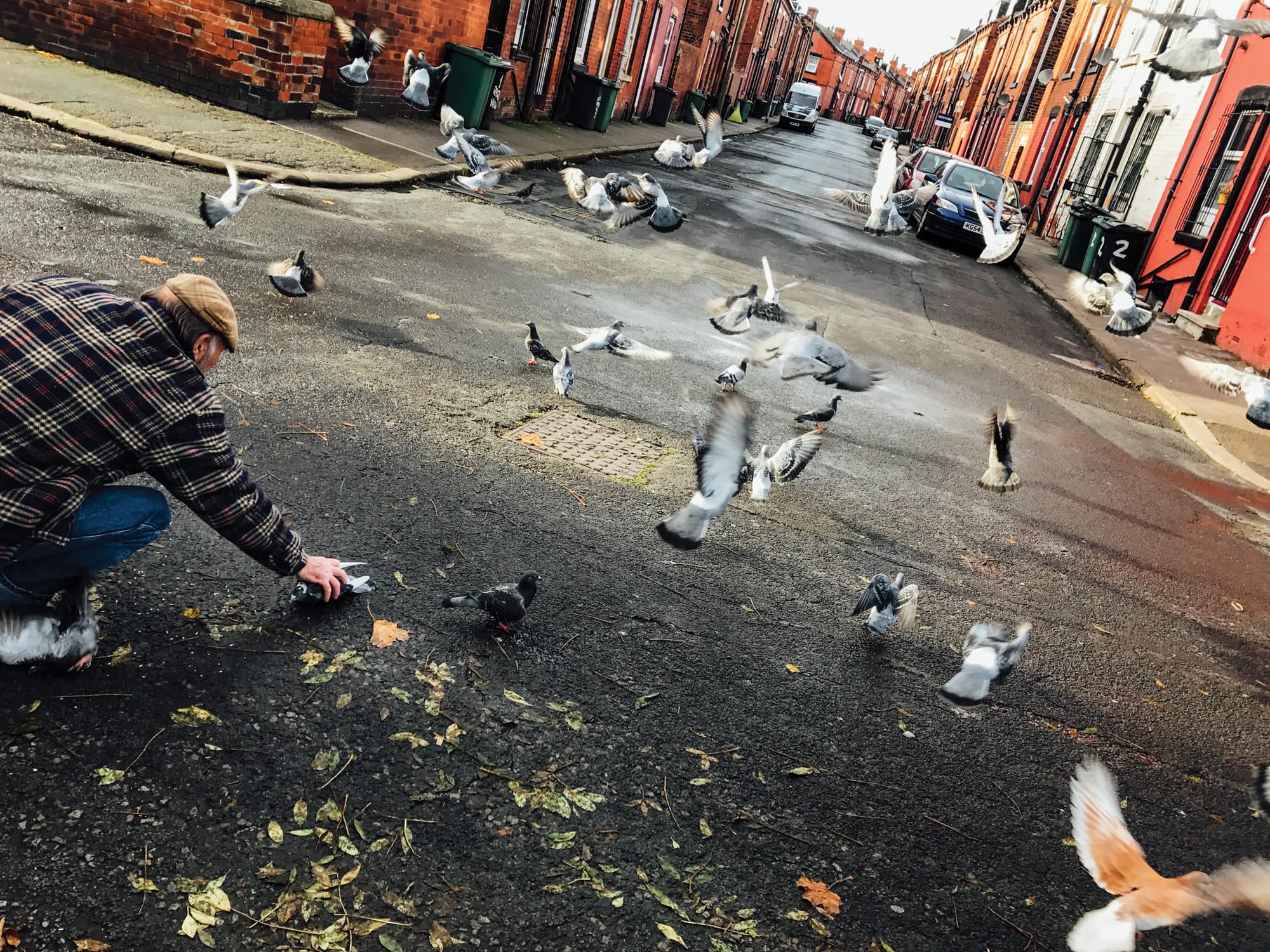
One Sunday morning on the terraced streets of Armley, a flat-capped man in his late fifties parked up in his van and began flinging massive quantities of birdseed out of its open back doors.
“There was a huge flock of pigeons,” Ricky Adam tells me. It was probably about 2014, he thinks. He had been on his usual bike ride round the city when he came upon the scene, and here, he whipped out his camera. “They all came down, and they were pecking the birdseed … he was sort of getting closer and closer to the pigeons.”
Suddenly, the man grabbed a bird “quick as a flash,” stuffing it into a wicker basket in the back of the truck. “And then got in the van and drove off.”
“I was like, ‘what the hell just happened there?’”, he says.
Perhaps it was a stray racing pigeon being returned to its fancier. Perhaps it ended up as dinner. It was one of the stranger encounters Ricky experienced in 20 or so years of cycling round the terraces of Leeds with a compact camera in his pocket. “I suppose part of me felt a bit pigeon-like in a way, sort of flapping round the city with a camera,” he says.
Ricky’s talking to me from Groomsport, County Down, where he moved in January to be back with his family. But between 2003 — when he moved to Leeds as a photographer for DIG BMX magazine — until the end of 2025, he pulled together a distinctive chronicle of life in the Leeds’ brick-lined terraces.
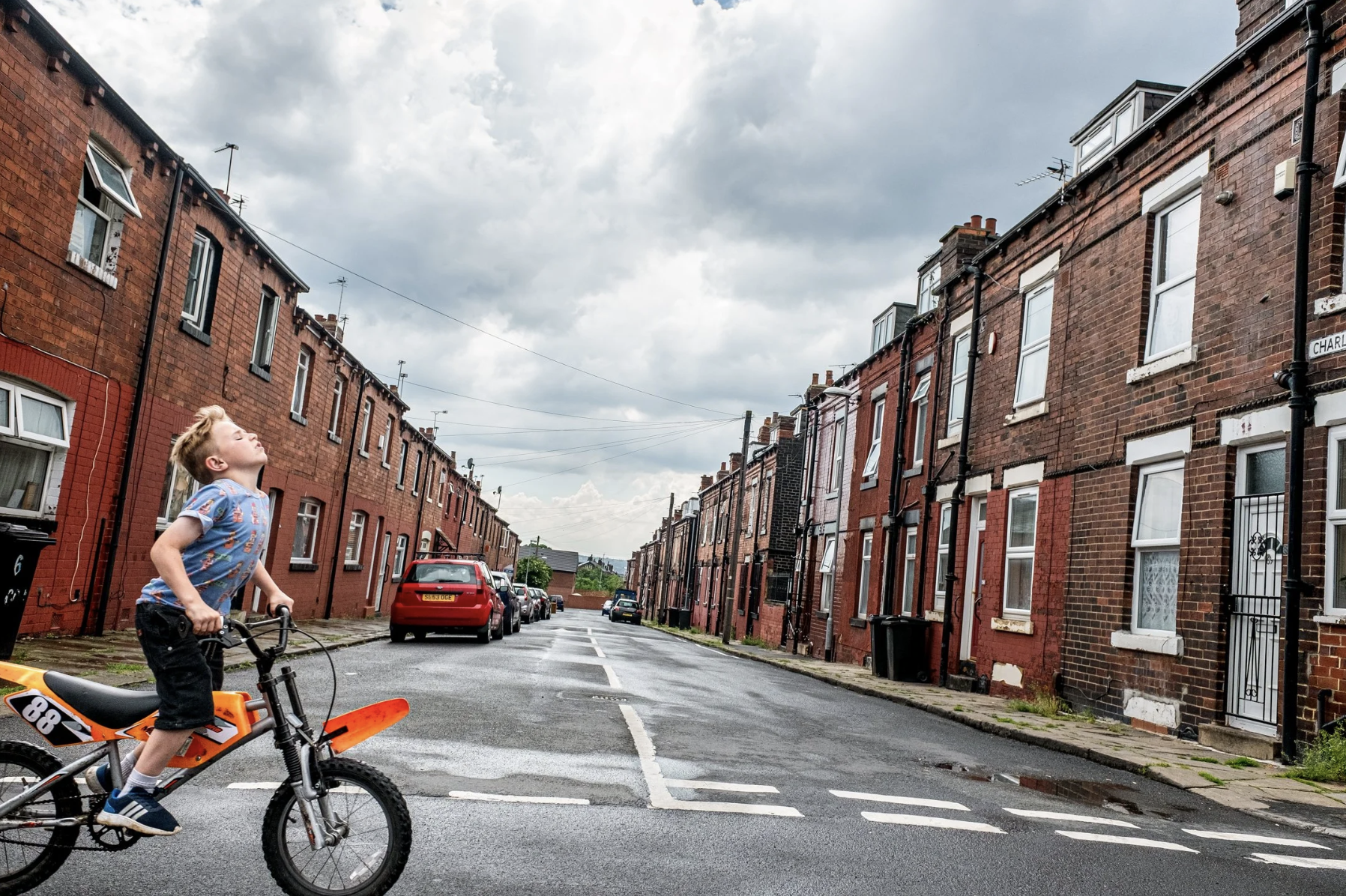
In 2025, the images were brought together in Back-to-Back. But, he says, he never set out to produce a book — the photos were split-second, opportunistic captures, sometimes from his commute to work, but mostly from weekend bike rides around the city’s “giant donut of red bricks” — taking him from his home in Hyde Park, through Armley, Beeston, Harehills, Chapeltown, and Woodhouse.
He’d been struck by how much the city reminded him of the work of his favourite photographers — Shirley Baker, who shot Greater Manchester in the 1960s, and Tom Wood, who documented Liverpool from the 1980s. Leeds “was like: whoa, this is like being in the middle of a Tom Wood-slash-Shirley Baker photo,” he says. “I couldn’t not photograph it.”
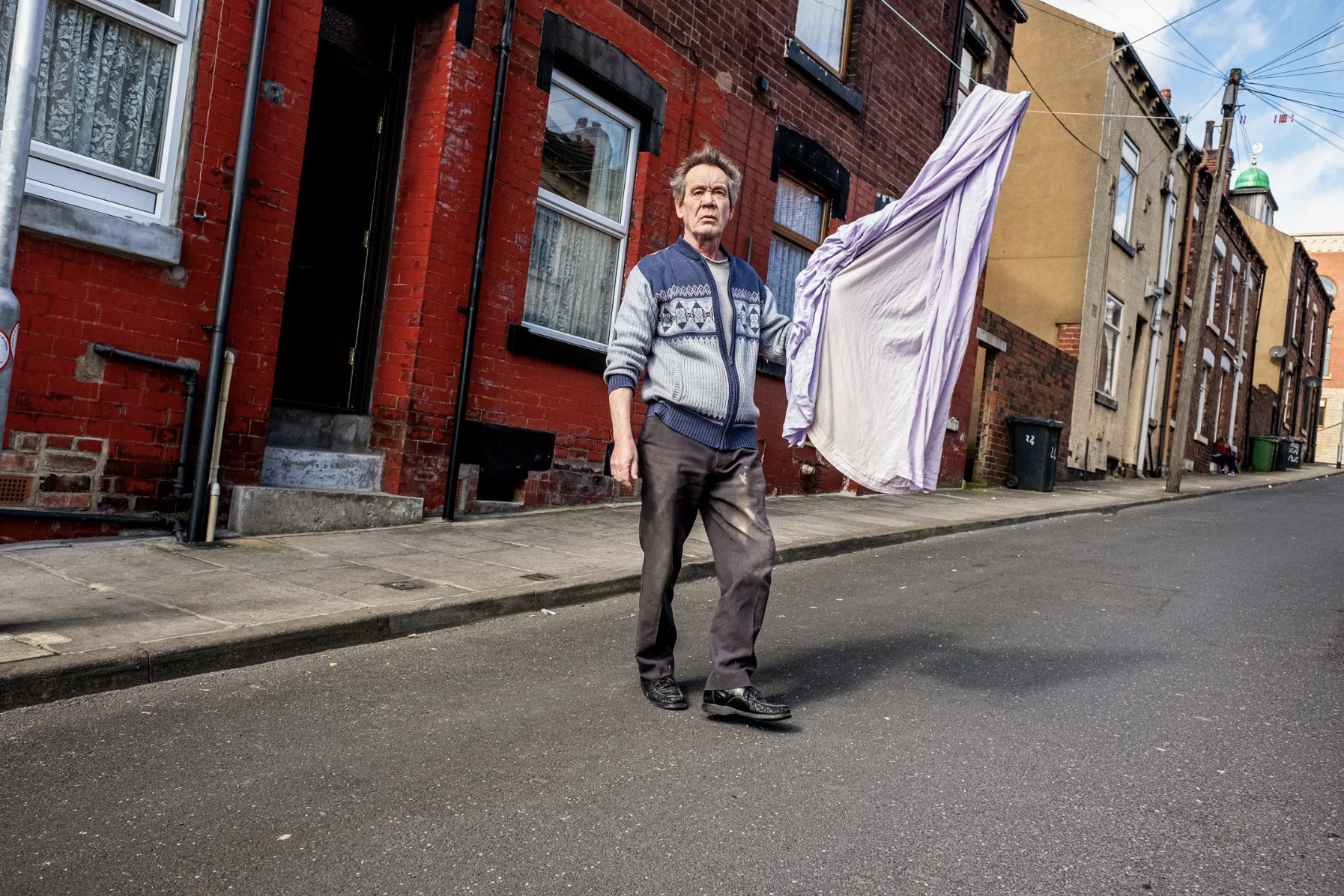
The city centre was changing fast, but “photographically, it just didn’t do anything for me,” he says. By contrast, the places he focused on in Back-to-Back “don’t change that much” — many people look at his photos and mistake them for images from the 1980s, he says. What does change is the population — armies of students passing through, and newer migrant groups. “It’s a very sort of transitory place, Leeds … there’s an endless, revolving movement of people, and that keeps it interesting,” he says. The fact that many of the people he was photographing were newcomers too helped him feel more at home, he says.
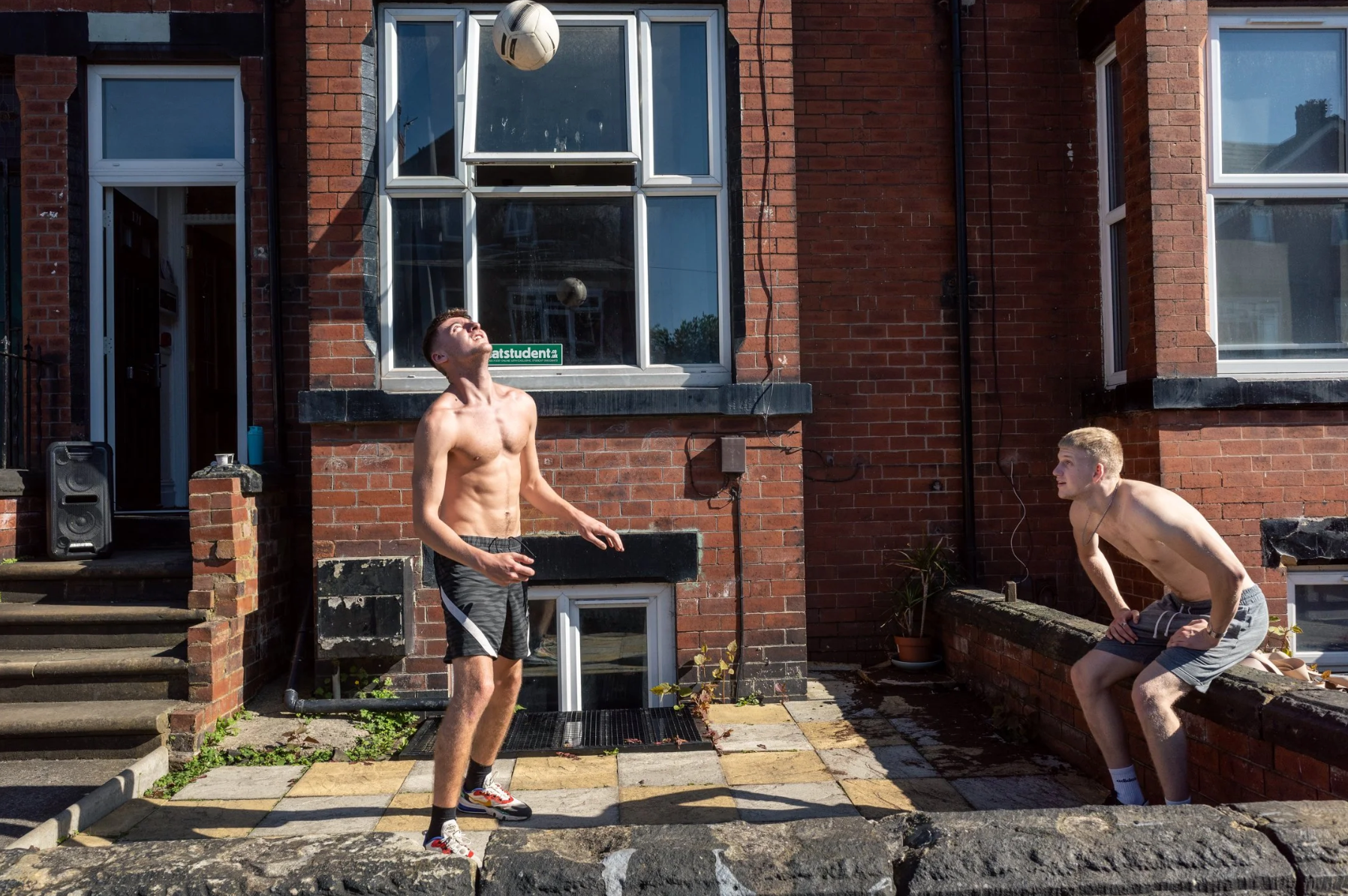
But in time, he became a familiar face. “I suppose I became part of the street furniture,” he told me. “Every time I did the rounds on my bike I would see the same people again and again, some of which I photographed and got to know.”
We hope you're enjoying this article — can we tempt you with more? Join us as a free member (no credit card details needed) to get regular stories like this, all about what's most important to West Yorkshire, direct to your inbox.
I was curious about his approach to picturing the many children — gambolling about, gurgling with silliness, tossing around a football — that appear in his images. As innocent as the pictures are, sensibilities around photographing children have changed hugely since he took them, and he wouldn’t take the same approach today, he says. “Looking at these now, I’m kind of like, yeah, God, there’s no way I could do this today.”
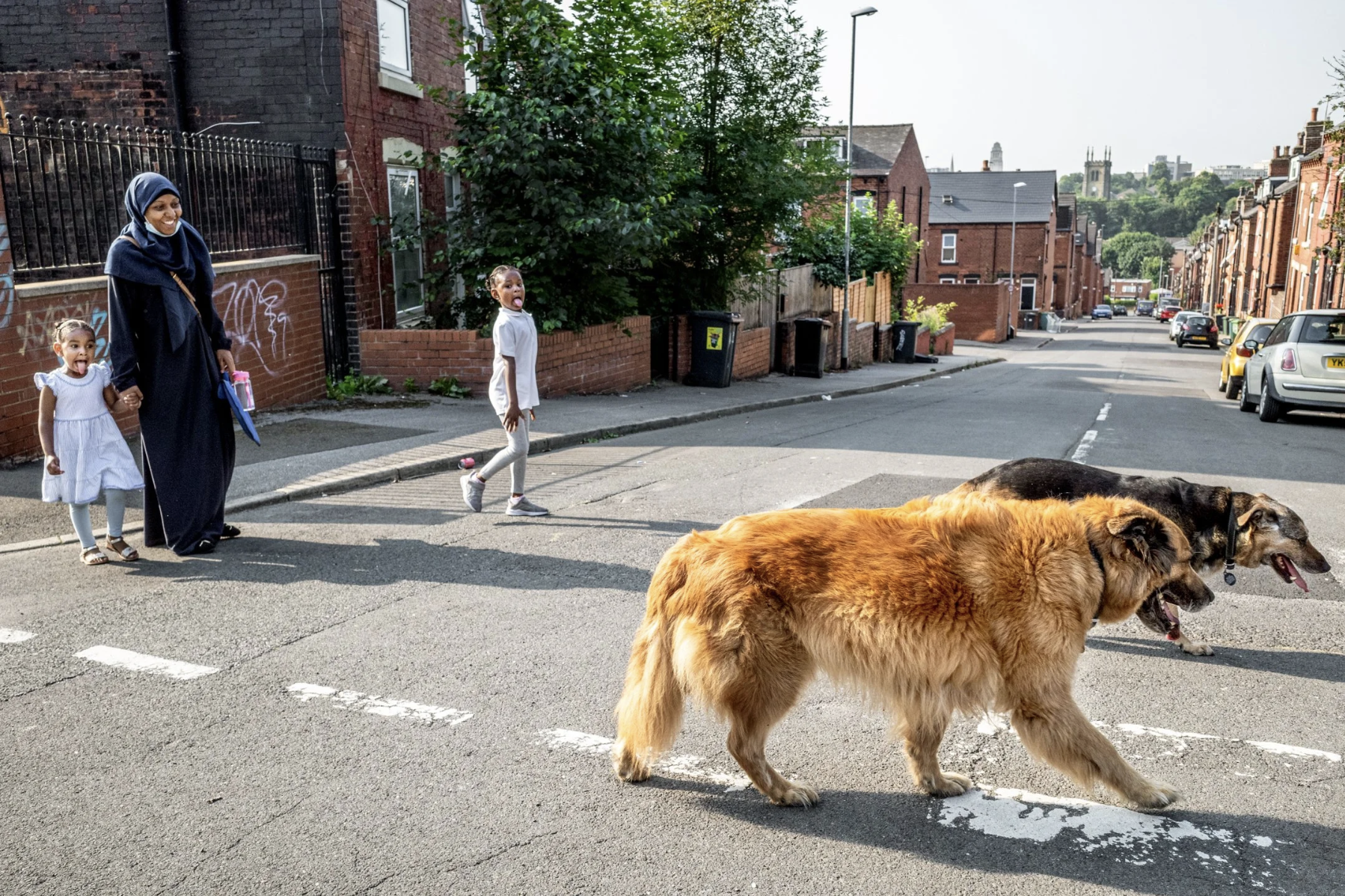
“You just have to read the room” when it comes to sensing who wants to be photographed, he said. He’s never been a fan of the most brazen school of street photography. “I really hate photographers that get up in people’s faces,” he says. He’d often catch the eye of nearby mums, or think about who was already engaging with him. One pair of boys “would always throw their football at me on my bike,” he says. “I remember heading the ball back to that kid one day.” In fact, street football was such a hallmark of his travels around Leeds that he developed a whole other series, In the Terraces, devoted solely to it.
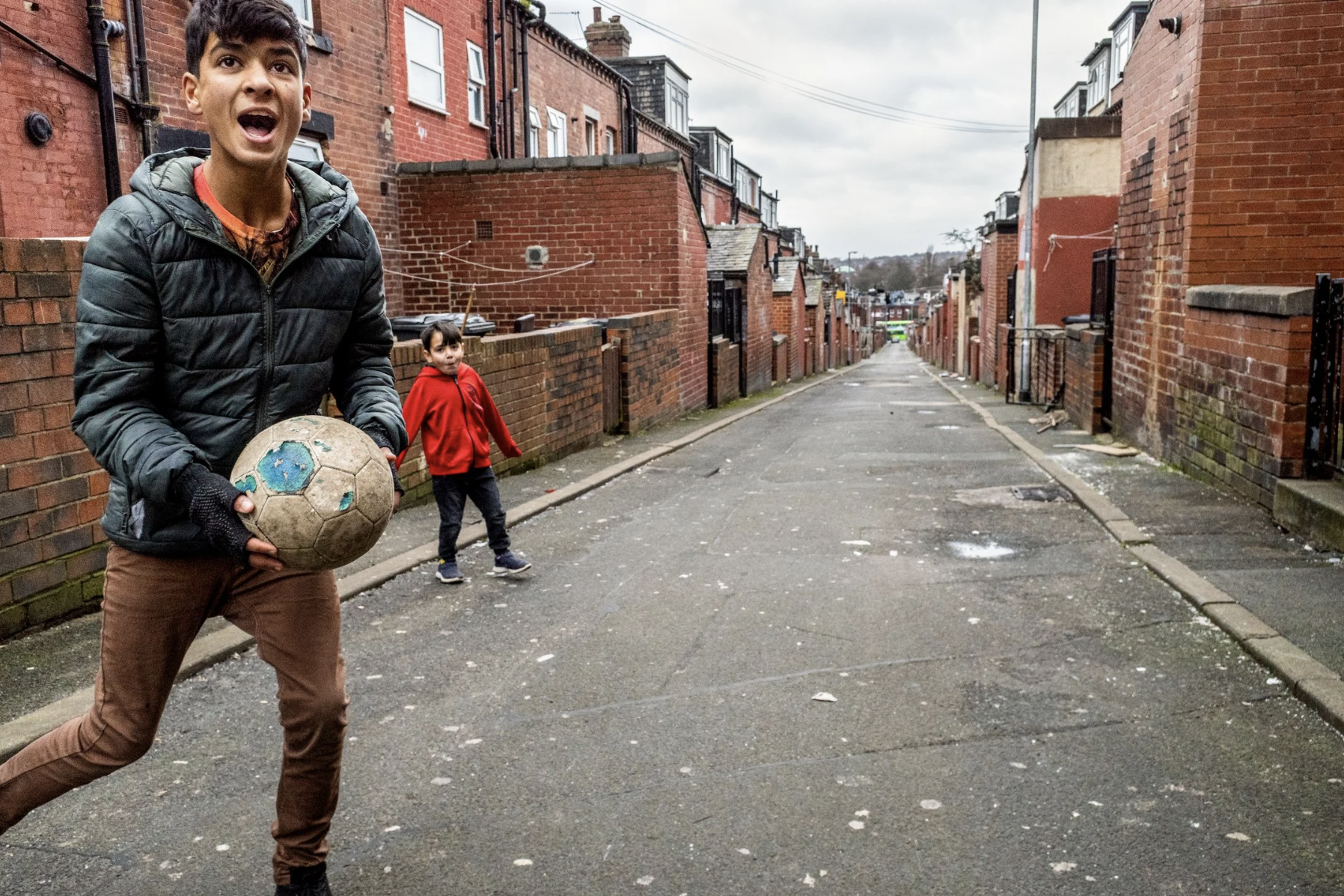
The photos radiate affection for the terraces. This stands out partly due to a conscious decision on Ricky’s part when putting together the edit. He left out some edgier photos — images of prostitution, and people “passed out in back alleys” — “because I didn’t want it to have a negative impact on Leeds,” he says.
Since the publication of Back-to-Back, he’s had numerous emails from people who recognise their home and familiar faces from his work. “It brought up a lot of memories for people, those little streets,” he says. “I mean, that’s where life happens, isn’t it?” he says. “That's where people grow up. You know, they go to school, they meet people, fall in love, get married.”
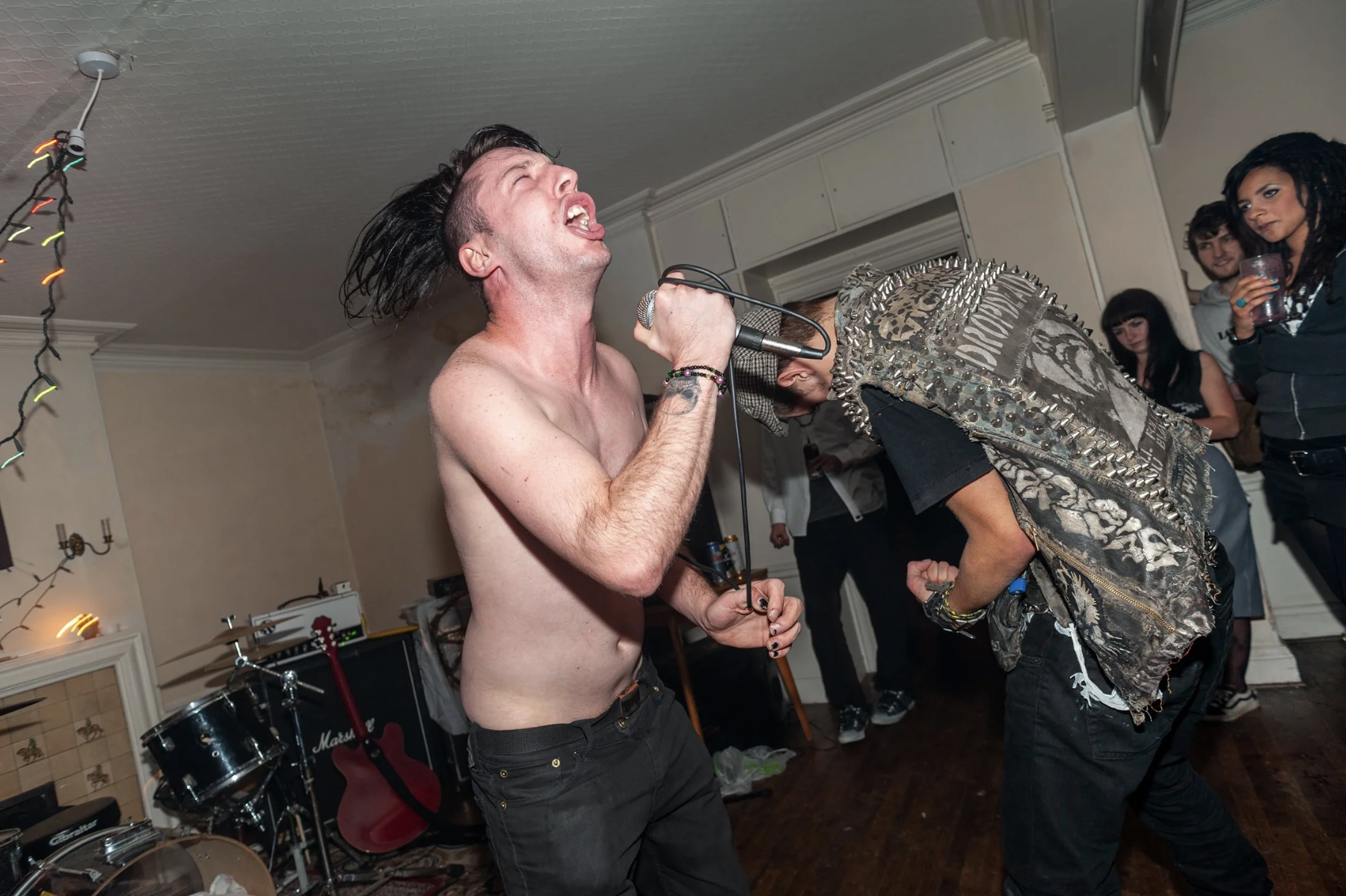
One of the things that drew Ricky to Leeds was its punk scene — a world he knew well from Belfast. Leeds was “a real epicentre in the north of England for DIY punk — I sort of came in on the tail end of that, in 2003,” he says. In Hyde Park, where he had first moved, there were regular tiny gigs in people’s homes. Homegrown bands like Bilge Pump were getting national attention. Ricky loved it — and by chance, it was through this that his camera would gain access to an unseen world.
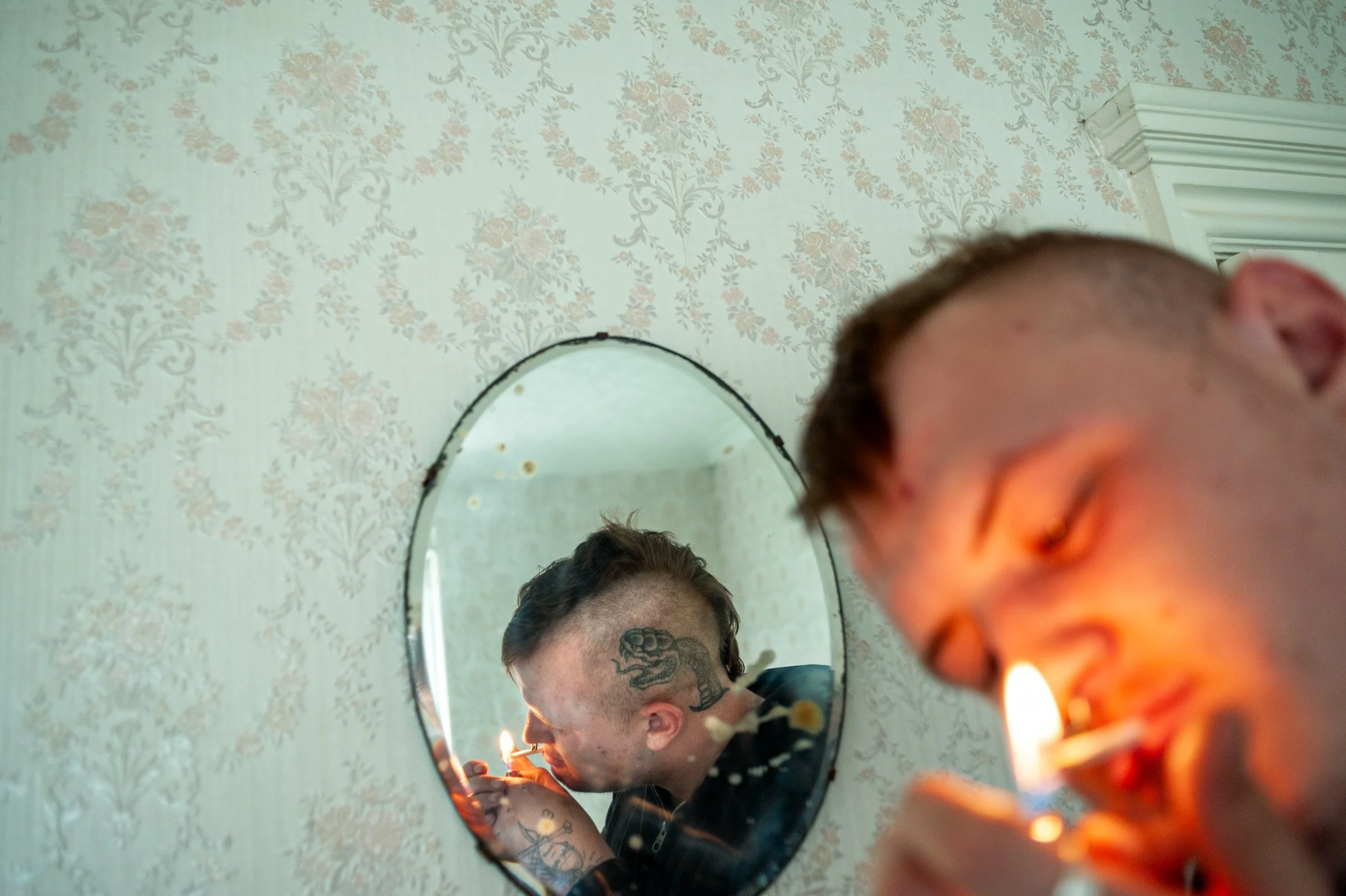
One night in 2008, at a gig at Brudenell Social Club, someone came up to him, “this big punk with a leather jacket on and a ginger mohawk … he goes, ‘I know you.’” turned out he’d recognised Ricky from his days photographing the punks of Belfast. “And then he said: ‘We’re squatting a house in Woodhouse. You should come over.’ And so I did.”
The 2008 financial crash had hit hard, homes were being repossessed in droves, and the city was “awash with these empty houses,” says Ricky. By this time, Ricky’s job at the magazine had petered out and he had time on his hands. The squatters he was introduced to after that gig were “quite lost young people, who didn’t really have anywhere else to go, and sort of formed this community in Leeds.”
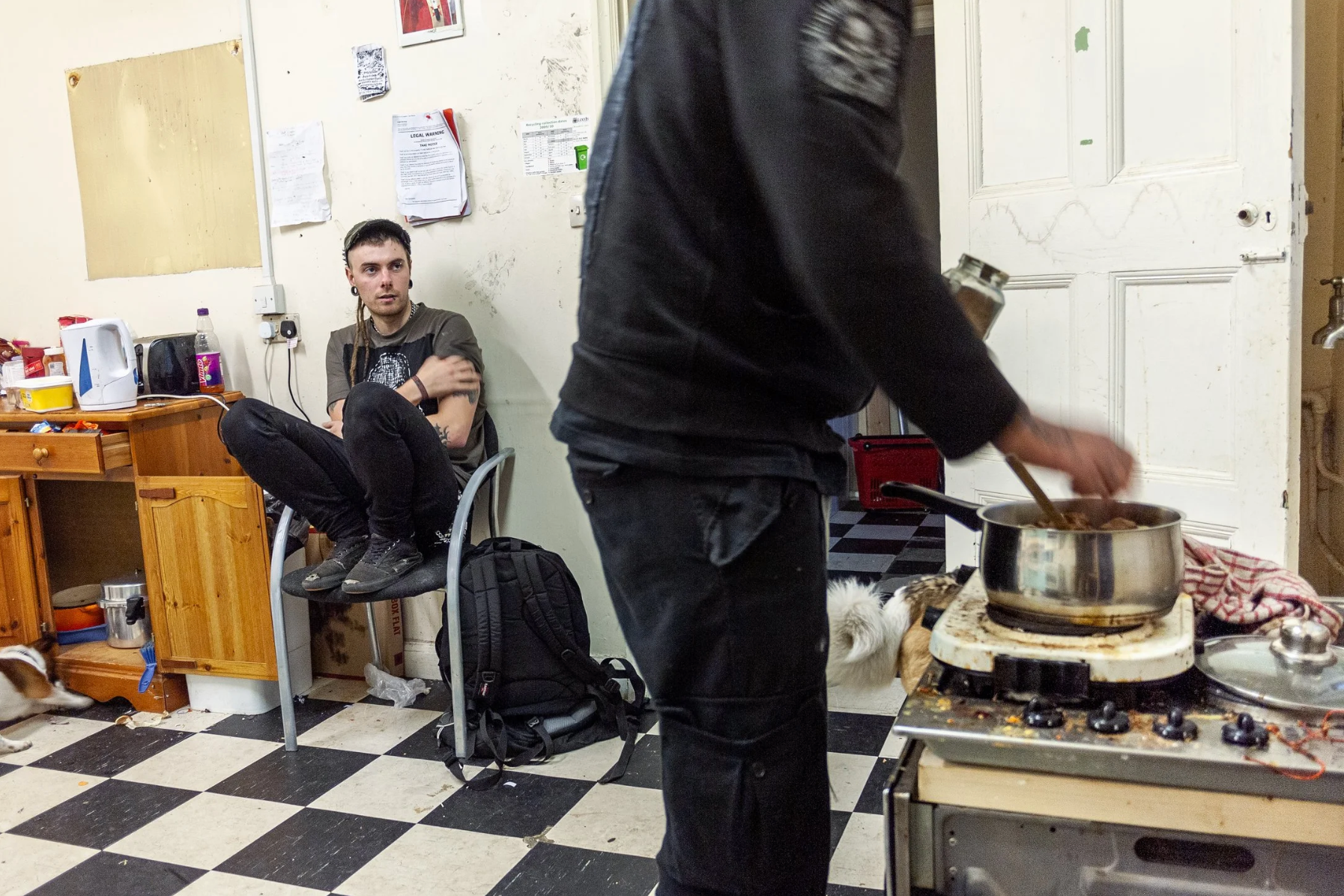
“I suppose I was a bit older than a lot of them,” he adds. “And kind of, you know, helped them with some things, sort of hung out with them as a friend.”
In contrast to Back-to-Back’s street-level view, the series that resulted — Edge of Living — shows us some of those Hyde Park terraced houses from the inside, from the view of the squatter. “Punk” here didn’t just mean music, but an attitude to life, that Ricky described as “‘I’m going to live by my own rules.’” The benefits? Self-determination, friendship, music, indulgence — “it was kind of joyful for the most of it,” Ricky says.
But Ricky’s photos also capture the downsides: bone-chilling cold, generalised squalor, and a hell of a lot of hanging about. One of the key tricks to holding down a squat was that someone had to be there at all times, so that police couldn’t break in and reclaim the property. “A few of them would go out, and I'd call around, and [one of them] would just be sitting there, bored rigid,” he says. “I’d just take a few photos.”
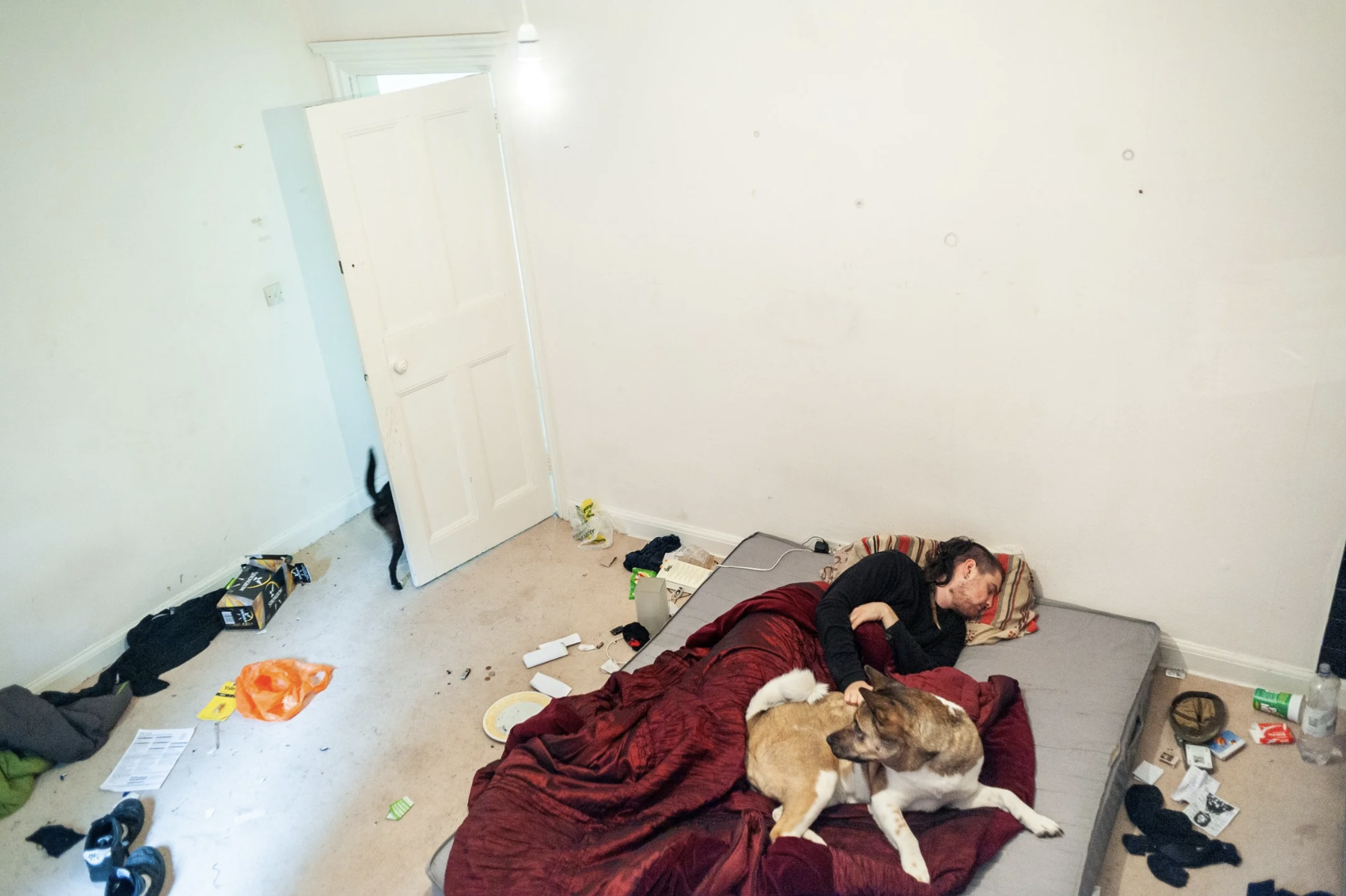
“They were a pretty nice bunch of people,” he says. “I don’t want to say directionless. That’s the wrong word, but they were just punks who wanted nothing to do with modern society.”
That world is gone; squatting was effectively made illegal in 2012, and the group eventually moved on.
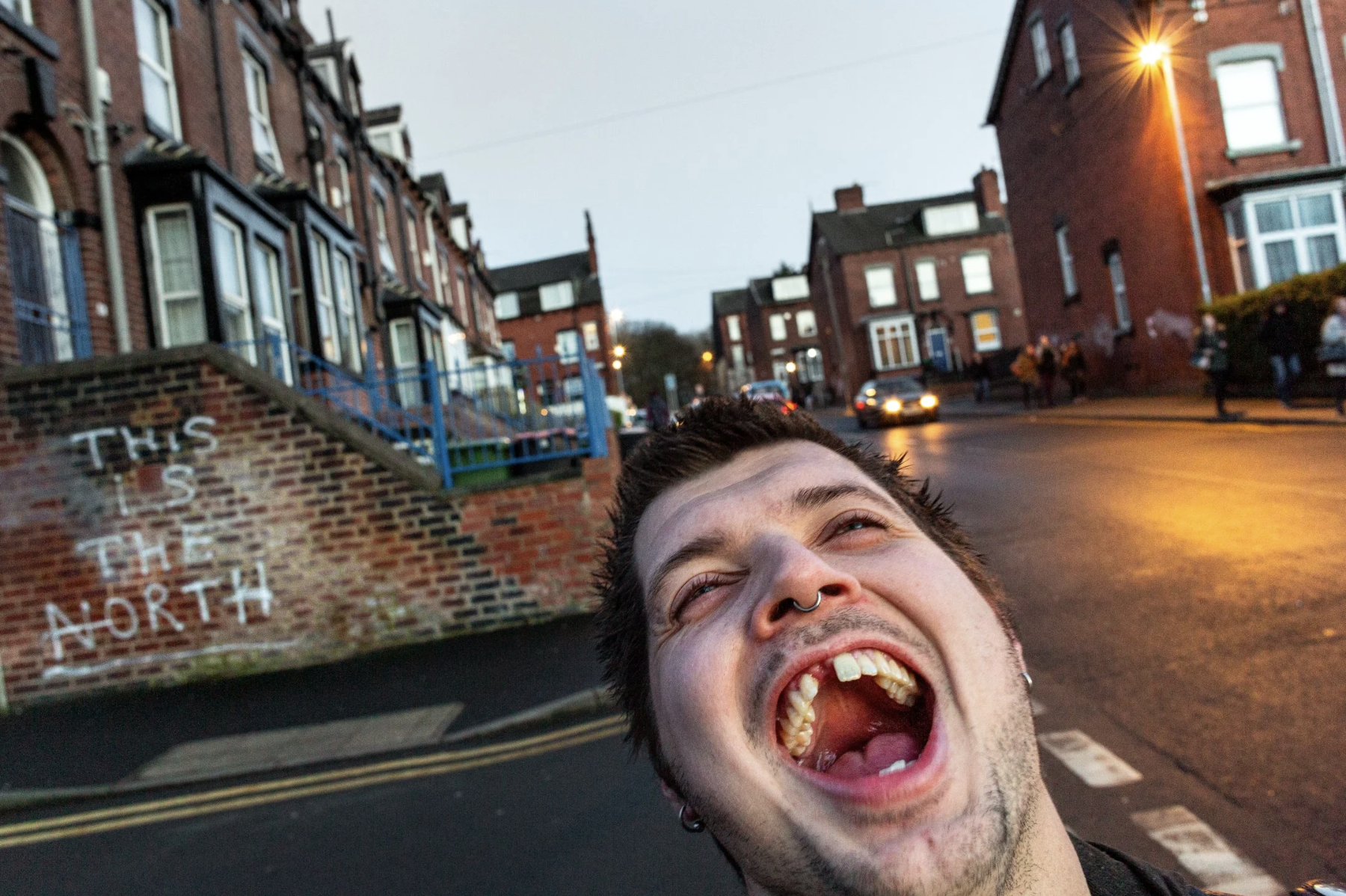
I ask Ricky about what is perhaps the most instantly “punk-like” image in the whole series. A nose-ringed, gap-toothed punk is laughing raucously in the terraces of Hyde Park; graffiti reading “this is the north” is scrawled across the brick wall behind him. It’s about as reminiscent of ungovernable northern street life as Joel Goodman’s famed 2016 new year’s eve image of drunkards and police in Manchester. But all is not what it seems.
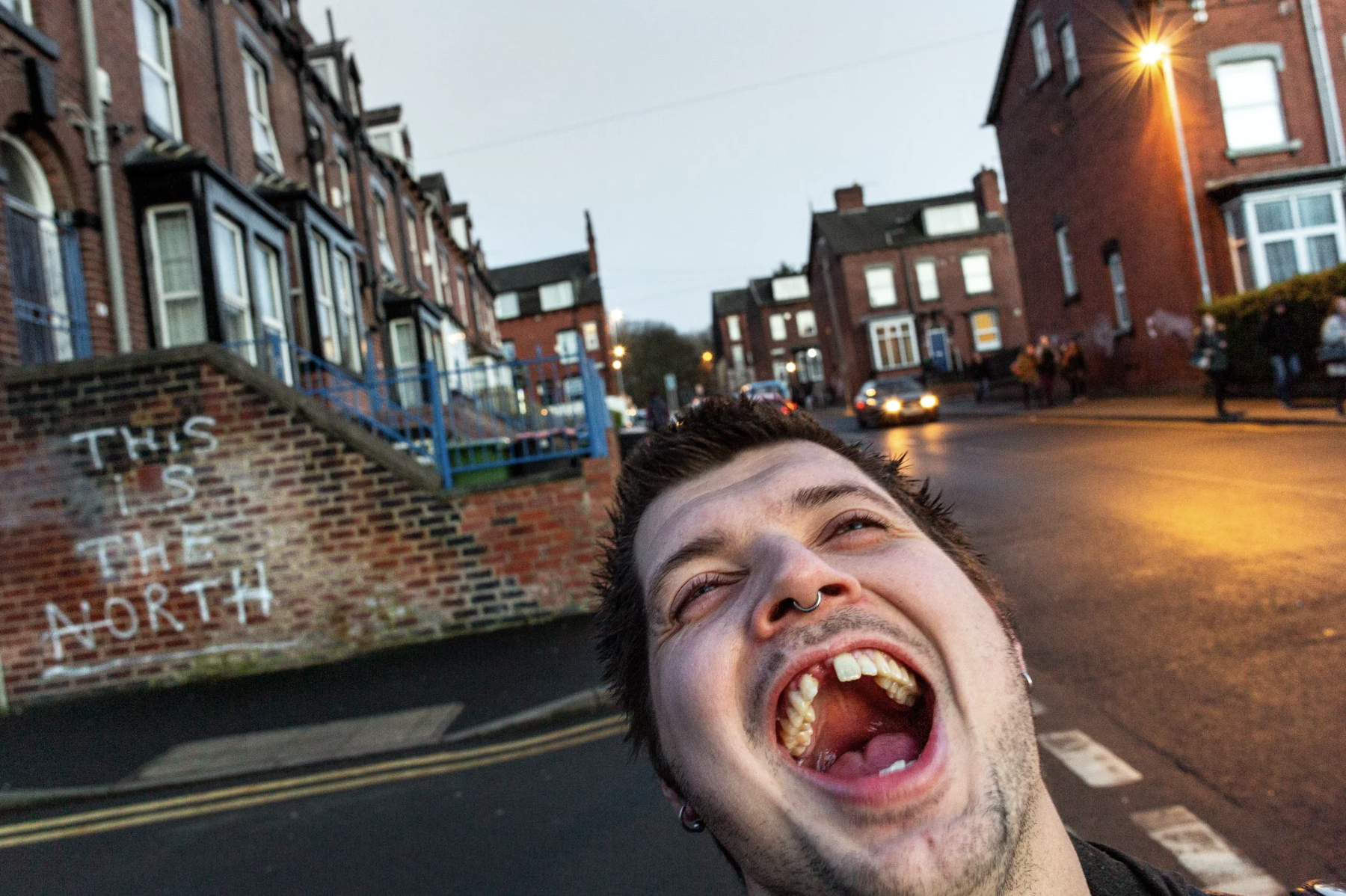
“It just looks like some uber punk that’s going to come up and kick all the walls down,” agrees Ricky. But in fact, the guy in the photo is a “really lovely, really quiet guy” who lost his tooth skateboarding. And he’s from London. It was that that made Ricky want to photograph him, as a joke, in front of the graffiti — which made the lad throw back his head and laugh, saying “‘nooooooo way, mate,’” Ricky says.
I laugh at how unexpected the real story behind the photo is. “That’s photography for you,” Ricky says.
We think Ricky's work chimes with a lot of people. Perhaps you agree — give this a share?