
Running through the vaulted brickwork of the Dark Arches is a large, jagged crack. Perhaps four metres long and an inch or so wide in places, it has disaster-movie credentials, with mortar slapped roughly into the gaps.
I’m craning my neck at it, underneath Platform 15 or thereabouts, imagining what it would be like if the crack inched a little wider — and then some more. For a moment, the tunnels crumble and the full weight of Leeds City Station stubs me out.
Then I snap back to reality, next to a Network Rail asset engineer. The crack has been reported to him, by the public and by engineers, more times than he can remember. He’s responsible for work that is neither glamorous nor highly visible — but which could be the difference between you making your journey from A to B safely or you having an accident. Namely, taking care of about 4,000 rail-related structures across the Leeds area.
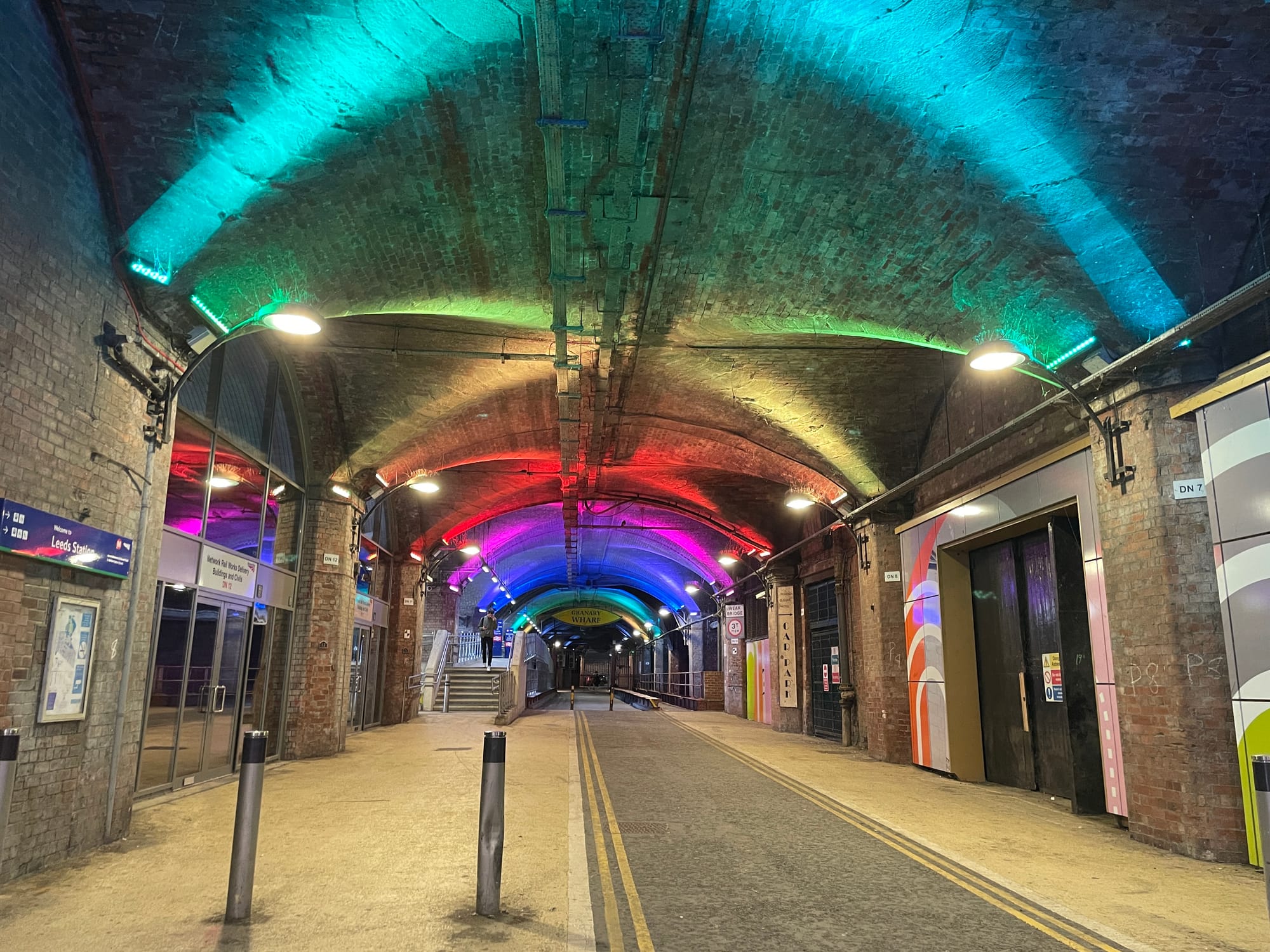
About 125 of those are right here under the station. Specifically, the series of cavernous tunnels and arches that readers will know as the Dark Arches.
I’ve begged Network Rail for an interview because the very first thing I ever did upon arriving in Leeds was to get lost under there. My internal compass clearly gone haywire, me and my wheelie suitcase haplessly swivelled in and out of caverns, distracted by the noise of the river, rainbow lighting, and the uncanny sense of being in the exploratory stages of a video game.
Despite that slight feeling of unreality to the place, a very real 33 million people stomp through the station directly overhead every year. That figure has grown rapidly in recent years (figures from 2017 planning documents put the number at 28 million). A combined 37 million-ish-tonnes of train pass through per year, ranging from the relatively dainty passenger trains, right through to those that transport aggregate materials from quarries at Skipton, weighing more than 2,000 tonnes each. Even the station itself, dating back to the mid-19th century, is a historical hodgepodge. That’s above.
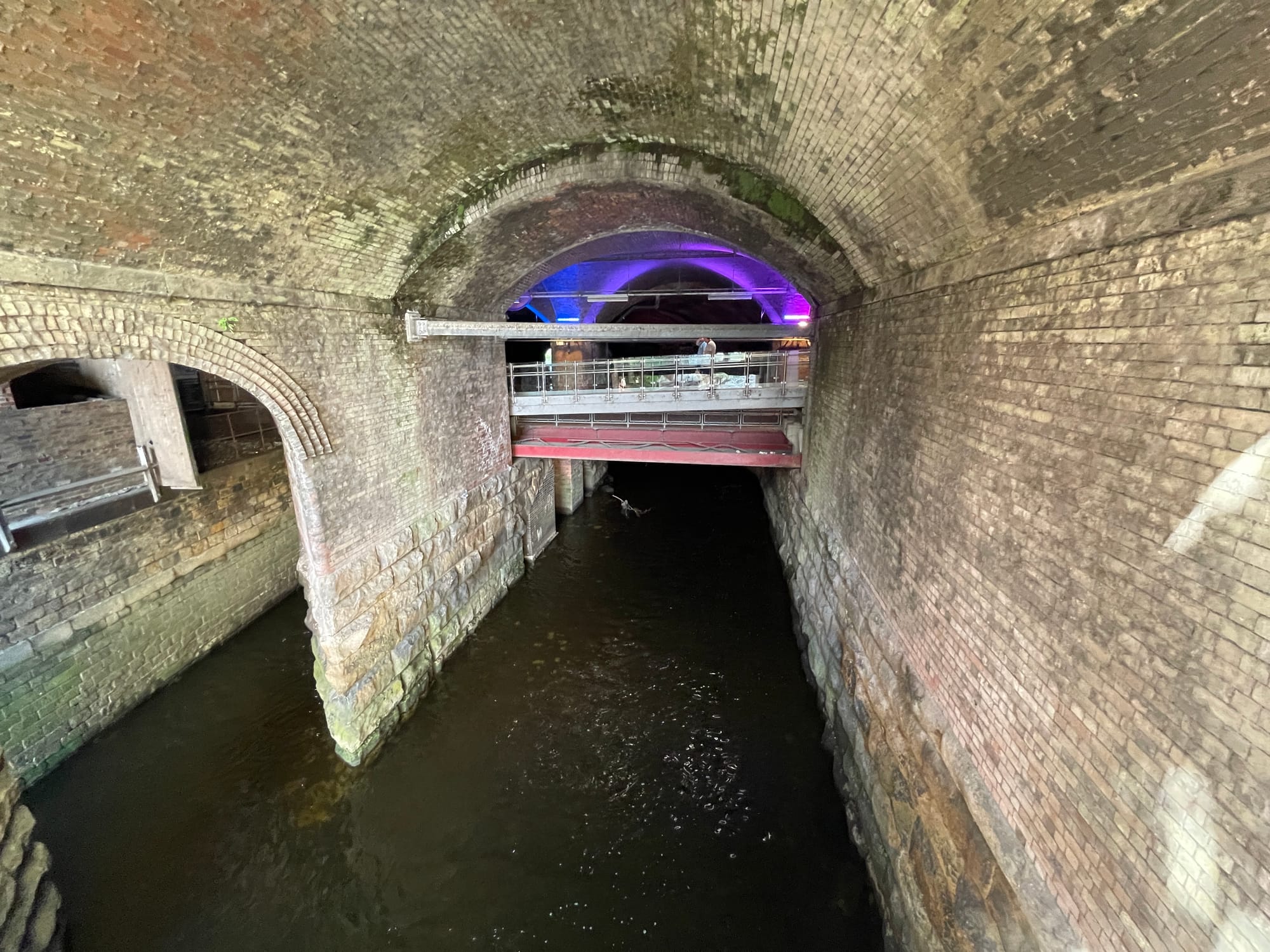
Then there’s underneath. Millions of gallons of the Aire gurgle through the arches each day; billions if there’s a flood, which there often is. They pour in via a right-angle bend, stopped short at the edge of a former mill goit (now itself being re-built over to form the new station entrance). The water sketches out something like a Z-shape under the station and emerges to join up with the Leeds and Liverpool Canal.
That’s a lot of pressure on the arches from both directions — so how do they deal with the stresses and strains on this magnificent construction sandwiched between the river and the railway?
‘One of the most convoluted and complex stations’
A large team is involved, but if I had to name the Man Who Holds Up the Dark Arches it would probably be 29-year-old asset engineer Calum Cholmondeley, who is the one who showed me that crack. With a backpack and a relentlessly calm demeanour, he meets me during the recent heatwave to show me round.
This story is free to read. You just need to sign up to join The Exchange's mailing list. And why wouldn't you? You'll get our journalism in your inbox the second we publish, keeping up-to-date on this and all our stories. No card details required.
Already have an account? Sign In