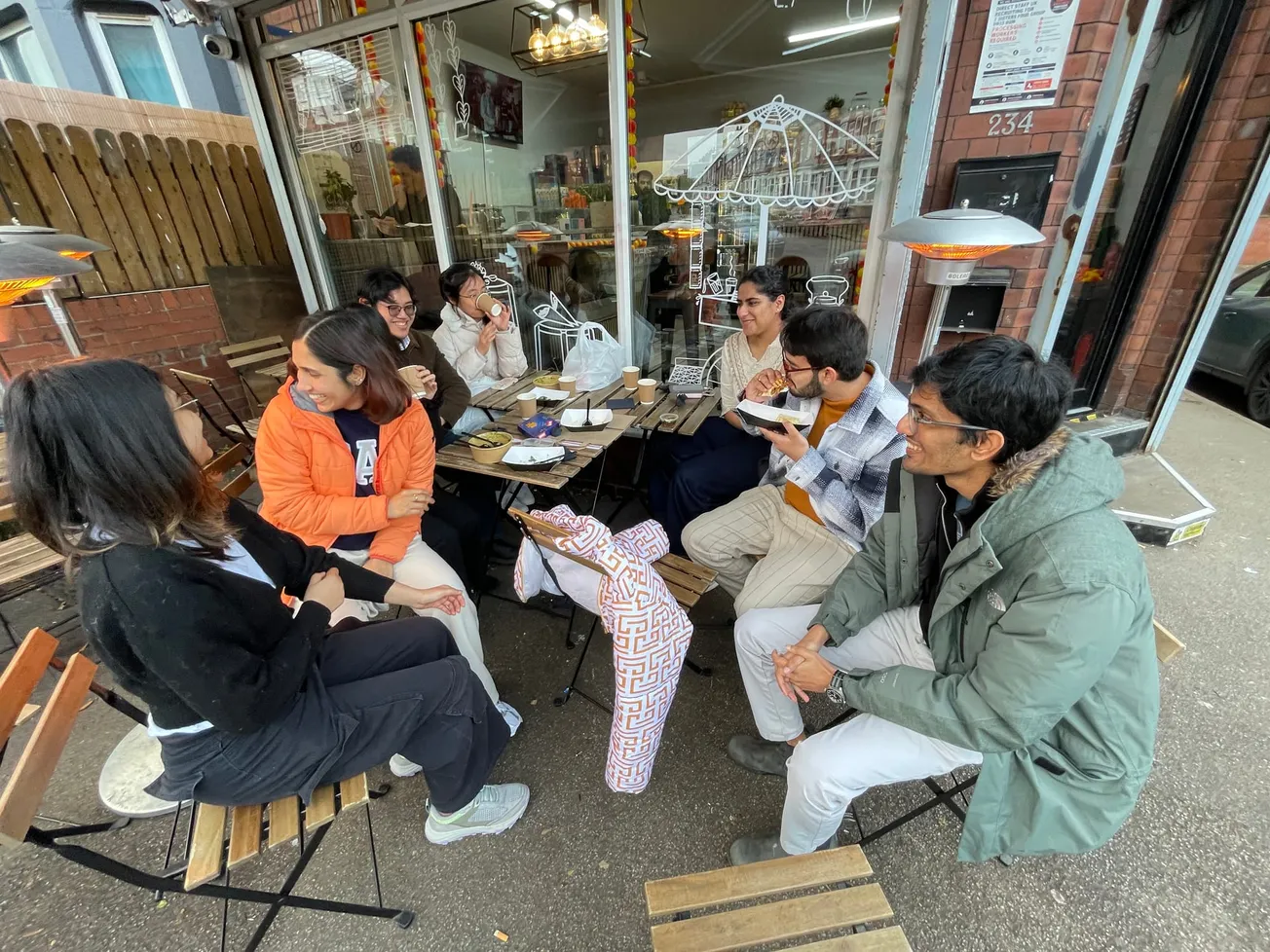


It’s a brisk November day, with heavy blankets of cloud overhead and rolling countryside at my feet. Nestled downhill, beyond acres of mossy drystone wall and green fields, sits the town of Silsden, a few miles from Keighley. The views are stunning, but I’m not just here to stretch my legs.
Along with my colleague Brad, I’m here to learn what I can about Jacob’s Wood, a wedge-shaped patch of protected ancient woodland that I’ve been squinting at via Google Maps and the Land Registry for the last few weeks. Now I’m here in person, and I’m trying to catch a glimpse of the tree-felling and holiday pod-building that have caused an almost two-year-long battle with planning officials and a furore in the national news. But one detail has remained obscure: who is really behind it?
To find out, you'll need to upgrade to The Exchange's deluxe tier, where for a mere £7.42 a month (if you pay for a year upfront) you'll get two extra stories a week, invites to members' events, and a seat at the table of the new big thing in local journalism. Upgrade today.
First though — it's your regular round up.
The round up
📋 Another coroner’s report has been published, raising yet more concerns about the safety of SystmOne. The software, which is produced by Leeds’ biggest tech company TPP, manages medical records and is used by thousands of GP practices and every prison in England and Wales.
Angela Montegomery, a prisoner at HMP Low Newton in County Durham, took her own life by drowning in February 2024. She had communicated her intention to do this to staff, a fact which was recorded in SystmOne. However, the coroner, Jeremy Chipperfield, noted that “none of the healthcare staff who viewed the record in the 55 days between Angela’s screening and death communicated the fact of Angela’s statement of intent to prison staff,” which the jury found contributed to her death.
How on earth did this happen? The coroner noted that: “Information may be missed because it is buried within a lengthy record, is not appropriately coded or highlighted, or is not captured by a particular search… there is no automated or other system-level safeguard to identify safety-critical information and prompt its communication to custodial staff when the necessary human action fails.” He added that similar concerns “have been raised in a number of published Reports to Prevent Future Deaths” — something we revealed in our major investigation into TPP. He added that: “In my opinion there is a risk that future deaths could occur unless action is taken.”
🛍️ The Ridings Centre in Wakefield is no longer set to be demolished, following a u-turn (BBC). The shopping centre, which was pioneering in its day but now run down with many empty units, had been marked for demolition as part of plans to regenerate Wakefield city centre. But after Reform UK took the council in May, they promised to review the plans, and have now announced it’s off. Instead, they plan to revive the shopping centre. “Our plan will inject a new lease of life into the centre and deliver the cafés, restaurants, bars, leisure attractions and cultural activities that complement retail,” said council leader, Karl Johnson. But Nathan Spencer, Managing Director of UKREiiF (and local resident) criticised the decision, describing it as: “Zero ambition. Keeping everything the same as the last 10-years where all the city has seen is decline.”
🌳 Amid a week of fairly bleak news for the safety of women and girls, some good local news — University of Leeds researchers have developed new tools to help make parks safer for women, the YEP reports. The online dashboard will be used by police and the council to identify safety issues by using lighting and visibility data. Three parks are being used in the trial: Roundhay Park, Potternewton Park, and Woodhouse Moor (where the lack of street lighting on the paths has frequently been raised as a risk to students' safety).
What should we be looking into? Let us know:
Holiday lets, gang violence and carpet warehouses: Who felled Jacob’s Wood?
By Mia Jankowicz
It made national headlines. “LOG JAM: Holiday homes built on 500-year-old ancient woodland to be DEMOLISHED in bitter row after 300 trees chopped down” yelled the Sun. “Mystery Turkish firm loses appeal to stop demolition of holiday homes illegally built in ancient woodland after ‘300 trees were chopped down’” said the slightly calmer Daily Mail.
Despite its relatively small scale — development work towards a handful of holiday pods on an obscure patch of woodland — the case of Jacob’s Wood caused a public outcry. It’s actually not clear exactly how many trees were felled, but it was enough to alarm the experts. Bradford council says it “witnessed at least 68 bulk (tonne) bags of cuts [sic] logs on the site.”
Justified and ancient
Ancient woodland — woods that are more than 400 years old — covers just 2.5% of the country, the Woodland Trust estimates. “These sites have developed over hundreds of years or more, and support rich communities of wildlife that cannot be replaced by planting new trees,” Jay Henderson, a campaigns manager at the trust, tells me. “While restoration can help, once ancient woodland is damaged its unique soils, species and ecological relationships can take centuries to recover, if they recover at all.”
It’s for this reason that, although Jacob’s Wood is privately-owned land, there are restrictions on cutting down trees there. And it’s why, when the case ended up with the Planning Inspectorate, they came down hard. While two of the holiday pods were allowed to stay, they ordered the removal of two buildings, three concrete pads and their septic tanks, an access track, and the replanting of 100 trees.
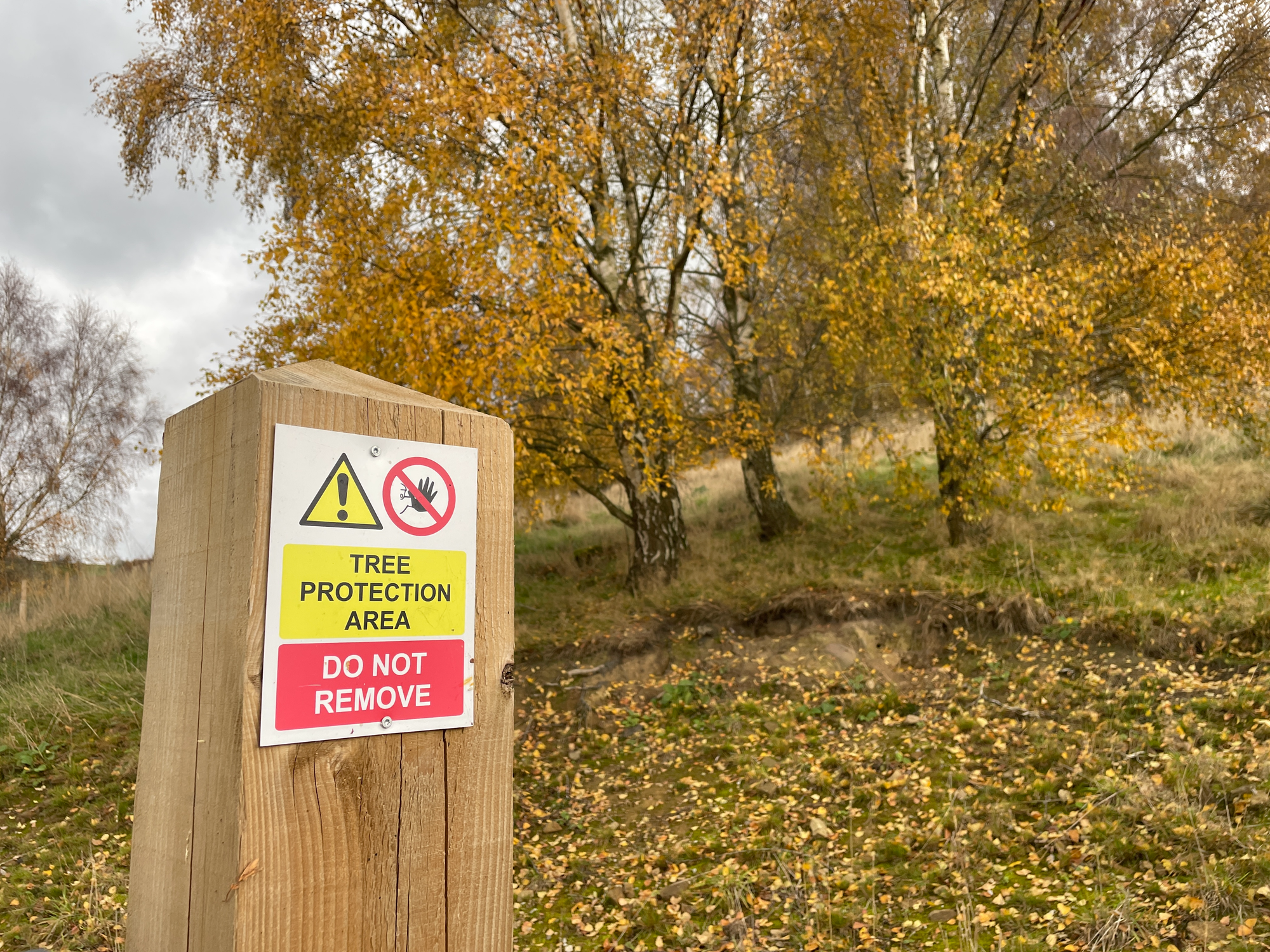
All this is already in the public domain. But there was one strange detail: the company fighting the planning battle itself. Azara Gıda Sanayi Ve Ticaret Limited Şirketi — which we’ll call Azara from now on — doesn’t have much of an online presence, but what is clear is that it’s a Turkish food exporter. Many outlets leaned into the enigma, spicing up their copy with references to this “mystery Turkish company”. What possible interest could a food company have in fighting a convoluted planning battle over a handful of holiday pods 2,000 miles away in the Bradford countryside?
But what no-one seemed to have picked up was that, while this company was leasing the land, they weren’t the ultimate owners. And when we found out who they were, we got quite a shock. They’re some very interesting characters — much, much closer to home.
West Yorkshire deserves great journalism. You can help make it happen.
You’re halfway there, the rest of the story is behind this paywall. Join the Exchange for full access to local news that matters, just £8.95 a month or annual deals with two months free.
SubscribeAlready have an account? Sign In