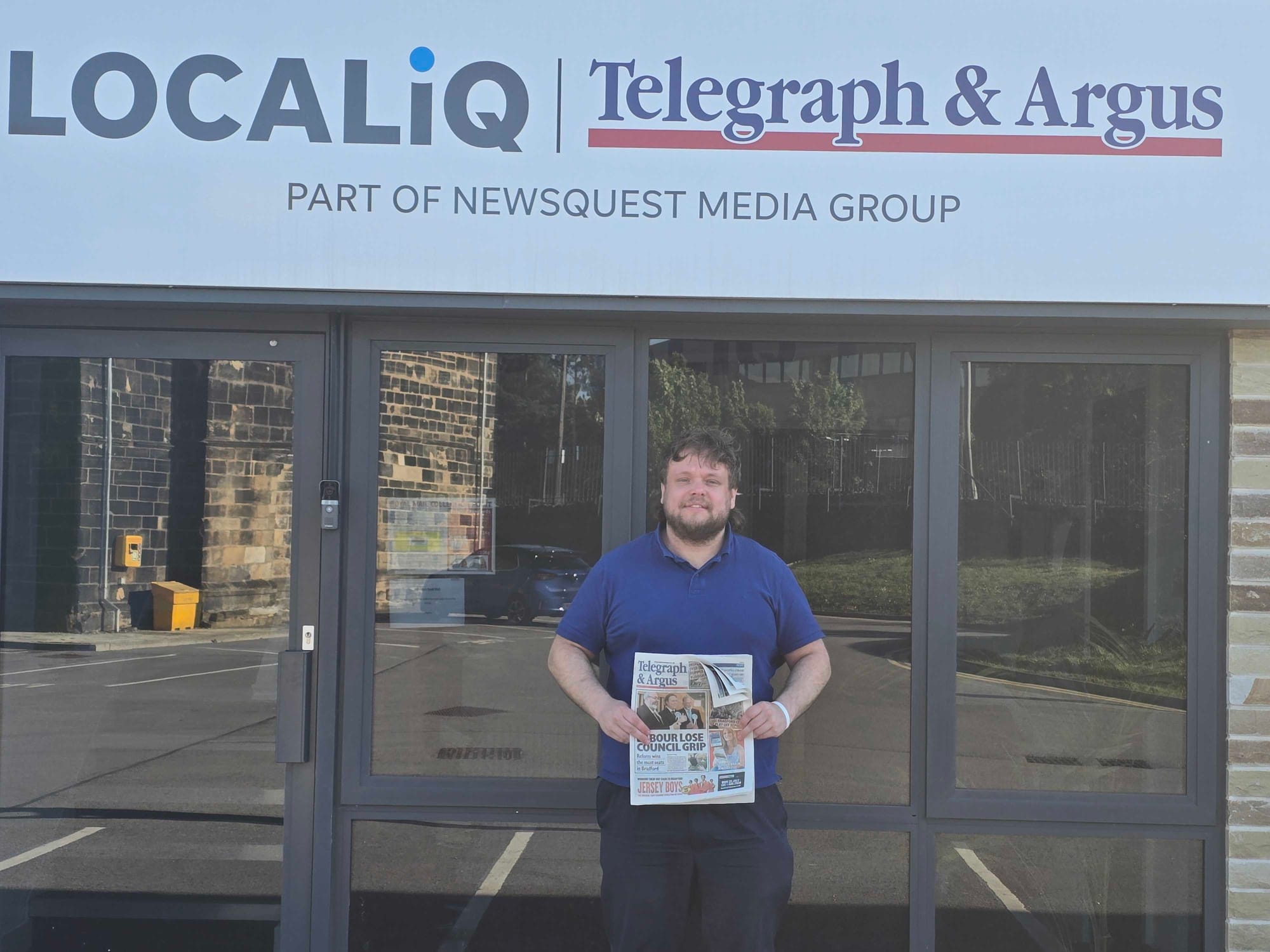

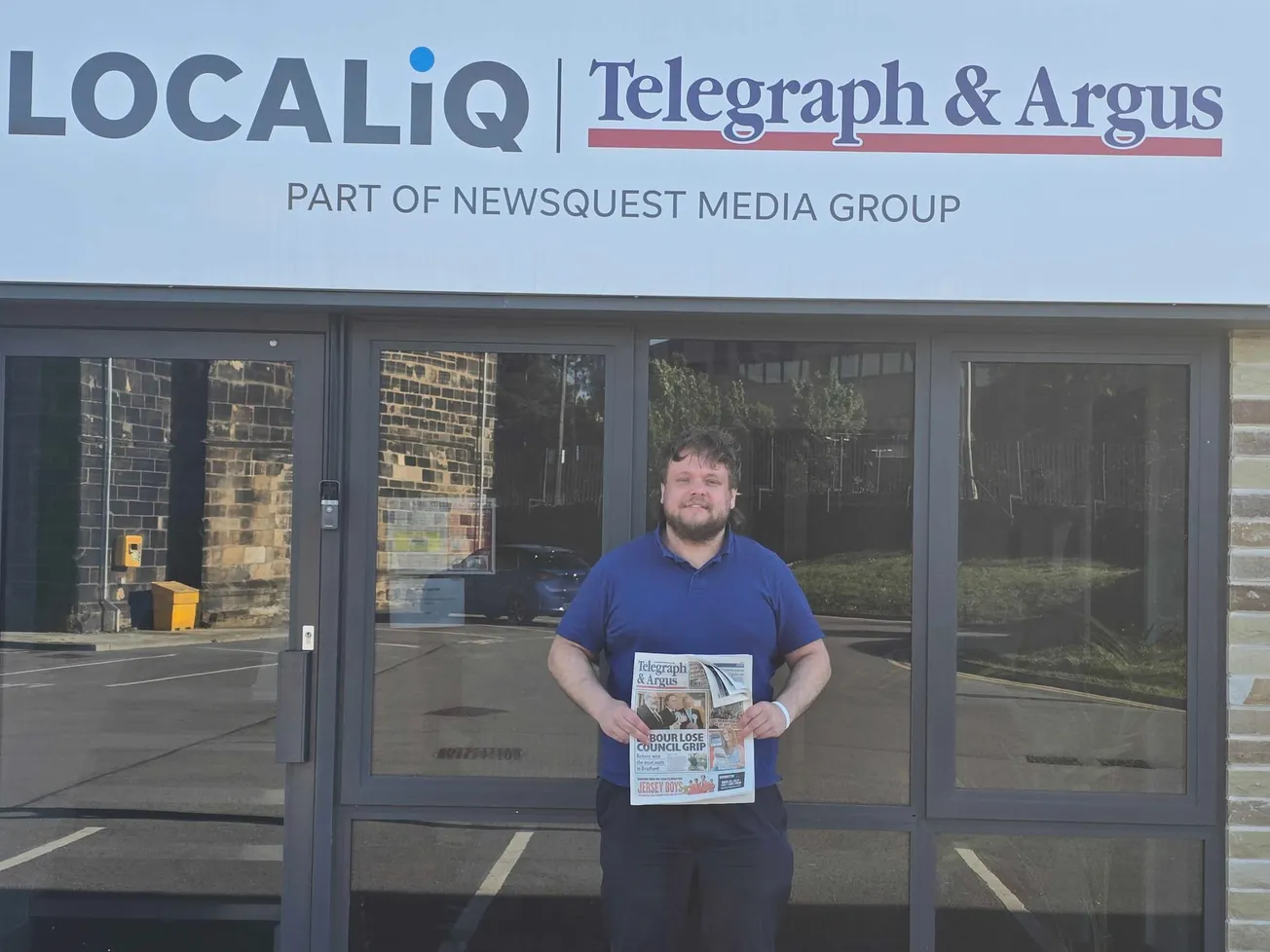
If you wander around central Bradford now, you might well see relics of the Telegraph and Argus, like the paper’s name stamped across the different sides of Hall Ings. As a journalist there, I’d often pop out to watch a trial, or stroll the short distance to the town hall and keep an eye on proceedings. People would wander into our office with tales to tell — my best story at the T&A came from precisely such an encounter.
Now, only those signs remain. The once-thriving Hall Ings office, spread across multiple levels, had been reduced to a single floor by the time I even got there in 2017. Slashed budgets, leading to less staff and less space needed. You don’t need to be business-savvy to work out paying for a whole building while only using a fifth of it isn’t cost-effective. The Covid pandemic accelerated plans for the Telegraph and Argus to find a new home. Cue: a move to a soulless business park at New Hall, just off Rooley Lane and the M606. This had knock-on effects, like people stopping wandering into our offices. We had to drive if we wanted to get into town. It felt like our connection had been severed with the very people we were there to serve.
I had great colleagues at the T&A. But like almost every other local news title, it’s part of a massive group — in this case Newsquest. The media group has more than 200 news titles and magazines, based everywhere from Dorset to Dunfermline.
Our orders came from the top. And what the big bosses were after was made abundantly clear: page views.
To give you an idea, my monthly target at the T&A was 525,000 page views on things I’d written. A successful story would hit 10,000+ views, but the average was more like 3,000. In chats with my boss, this would often be the key theme — how I could entice more people to click on a juicy headline? How could I get more stories out in less time to drive that number up? What topics should I be focusing on to maximise hits? I’d often hit my goals, but as soon as the numbers dropped the pressure was on — all while trying to juggle the other part of my hybrid role, which involved me being part of the Newsdesk and trying to implement our social media strategy. Focusing on one meant the other suffered, and more often than not, pageviews were the priority.
Continually trying to hit unobtainable numbers is pretty depressing. But even worse, it doesn’t work — certainly not if the goal is to produce valuable news. Sure, each of those views generates a few pennies of advertising revenue from that garish pop-up that’s filling your screen (even more if, heaven forbid, the poor reader accidentally clicks on it). But the model actively pushes you away from the stories that really count, because they’re the ones that take real time to pull off. Readers can sense the drop in quality, their trust is eroded, and they switch off.
It wasn’t always that way at the T&A and I’m extremely grateful for the opportunity afforded to me by my editor, giving a foot into the door of one of the most competitive industries. I knew I’d be able to prove that decision was a good one and those early years were how I envisioned journalism. A bustling newsroom, heading here, there and everywhere for stories, and really tackling what mattered to Bradford. But looking back, the greater share of my favourite and most impactful articles came during the early years, before the creeping shadow of a hits-first approach descended in full force.
I’ve been at The Exchange for three months now. The biggest change, which I hadn’t anticipated, was that I now actually go out to meet people. In person! At my old job, a phone call had become the most “efficient” method — if you need to publish three to five stories a day then there’s always huge pressure to save travel time. But in my few months here, I’ve definitely written stories that I could never have pulled off without actually being with someone, and building up trust with them.
Then there’s the time. Instead of turning a story around in a couple of hours, I typically have a week here. That gives me much more time to really understand something before we publish it. Going a bit slower gives much better results; quality, not quantity.
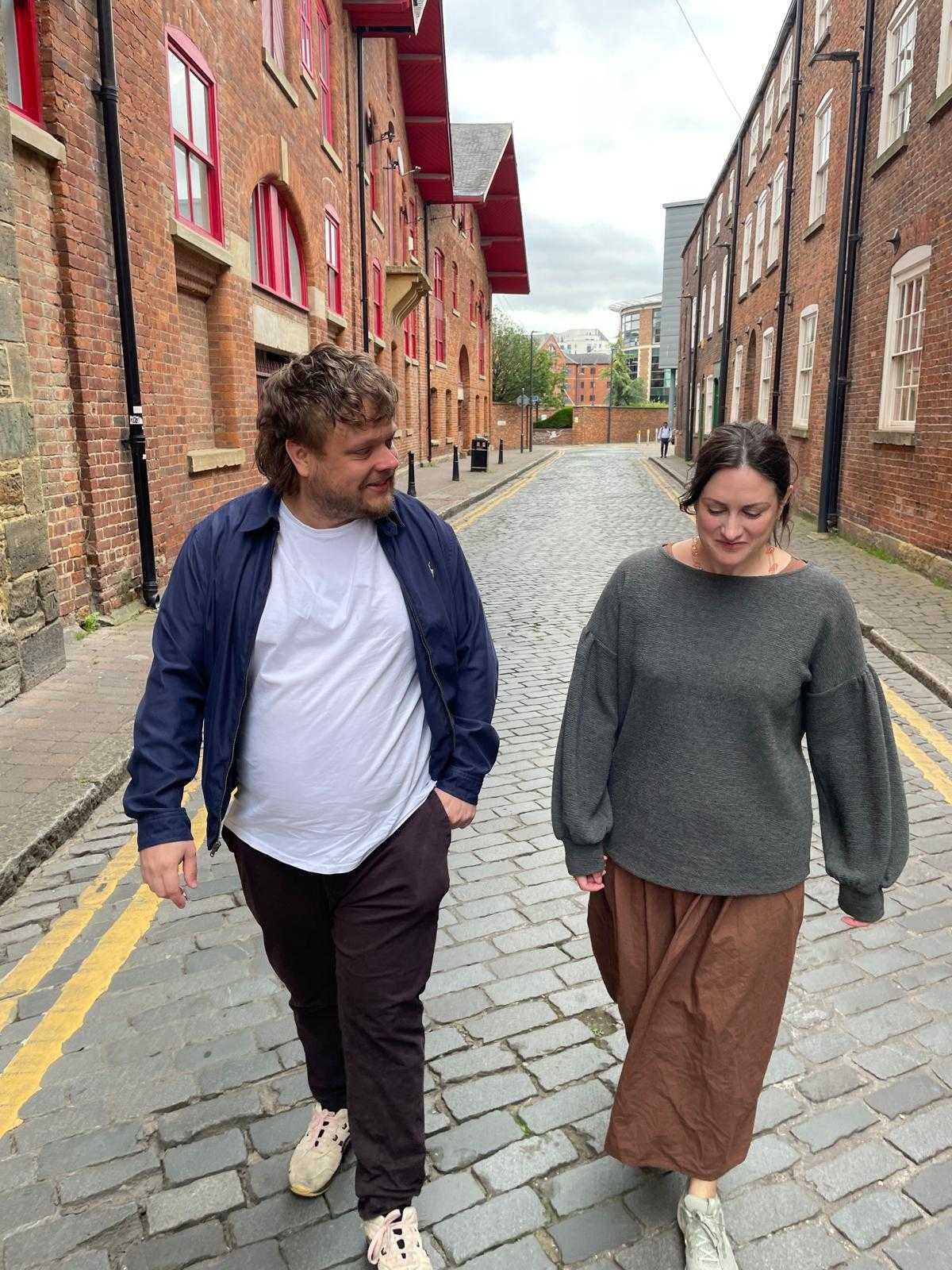
We had one of our favourite comments on a story so far on Wednesday. Lee Gill said: “It’s been really lovely reading everything The Exchange has been putting out. It feels like you’re finding stories about Leeds and West Yorkshire that I simply wouldn’t come across otherwise.” I don’t think this is a coincidence. Mia’s piece on neon, my work on the Greens, Daniel’s story about Channel 4 — all of these could only happen because we took the time to go much deeper than a quick write-up. We’re proud of this work, and we think it is a force for good.
Here’s the snag though: all this time obviously comes with a cost. Flesh and blood journalists can’t work for free, nor should they.
We desperately want to believe that there’s an audience out there who care enough about this place that they’re willing to pay a small amount a month to keep The Exchange going. We’re running at a loss now, which we expected, but can’t keep doing it forever.
We need more readers to put their money where their mouth is and say, this paper is doing valuable work, and it’s worth backing. Because as grateful as we are for kind emails and positive social media posts in support of our work, unfortunately they don’t pay the rent in our Leeds city centre office or our salaries. It sounds cynical, but financial support from our members will mean we can make meaningful work for the foreseeable future.
So if you’re in a position to support us, I hope you’ll consider doing so. To break even, we would need at least 1,080 paying members. I should stress that’s breaking even — not turning a profit, but covering our smallest base costs (mine and Mia’s salaries, the rent for our office, plus money for freelancers). Why is money for freelance writing a base cost? Because it buys Mia and I more time to work on more complicated and challenging investigations — which tend to have a more unpredictability built into their timeline (as legal threats, which we've had already, or sifting through an extra folder or five of documents inevitably arise). If we had those 1,080 members, we could build a paper that’s worthy of this incredible city.
Obviously, we don’t expect everyone who is reading this to be able to pay for our news — and that’s totally fine. If you’re struggling with costs at the moment, thanks for being on our mailing list and please go and enjoy your day. We deliberately paywall only half of our articles so that everyone can benefit from us being here — so that Leeds and West Yorkshire is hopefully a more transparent place because of us. But at the moment, while we have a list of 5,368 people, only 595 pay for the service — just over one in ten of you. That’s too few for the paper we’re hoping to build with your help.
That’s why I’m asking you to upgrade your subscription now by hitting the button below. If you’ve seen enough to think we’re making a difference here, then we need you to get behind us.
As a paying member, you’ll get all our articles. But most importantly, you’ll be helping us build something that can last.